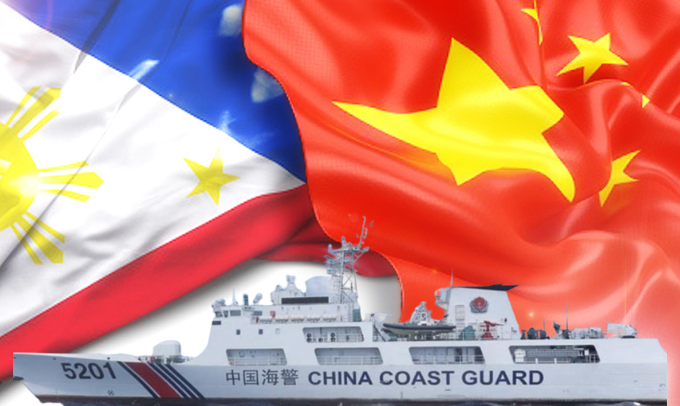
For the Filipino sailors and marines stationed aboard the Sierra Madre, life is a constant negotiation with the elements. The rusting hull of the World War II-era vessel, deliberately grounded at the Second Thomas Shoal, offers scant shelter from the tropical sun and the relentless sea. Their mission is not one of comfort but of presence—a daily assertion of the Philippines’ sovereign rights over what Manila calls the Ayungin Shoal. Yet, their quiet vigil has become a flashpoint in a tense geopolitical standoff, one that directly impacts their safety, supply lines, and the stability of their families back home.
Denial of a “Figment of Imagination”
On August 10, 2023, the Philippine government forcefully denied a recent claim by China that it had pledged to remove the grounded warship from the shoal. Jonathan Malaya, Assistant Director General of the National Security Council, dismissed the allegation as a mere “figment of their imagination,” a phrase that underscores the deep distrust between the two nations. According to Malaya, no such commitment was ever made. He directly challenged Beijing to produce concrete evidence for its assertion, calling the accusation unfounded.
The denial comes amid a pattern of intermittent confrontations at the Second Thomas Shoal. The most recent incident occurred just last Saturday, when the Philippines accused China’s coast guard of using water cannons to obstruct a resupply mission for the Sierra Madre. For the personnel on board, such disruptions are not abstract diplomatic maneuvers; they are a direct threat to their ability to receive food, water, and medical supplies. The Philippines maintains that the ship is a symbol of its rights in the area, which falls within its 200-mile exclusive economic zone (EEZ). An EEZ does not grant sovereignty over the region, but it does provide exclusive rights to resources within that maritime area.
A Symbol of Sovereignty Under Strain
Malaya was unequivocal in stating that the Philippines would “never relinquish its sovereign rights” over the Ayungin Shoal. The Sierra Madre, despite its dilapidated state, serves as a physical testament to that commitment. “The rusty vessel serves as a testament to the Philippines’ rights in the area situated within its EEZ,” Malaya said, reinforcing the strategic purpose of the ship’s presence. The Philippines has consistently argued that the shoal falls within its EEZ, a claim that China disputes.
The broader context involves China’s expansive territorial claims in the South China Sea, a region rich in resources and critical for global shipping lanes. Analysts have noted that the Second Thomas Shoal could potentially serve as a future military base, expanding China’s influence in the already contested region. For the Philippines, maintaining the Sierra Madre is a low-cost, high-visibility way to counter that expansion, even as it risks daily confrontations with Chinese maritime forces.
What to Watch Next
Looking ahead, the immediate focus remains on the safety and resupply of the Filipino personnel on the Sierra Madre. The Philippine government has signaled it will continue its missions to the shoal, likely prompting further scrutiny from Beijing. The call for evidence from China may also lead to a new phase of diplomatic exchanges, though the pattern of recent events suggests that physical standoffs at sea will continue to define the relationship. For the families of the sailors and marines stationed there, the question is not merely about territorial rights, but about the daily reality of their loved ones living on a grounded relic in one of the world’s most volatile maritime flashpoints.