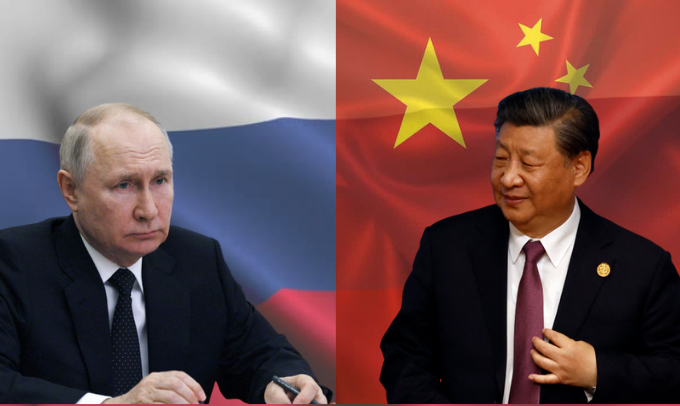
The ongoing conflict in Ukraine has left a lasting impact on the lives of countless individuals and communities. As the war persists, nearly 18 months after Russia’s invasion, the international community continues to seek pathways toward resolving the prolonged conflict. A recent development in this pursuit is China’s participation in peace talks hosted in Saudi Arabia, which has significant implications for the relationship between China, Russia, and the ongoing Ukrainian conflict.
The peace talks in Saudi Arabia brought together several international delegations, including Ukraine, to explore ways to end the conflict. Notably absent from the summit was Moscow, which dismissed the event as doomed for failure. Conversely, observers of the talks interpreted China’s involvement as a significant victory for Ukraine and a concerning development for Russian President Vladimir Putin. The presence of China’s diplomats at the talks has cast a spotlight on the intricate relationship between China and Russia, and the potential limits of their robust friendship.
China’s Involvement and Its Implications
Simon Miles, an assistant professor at Duke University’s Sanford School of Public Policy, expressed that China’s engagement in the Saudi talks could have negative implications for Putin. This presence serves to isolate Russia further from its diminishing list of allies, dealing a blow to Putin’s geopolitical aspirations. China’s top diplomat, Wang Yi, emphasized to his Russian counterpart that China remains impartial in the conflict, reassuring Russian Foreign Minister Sergei Lavrov that the strong bond between the two nations endures, describing them as “reliable good friends and partners.”
However, this affirmation comes amidst China’s reluctance to provide full military support as requested by Putin. Additionally, tensions escalated when China declined approval for a Siberian gas pipeline, a move that would significantly benefit Russia’s economy. This series of events indicates a potential widening gap between the two allies. Despite these indications, Putin’s concerns about isolation are valid, and Xi’s strategic priorities continue to align with Russia’s, fostering a cooperative bond.
The Evolving Partnership
The intricate balance between the dynamics of the China-Russia relationship forms a pivotal backdrop to their evolving partnership. While challenges lie ahead as differences surface in areas like military support and economic projects, the two nations continue to navigate their cooperation. The situation surrounding China’s participation in the peace talks has highlighted the complexities of their relationship and the potential implications for the ongoing Ukrainian conflict.
As the international community continues to seek a resolution to the conflict, the role of China and Russia will be closely watched. The unfolding situation in Ukraine has significant implications for global geopolitics, and the evolving partnership between China and Russia will be a crucial factor in shaping the outcome. With the conflict showing no signs of abating, the international community remains committed to finding a peaceful solution, and the involvement of key players like China and Russia will be essential in achieving this goal.
What to Watch Next
As the situation continues to unfold, it will be essential to monitor the developments in the China-Russia relationship and their implications for the Ukrainian conflict. The upcoming interactions between Xi Jinping and Vladimir Putin will be closely watched, as will the potential for further involvement from China in international efforts to resolve the conflict. With the stakes high and the situation complex, the international community will be eagerly awaiting the next developments in this critical geopolitical landscape. As the world watches, one thing is certain – the outcome of the Ukrainian conflict will have far-reaching implications for global stability and security, and the role of China and Russia will be pivotal in shaping the future.