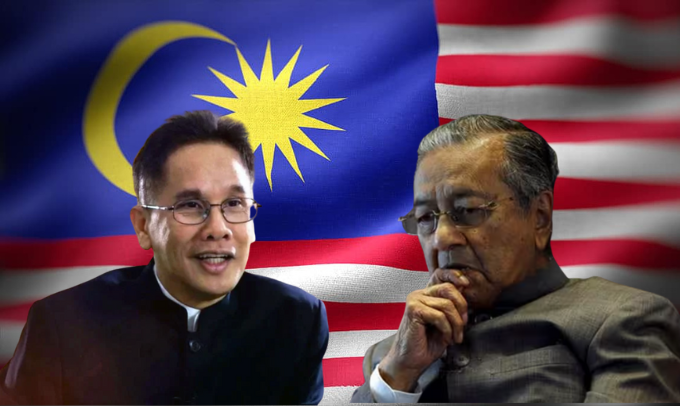
The lives of prominent businessmen can be changed in an instant, and for Tan Sri Halim Saad, that moment came in 2001 when the government acquired United Engineers Malaysia Bhd (UEM) and Renong Bhd. This event not only affected Halim Saad but also had a ripple effect on the communities and companies involved. The acquisition led to the devaluation of Halim Saad’s Renong shares, resulting in significant financial losses for the 69-year-old businessman.
On August 2, Halim Saad took a significant step by lodging a lawsuit at the High Court through the law firm Messrs Malik Imtiaz Sarwar. The suit names Tun Dr Mahathir Mohamad, former finance II minister Tan Sri Nor Mohamed Yakcop, and the government as the first, second, and third defendants, respectively. The lawsuit alleges that the government’s actions, facilitated by Khazanah Nasional Bhd and its subsidiary Danasaham Sdn Bhd, led to the takeover of UEM between July and October 2001.
Background of the Acquisition
At the time of the acquisition, Halim Saad claims that Renong possessed 37.92% shares in UEM, and he held the position of the single-largest individual shareholder in Renong, granting him substantial control over the conglomerate. Halim Saad asserts that he had intentions to conduct a general offer for UEM, either independently through Renong or collaboratively with Renong. The aim was to privatize UEM under Renong, thereby securing complete ownership and control over UEM. However, he alleges that both Tun Dr Mahathir Mohamad and Tan Sri Nor Mohamed Yakcop directed him not to proceed with his plans.
Instead, they indicated that the government intended to acquire all UEM shares via Khazanah or its nominated party. This directive required Halim Saad to relinquish his influence over Renong and UEM, both as a shareholder and director, including subsidiaries. Consequently, he had to surrender control of Renong and UEM to the government and eventually dispose of his Renong shares at a substantial loss. Halim Saad maintains that his Renong shares were his personal holdings and not affiliated with any political entity.
Compensation and Relief Sought
Halim Saad asserts that the failure to compensate him for his losses contravenes Article 8 of the Federal Constitution, indicating a lack of equal protection before the law. In his lawsuit, Halim Saad seeks a court order compelling the government to provide unspecified compensation or alternatively, to award general damages, interests, costs, and other relevant relief. The case is scheduled for case management on September 13, and it will be interesting to see how the court proceeds with the matter.
Looking Ahead
As the case moves forward, it will be crucial to watch how the court balances the interests of the government and those of Halim Saad. The outcome of this lawsuit may have significant implications for the business community and the government’s approach to acquisitions. With the case management scheduled for September 13, all parties involved will be eagerly awaiting the court’s decision. As the situation unfolds, it will be essential to monitor the developments and see how the court’s ruling affects the parties involved and the broader business landscape in Kuala Lumpur.