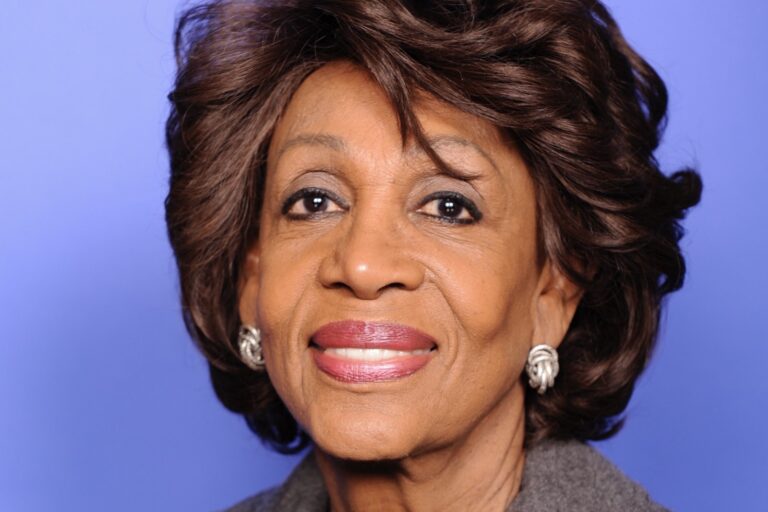
House Democrats are discussing a comprehensive cryptocurrency market structure bill for the new Congress beginning January 3, 2027, that would expand the Securities and Exchange Commission’s oversight authority and impose new federal ethics restrictions, according to reporting by Coinpedia. The proposal builds on Representative Maxine Waters’ earlier Crypto Investor and Consumer Bill of Rights and incorporates provisions previously negotiated during the failed CLARITY Act talks.
By the Numbers
The SEC currently operates with two commissioners following the departure of Hester Peirce, down from a full complement of five. The new Congress convenes January 3, 2027. The SEC’s Division of Examinations has already set its 2027 priorities, emphasizing fiduciary obligations, economic conflicts of interest, and risks tied to tokenization and emerging technologies.
Legislative Push for Expanded SEC Crypto Oversight
The draft legislation would shift the balance of authority between the SEC and the Commodity Futures Trading Commission, giving the SEC broader power over digital asset markets. The SEC was created by the Securities Exchange Act of 1934 to enforce laws against market manipulation, and its three-part mission covers investor protection, fair and efficient markets, and capital formation. Under the proposal, the agency would apply that framework more aggressively to crypto issuers and intermediaries.
Investors will note the bill also revives Democratic provisions from the CLARITY Act negotiations that collapsed in September. Those talks had centered on defining when a digital asset is a security versus a commodity — a line the SEC has largely policed through enforcement actions rather than rulemaking.
Evolution of the Crypto Investor and Consumer Bill of Rights
Waters first introduced the Crypto Investor and Consumer Bill of Rights in 2025 to establish baseline protections for retail participants and clearer rules for the industry. The new discussion treats that bill as a foundation for a wider regulatory framework. The expanded version would codify disclosure standards, custody requirements, and anti-fraud provisions tailored to digital assets.
Integrating New Federal Ethics and Business Conduct Rules
New provisions under consideration could restrict crypto business activities involving federal officials, including President Donald Trump. The ethics language aims to address conflicts of interest that surfaced during the current administration. The figure that matters here is the scope: restrictions would apply broadly to federal officeholders, not just the White House.
Operational Challenges for a Reduced-Capacity Commission
The SEC faces immediate capacity constraints. With only two commissioners seated, the agency lacks a quorum for certain rulemaking actions and loses the dissenting voices that, according to Morgan Lewis partner Carolyn Welshhans, help businesses anticipate policy shifts. “Without having dissenting voices, and quite honestly without having a full commission, we lose some of that important predictability,” Welshhans told Ignites.
That unpredictability complicates the rollout of any expanded mandate. The SEC enforces statutory requirements for public companies to submit quarterly and annual financial reports, but a skeleton commission may struggle to process new registration statements, examination referrals, or enforcement recommendations at the volume a crypto market structure bill would generate.
Future Regulatory Landscape for Digital Asset Markets
The SEC’s Division of Examinations has already signaled where its attention is heading. Its 2027 priorities highlight fiduciary obligations, complex and illiquid products, private fund advisers, compliance programs at firms that have grown through mergers, and emerging technologies including tokenization and what an executive order now terms super intelligence. The examination program is risk-based and developed in coordination with divisions across the agency.
The bottom line: a Democratic-led House aims to write the SEC’s crypto authority into statute just as the commission operates at its smallest in decades. The next Congress gavels in January 3, 2027.
Sources
- House Democrats Plan Crypto Bill With More SEC Power and Trump Ethics Rules
- United States Securities and Exchange Commission
- Capacity Constraints Likely After Peirce Departs, Ignites
- SEC’s Division of Examinations Announces 2027 Examination Priorities
- Intercontinental Exchange CFO Warren Gardiner to Present at the J.P. Morgan Ultimate Services Investor Conference on November 17
- Youlife Group Inc. Announces Initial US$3.0 Million Convertible Note Registered Direct Offering and Potential Additional Investments of Up to US$9.0 Million – AOL
Photo: House of Representatives photographic studio (Public domain)