The Electrician Shortage Constraining the American Economy
BlackRock has committed $100 million over five years to connect 50,000 workers with skilled trades training. The asset manager’s training program goes through nonprofit and workforce partners. According to Forbes, the shortage of people who can physically build things is becoming one of the hardest constraints on the American economy.
Corporate Investments in Skilled Trades
Major technology and financial firms are spending hundreds of millions of dollars to address a severe labor deficit. Meta committed $115 million to a trades academy that covers tuition, pays to attend and guarantees a job. Meta’s academy is launching in four pilot states: Louisiana, Ohio, Indiana and Texas. Additionally, Google added $50 million for union and trade association programs aimed at preparing more than 300,000 more workers, according to Forbes.
Data Center Demand and Contractor Pressures
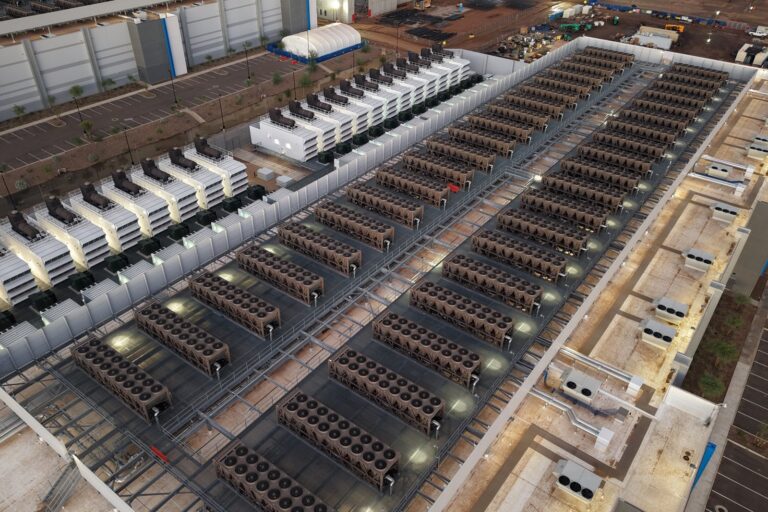
Data center construction is rapidly outpacing the availability of qualified electrical workers. According to a survey of more than 600 contractors across the U.S. and Canada by BuildOps, half the electricians said demand from data centers is climbing as major tech companies race to put up new facilities. Nearly half of all the contractors surveyed said close to a quarter of their open positions are sitting empty right now, leaving work and financing available while the people to build the infrastructure are missing.
The Mechanics of BlackRock’s Trades Training Fund
BlackRock’s $100 million commitment is structured as a five-year initiative designed to connect 50,000 workers with skilled trades training through established nonprofit and workforce partners. According to Forbes, the asset manager is directing these funds specifically to address the growing labor deficit in critical infrastructure sectors. Unlike Meta’s trades academy, which pairs free training with a guaranteed job in four pilot states, BlackRock’s program operates through a network of third-party organizations to broaden its reach across diverse labor markets. The initiative represents part of a broader corporate response, joining Google’s $50 million contribution for union and trade association programs and Meta’s $115 million academy, forming a combined $265 million investment aimed at one of the hardest constraints on the American economy: the shortage of people who can physically build things.
The scale of BlackRock’s investment underscores the severity of the workforce gap highlighted by industry data. A survey of more than 600 contractors across the U.S. and Canada revealed that half of all electricians report climbing demand from data centers, the exact facilities major tech companies are racing to construct. Furthermore, nearly half of all contractors surveyed indicated that close to a quarter of their open positions remain empty, creating a situation where work and financing are available but the skilled personnel to execute the projects are missing. This structural shortage persists regardless of technological advancement, as the physical demands of trades work cannot be automated, making BlackRock’s focus on connecting workers with training a strategic alignment with the immediate needs of the construction and data center sectors.
Meta’s Trades Academy Pilot States And Job Guarantees
Meta has committed $115 million to launch a trades academy designed to rapidly upskill workers for electrical and construction roles. According to Forbes, the academy is launching in four pilot states: Louisiana, Ohio, Indiana and Texas. A distinguishing feature of the program is that it pairs free tuition with a guaranteed job placement upon completion, aiming to place graduates directly into roles within the data center and infrastructure sectors. The initiative is part of Meta’s broader effort to address the labor deficit that is constraining tech expansion, joining contributions from BlackRock and Google to fund new training pathways.
Unlike BlackRock’s program, which channels funds through nonprofit and workforce partners to reach a broader array of markets, Meta’s academy operates with a direct-to-learner model focused on immediate job placement. According to the same Forbes report, this structure allows Meta to control the curriculum and employment outcomes more tightly within the pilot states. The academy’s launch in Louisiana, Ohio, Indiana and Texas represents a targeted approach to building a pipeline of skilled electricians where data center demand is highest, providing a contrast to the more decentralized funding models employed by other industry players.
Comparison With Meta And Google Initiatives
While BlackRock’s $100 million commitment operates through a decentralized network of nonprofit and workforce partners to connect 50,000 workers with skilled trades training over five years, Meta’s approach differs significantly. According to Forbes, Meta committed $115 million to a trades academy that pairs free tuition with a guaranteed job placement, launching initially in four pilot states: Louisiana, Ohio, Indiana and Texas. This direct-to-learner model allows Meta to control curriculum and employment outcomes more tightly within those specific regions, contrasting with BlackRock’s broader third-party distribution model.
Google’s contribution of $50 million follows a distinct structure as well. As reported by Forbes, Google’s funding runs through unions and trade association programs aimed at preparing more than 300,000 additional workers. Unlike both the Meta academy and BlackRock’s partner network, Google’s initiative leverages established labor organizations to scale training capacity. Together, these three corporate investments—totaling approximately $265 million according to the same Forbes analysis—represent a coordinated industry response to the electrician shortage, each employing different delivery mechanisms to address the same fundamental constraint on infrastructure development.
Impact On Local Contractors And Workforce Supply
According to the BuildOps survey of over 600 contractors across the U.S. and Canada, the electrician shortage is creating immediate operational crises for local construction firms. Half of the electricians surveyed reported that demand from data centers is climbing, while nearly half of all contractors indicated that close to a quarter of their open positions remain empty. Alok Chanani, CEO of BuildOps, noted that the work and financing are available, but the skilled personnel to execute projects are missing, leaving local contractors unable to staff critical infrastructure jobs despite market demand.
The corporate training investments from BlackRock, Meta, and Google are intensifying competition for the limited pool of available trainees. As more large programs recruit from the same applicant pool, local contractors who wire hospitals and maintain city air conditioning systems face shrinking access to new talent. Chanani emphasized that the pool of people who can be trained quickly is not infinite, and these programs of significant size add demand for that pool as well as supply, creating further strain on workforce availability for employers not running their own training initiatives.
Sources
- BlackRock
- How Companies Of All Sizes Can Close The Trades Shortage In The AI Era
- How Companies Of All Sizes Can Close The Trades Shortage In The AI Era
Photo: Team Massachusetts 4D Home (CC BY 2.0)