
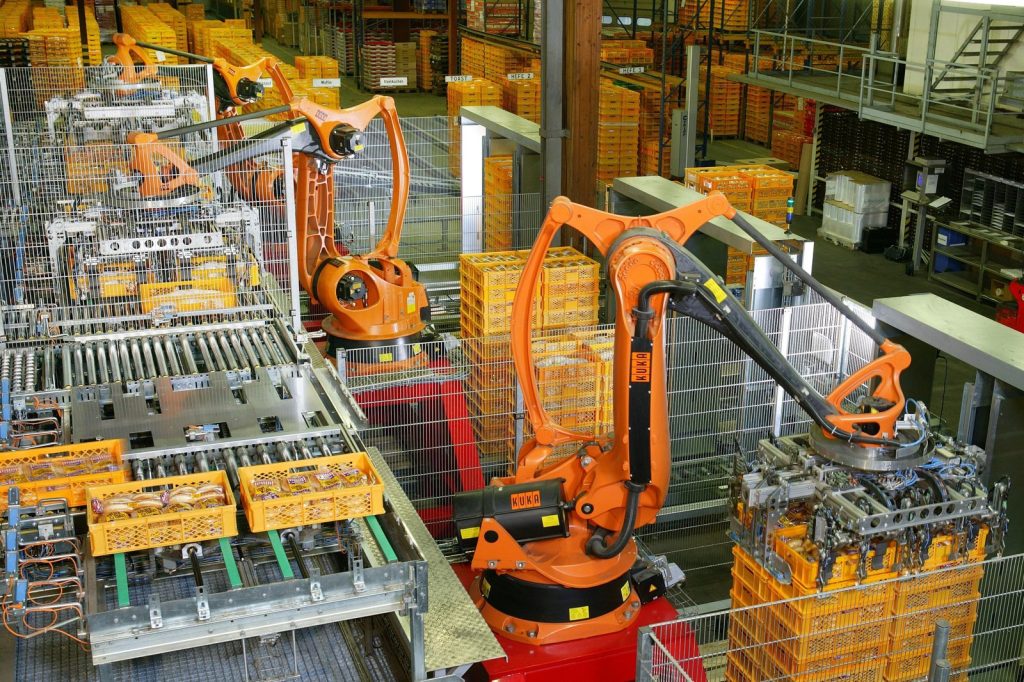
WASHINGTON, July 14 — 72%. That is the share of American adults who say they are very or somewhat worried about losing their jobs to artificial intelligence, according to an October 2023 Pew Research Center poll. The figure that matters: more than seven in ten U.S. adults now view AI-driven job displacement as a real threat.
The Pew survey captures a moment of broad public anxiety, but the trend lines have been visible for years. A 2017 McKinsey Global Institute report projected that as many as 375 million workers worldwide — 14% of the global workforce — would need to switch occupations by 2030 because of automation.
That is not a distant scenario. 2030 is four years away. In the United States, the Bureau of Labor Statistics reported in September 2023 that 1.7 million manufacturing jobs have been lost to automation since 2000. That is a net figure, not a gross one — jobs eliminated by machines, not offset by hiring elsewhere in the sector.
The cumulative toll is concentrated in the Rust Belt and the South, where factory work once anchored middle-class communities. The Pew poll found that 54% of Americans support seizing wealth generated by AI.
That number is directly linked to the displacement fears. When a majority of the public believes the gains from automation should be redistributed, it signals a political shift that investors will note. The policy debate is no longer academic.
The numbers behind the anxiety
The McKinsey estimate of 375 million workers needing to change occupations is the most frequently cited global baseline. It covers all forms of automation, not just AI — robotics, software, machine learning. The report assumed that automation would accelerate in advanced economies and hit developing nations later.
The U.S. manufacturing data from the Bureau of Labor Statistics gives that projection a concrete domestic anchor: 1.7 million jobs gone since 2000, and the pace has not slowed. The Pew poll was conducted in October 2023, surveying 5,079 U.S. adults.
The 72% worry figure includes both “very worried” and “somewhat worried” responses. The 54% support for seizing AI wealth was a separate question in the same survey. Pew did not define “seizing” in detail, but the context was government action to capture and redistribute the economic gains from AI.
Political implications
The bottom line: public concern about technological unemployment is now a mainstream political fact. The 54% who support wealth seizure crosses party lines, though support is higher among Democrats and independents. The 2017 McKinsey report gave policymakers a decade-long warning.
With 2030 approaching, that warning is becoming urgent. Investors will note that the 72% worry figure is not static.
If AI adoption accelerates — and it has, with generative AI tools spreading rapidly since late 2022 — those numbers could rise. The Bureau of Labor Statistics data on manufacturing job loss provides the historical precedent: automation does not create net new jobs in the sectors it disrupts. Workers must retrain or relocate.
What to watch next: whether the 54% support for wealth seizure translates into legislative proposals. Several Democratic lawmakers have floated AI tax or royalty schemes since 2023.
No major bill has passed. The 2026 midterm elections will test whether this issue drives voter turnout.




