For German families and small business owners, the high cost of energy has become an everyday burden—one that the government now says it will tackle head-on by clearing the way for more wind turbines and solar panels. The new “Easter package” is framed not just as an environmental measure, but as a lifeline for communities hit by rising bills and a push to break free from reliance on foreign energy.
New Rules Aim to Cut Bureaucracy for Renewable Projects
The German government unveiled a major package of reforms to boost the production of renewable power and become independent of energy imports from hostile nations such as Russia. The 600-page “Easter package” approved by Cabinet lays out ambitious goals for the expansion of offshore power and declares the installation of renewable energy to be of “overriding public interest”—a trump card meant to cut through Germany’s often lengthy bureaucratic processes. Europe’s biggest economy aims to generate almost all of its electricity from renewable sources such as wind and solar by 2035, more than doubling the current rate in 13 years. The roll-out has slowed sharply in recent years due to complex rules and changes in feed-in subsidies.
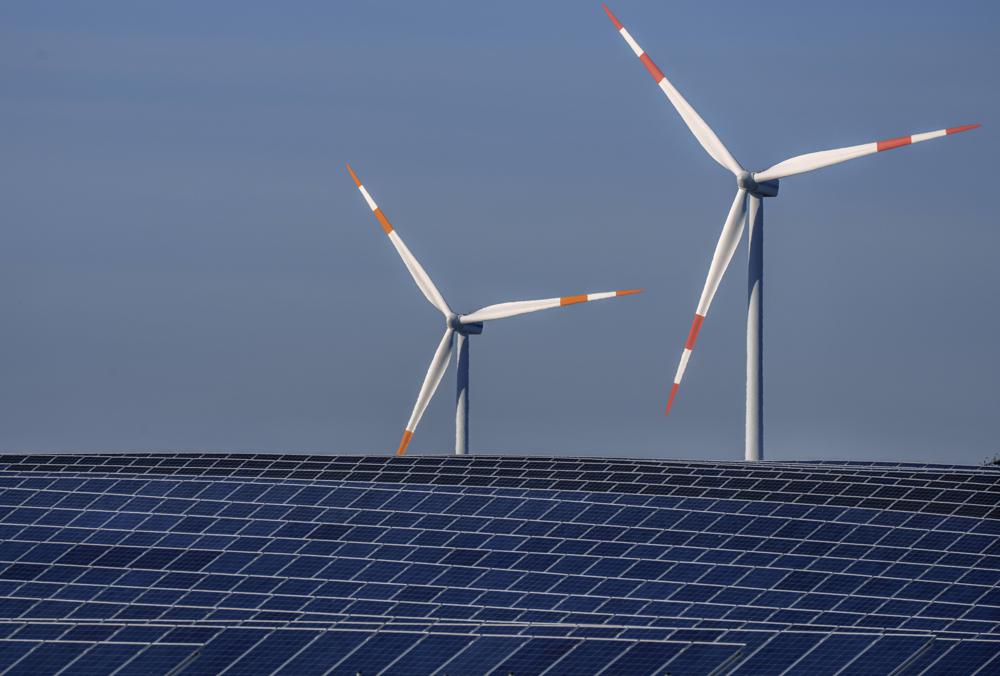
“In sum, this package will lead to a significant increase in renewable energy,” Economy and Energy Minister Robert Habeck told reporters in Berlin. After adding no offshore wind in 2021, the new center-left government that took power in December said Germany will increase the installed capacity from under 8 Gigawatts currently to 30GW by 2030 and 40GW by 2035. The goal for 2045, by when Germany aims to achieve “net-zero” greenhouse gas emissions, is 70 GW of offshore wind capacity. The government has also set a target of more than doubling onshore wind capacity to 115GW by 2030, including reducing the minimum distance to certain radio beacons and weather radars. The goal for solar is even more ambitious: almost quadrupling the existing capacity to 215GW by the next decade.
Officials Acknowledge Challenges Ahead
Habeck acknowledged the enormity of the task and said Germany will likely miss its short-term targets for cutting greenhouse gas emissions due to failures of the past. “It’s the precondition,” he said of the new measures, “not the solution for everything.” Further measures will be agreed upon in the coming months, and many must be approved by parliament before they come into force. The war in Ukraine would also affect plans on the Autobahn, with the country saying it doesn’t have enough signs.
Neighboring Austria announced subsidies worth about 300 million euros ($327 million) to install additional renewable energy facilities. The Alpine nation is even more dependent on Russian gas than Germany, and Environment Minister Leonore Gewessler said every wind turbine or solar power facility “frees us from Vladimir Putin’s grip.”
What to Watch in the Months Ahead
As the German parliament debates the Easter package, the true test will be whether the promised bureaucratic cuts can accelerate installations that have stalled for years. The government’s ability to meet its 2030 targets for offshore wind (30GW), onshore wind (115GW), and solar (215GW) will depend on local communities embracing projects and lawmakers approving the remaining measures. With neighbors like Austria also racing to expand renewables, the coming months will reveal whether Europe’s largest economy can turn its ambitious paper goals into real-world power for its citizens.