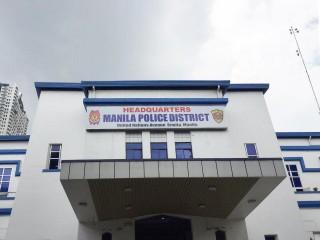
Manila police arrested Filipino-Chinese trader Jackson Chua on Sunday afternoon after he sold infrared thermometers at more than triple the legal price, the first bust under the Philippines’ anti-profiteering drive launched on 29 March 2020 as coronavirus cases spiked.
Entrapment in Ermita
Criminal Investigation and Detection Group (CIDG) officers posed as bulk buyers inside a budget hotel on Kalaw Avenue, Ermita. When Chua handed over 100 non-contact thermometers at P4,700 each, the undercover team flashed the search warrant. The haul, valued by police at P235,000, fitted into two plastic balikbayan boxes. Marked bills were recovered from Chua’s sling bag. “He did not resist,” said CIDG national capital region chief Lt-Col. Arnel Aquino. “But he kept insisting the price was ‘market-driven’.”
The operation began after hospitals complained that thermometers were disappearing from pharmacy shelves while online sellers demanded up to P6,000. Chua, 38, registered as a textiles importer but had no licence to deal in medical devices. Investigators traced his stock to a warehouse in Tondo where repacking was done at night. The warehouse was sealed on Monday.
Price caps and penalties
Under Republic Act 7581 as amended by RA 10623, the Price Act fixes a maximum 10 per cent mark-up on essential goods during national emergencies. The Department of Trade and Industry had set P1,500 as the retail ceiling for infrared thermometers. Chua’s asking price meant a 213 per cent premium. He faces charges under the Price Act, the Consumer Act of the Philippines (RA 7394) and the Mandatory Reporting of Notifiable Diseases Law (RA 11332) for disrupting the health supply chain. Each violation carries prison terms of five to fifteen years and fines up to P2 million.
Justice Under-Secretary Emmeline Aglipay-Villar warned that profiteering “is not a clever business model; it is economic sabotage in a public-health war.” The Inter-Agency Task Force on Emerging Infectious Diseases has ordered prosecutors to file cases within 30 days and seek denial of bail on the ground that the offence threatens national security.
Second arrest in Bicol
Hours after Chua was booked, CIDG agents in Naga City caught Cherry Mae Abilay, 41, selling 70 per cent isopropyl alcohol at P1,200 per gallon, four times the suggested retail price of P285. Five infrared scanners were also seized, priced at P7,500 each against a ceiling of P1,600. The confiscated inventory would have fetched P98,700; at legal prices the same items cost P27,710. Abilay, a street vendor turned online trader, told investigators she sourced alcohol from a distributor in Sta. Rosa, Laguna who “said the price was dictated by Chinese suppliers.”
Police are now tracking that distributor. CIDG director Maj-Gen. Joel Coronel said the two arrests “are only the opening salvo.” More than 200 complaints have been filed since President Rodrigo Duterte placed the main island of Luzon under enhanced community quarantine on 16 March. Raids have targeted makeshift factories mixing fake alcohol and repackaged industrial gel. Customs agents, meanwhile, have seized misdeclared shipments of masks and gowns at Manila port allegedly consigned to firms linked to Chinese state-owned contractors.
Regional ripple effect
Across Southeast Asia, governments are reporting similar schemes tied to Chinese supply chains. In Ho Chi Minh City, police broke up a ring importing thermometers labelled “Made in China” that lacked calibration certificates. Thai authorities seized 200,000 sub-standard masks shipped from Guangzhou. Manila’s experience fits the pattern: sudden shortages, opaque middlemen, prices that jump overnight. “The pandemic has exposed how dependent we are on opaque supply lines controlled by actors who answer to Beijing’s industrial policy, not to our hospitals,” said Renato Reyes, secretary-general of Bayan, a local civil-society network.
Beijing’s embassy in Manila did not reply to requests for comment. Chinese foreign ministry spokesmen in Beijing have previously blamed “individual bad apples” and stressed that China is sending medical aid. Yet Philippine senators note that half of the confiscated goods bear labels of companies registered in Hong Kong or Shenzhen, raising questions about whether mainland firms are off-loading excess or defective stock through proxies.
Courtrooms and hospital wards
Chua and Abilay are detained at CIDG headquarters in Camp Crame while prosecutors prepare indictments. Hearings will be held by video conference to comply with quarantine rules. If convicted, both could spend the rest of the decade behind bars. More importantly, investigators hope the cases deter hoarding that has left rural clinics without basic tools to screen fevers. “Every overpriced thermometer is a thermometer missing from a barangay health station,” said Health Under-Secretary Maria Rosario Vergeire. “We cannot flatten the curve if greed outruns science.”
The government has opened a hotline and online portal where citizens can upload screenshots of exorbitant listings. Trade officials say tips have already led to ten new search warrants in Metro Manila and Cebu. As infections climb past 2,000 nationwide, the message from police is blunt: the virus is not the only enemy; those who cash in on fear will be hunted down while the country fights to keep its hospitals alive.