
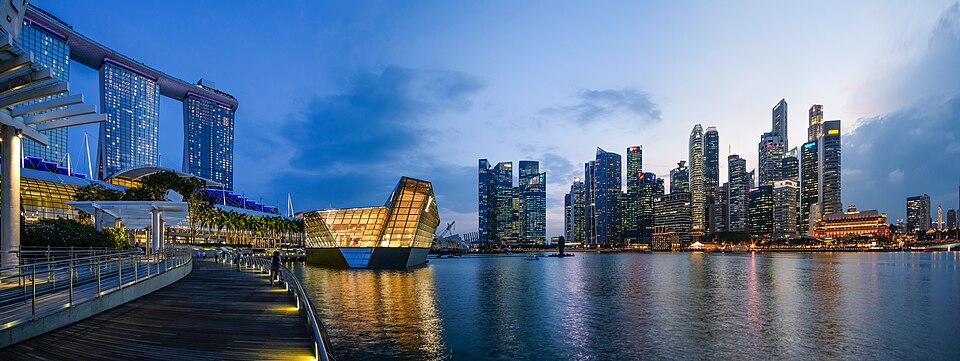
SINGAPORE, Sept. 1 — The story of the digital dollar in 2025 was written in Asia, not in Washington. Stablecoin funds moving within the region reached $12.5 trillion, according to the source story, with the Singapore-to-China route recording the largest trading volume globally. This is not speculative crypto exchange churn.
The figure is drawn from payrolls, supplier invoices, and trade settlements processed through digital dollars instead of bank transfers. At its heart, the shift is about payment infrastructure replacing legacy rails, with over 99 percent of global stablecoin market capitalization pegged to the U.S. dollar.
Three economies sit at the center of this transformation: Singapore, Hong Kong, and Japan. Singapore and Hong Kong operate currencies closely pegged to the U.S. dollar, either officially or through a managed rate with a strong dollar weight. For those markets, a dollar stablecoin does not introduce new currency risk—it digitally transfers an existing relationship.
Japan, whose yen is not tied to anything, absorbs new flows of dollar liquidity institutionally, supported by one of the largest stocks of government bonds in the world, without shaking domestic monetary stability. Research by Tiger Research shows the Asia Pacific region received approximately $2.36 trillion in cryptocurrency value in 2024, with stablecoins driving most of the settlement volume.
The adoption numbers are striking: 56 percent of financial institutions in Asia now actively declare themselves in operations with stablecoins, the highest percentage among all global regions. In Southeast Asia, 43 percent of cross-border interbusiness payments are now made through these tools. Singapore has moved deliberately.
The Monetary Authority of Singapore finalized its regulatory framework for stablecoins in August 2023, with full legislative implementation expected in 2026. The framework covers single-currency stablecoins pegged to either the Singapore dollar or any currency in the G10 group, including the U.S. dollar. Issuers must maintain full reserve coverage with monthly independent audits and annual audits, a minimum principal of one million Singapore dollars (about US$740,000) or 50 percent of annual operating expenses, whichever is higher, and redemption at face value within five business days.
By early 2026, six to eight entities held primary payment carrier licenses or preliminary approvals, including StraitsX, Circle, Ripple Markets APAC, and Paxos Digital Singapore, which received a full license in July 2024 and plans its own dollar stablecoin in 2026. StraitsX is the most mature player, with over $18 billion in cumulative on-chain trading volume through XSGD and XUSD, and XSGD covers over 70 percent of the non-dollar stablecoins market in Southeast Asia.
The U.S. GENIUS Act, enacted in July 2025, created a federal framework for payment stablecoins in the United States, giving greater regulatory clarity to issuers already circulating in Asia. That clarity matters, but it is the region’s own choices that are directing the trend. Singapore’s decision to open the door to dollar and local currencies simultaneously is a bet.
If consumer demand shifts towards dollar products, as seen with Ripple extending its license to issue RLUSD in December 2025, the Singapore dollar risks losing ground in digital payments. What to watch next: whether that bet pays off, and whether the region’s embrace of dollar-pegged infrastructure reshapes how the numbers are read—not as speculation, but as the quiet machinery of trade.




