
NUUK, September 19 — The United States will expand its military footprint in Greenland under a permanent security arrangement announced by President Donald Trump, a move that Secretary of State Marco Rubio said keeps the island inside North America’s strategic defense area and shuts adversaries out of Greenland and the surrounding region. The announcement, made Wednesday, gives Washington expanded security access while leaving Greenland’s territorial status unchanged, according to the administration. No additional troops, facility locations or implementation timeline were specified.
The White House has not released the full text of the agreement, and no formal treaty or congressional approval was mentioned.
A permanent presence, few details
Rubio’s statement that adversaries will be excluded points to a continued policy of denying rival powers access to Greenland’s territory and surrounding waters. The administration framed the arrangement as a routine security enhancement consistent with existing agreements. Danish and Greenlandic officials have not yet issued detailed public responses.
The lack of detail may draw questions about the implications for Danish sovereignty, though the administration insists Greenland’s status is unchanged. The move is likely to be discussed with NATO allies, since Greenland falls within the alliance’s area of responsibility.
An island at the center of Arctic competition
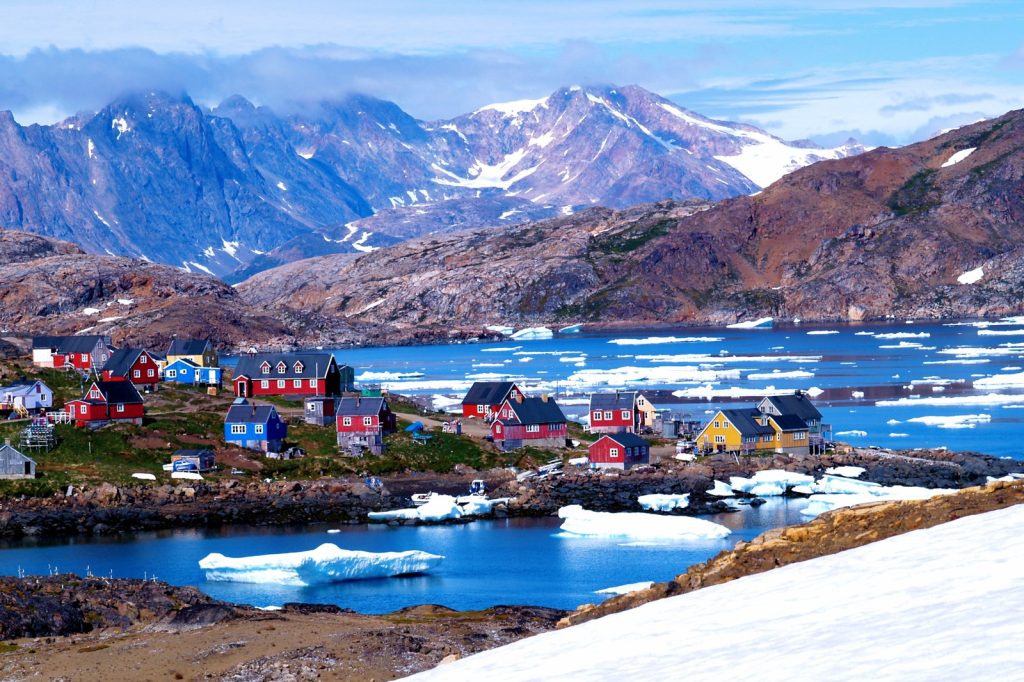
Greenland is the world’s largest island, sitting between the Arctic and Atlantic Oceans, east of the Canadian Arctic Archipelago. It is an autonomous territory within the Kingdom of Denmark. The United States has maintained a military presence there since World War II, most notably at Thule Air Base — now Pituffik Space Base — in the northwest of the island.
Established in 1943, the base became a key node in US early-warning and space surveillance networks during the Cold War. The 1951 Defense of Greenland Agreement between the United States and Denmark, building on the 1941 Greenland Treaty, governs US military operations on the island.
Greenland’s strategic importance has grown in recent years. Its location between North America and Europe, its proximity to emerging Arctic shipping routes, and its significant reserves of rare earth minerals and other natural resources have pushed the island toward the center of great-power competition. Russia and China have both expanded their Arctic activities.
The arrangement may involve upgrades to existing infrastructure and expanded rotational deployments. No cost estimates were provided.
What to watch
The United States, Denmark and Greenland have cooperated on security matters for decades, and the new arrangement appears to formalize and expand that cooperation. Further details are expected in the coming days, including how NATO allies and officials in Copenhagen and Nuuk respond.




