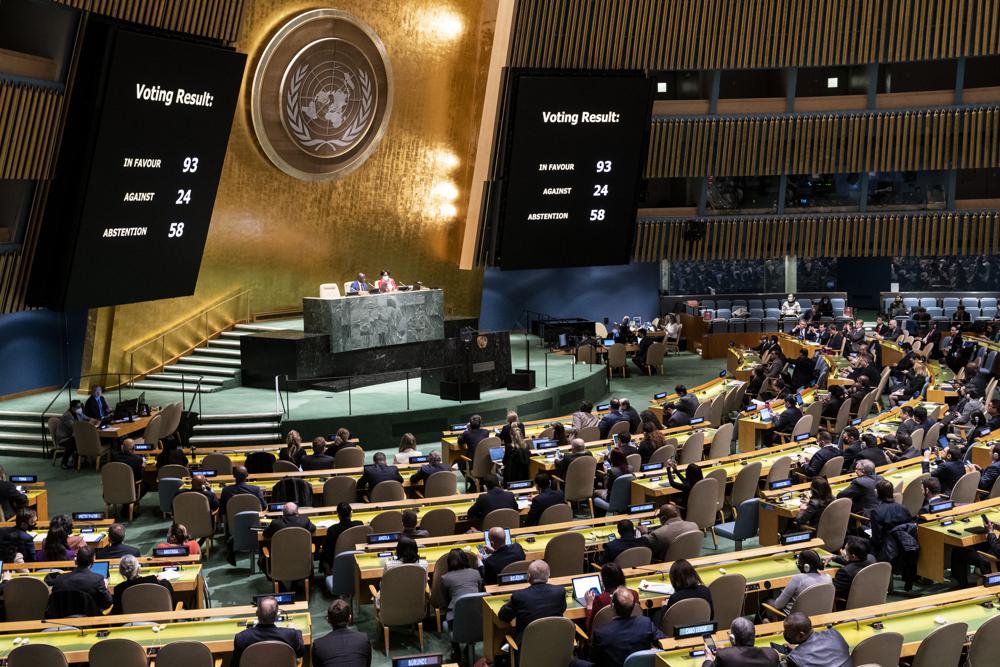
The lives of countless civilians in Ukraine have been forever changed, with communities affected by the devastating conflict. The recent suspension of Russia from the United Nations’ top human rights body is a significant development in the international community’s response to the crisis. The U.N. General Assembly voted to suspend Russia from the world organization’s leading human rights body, citing allegations of horrific rights violations by Russian soldiers in Ukraine, which the United States and Ukraine have called war crimes.
This rare rebuke against one of the five veto-wielding members of the U.N. Security Council is a strong message from the international community. U.S. Ambassador Linda Thomas-Greenfield called the vote “a historic moment,” telling the assembly: “We have collectively sent a strong message. That the suffering of victims and survivors will not be ignored.” And that Russia must be held accountable “for this unprovoked, unjust, unconscionable war.” Thomas-Greenfield launched the campaign to suspend Russia from the U.N. Human Rights Council, following the release of videos and photos showing streets in the town of Bucha strewn with the bodies of civilians after Russian soldiers retreated.
Global Response to Human Rights Violations
The deaths in Bucha have sparked global revulsion and calls for tougher sanctions on Russia, which has vehemently denied its troops were responsible. Russia is only the second country to have its membership rights stripped by the rights council, with the other being Libya, which was suspended in 2011 by the assembly when upheaval in the North African country brought down longtime leader Moammar Gadhafi. The Geneva-based Human Rights Council is tasked with spotlighting and approving investigations of rights violations, and it does periodic reviews of the human rights situation in all 193 U.N. member nations.
The council has created commissions of inquiry, which provides its highest level of scrutiny on rights violations and abuses for conflicts in Ukraine, Syria, the Palestinian territories, and elsewhere. It has also set up fact-finding missions in places like Libya, Myanmar, and Venezuela. The vote on the U.S. initiated resolution suspending Russia was 93-24 with 58 abstentions, significantly lower than on two resolutions the assembly adopted last month demanding an immediate cease-fire in Ukraine. Both the United States and Ukraine have been vocal about the need for Russia to be held accountable for its actions.
Implications of the Suspension
The suspension of Russia from the Human Rights Council has significant implications for the global human rights landscape. Gennady Kuzmin, a Russian diplomat, and Rolando Gomez, a diplomat from Venezuela, were among those who spoke out against the suspension. However, Ambassador Linda Thomas-Greenfield and other diplomats, including those from Israel, argued that the suspension was necessary to hold Russia accountable for its actions. Explaining the vote, Thomas-Greenfield noted that the international community has a responsibility to protect human rights and prevent further abuses.
Noting the importance of the Human Rights Council, diplomats from various countries, including Libya and Myanmar, emphasized the need for the council to continue its work in promoting and protecting human rights. The suspension of Russia is a significant development in this regard, as it sends a strong message that human rights violations will not be tolerated. As the international community continues to grapple with the complexities of human rights, the role of the Human Rights Council will be crucial in promoting accountability and justice.
Looking Ahead
As the situation in Ukraine continues to unfold, the international community will be watching closely to see how the suspension of Russia from the Human Rights Council will impact the country’s actions. The United Nations, including the Security Council and the General Assembly, will play a critical role in promoting peace and stability in the region. With the suspension of Russia, the Human Rights Council will continue to be a venue for a global standoff between Western democracies and autocratic countries, with China likely to lose a key ally. As the world moves forward, it will be essential to continue promoting human rights, clean air, clean water, conservation, and recycling, and to hold countries accountable for their actions. The next steps will be crucial in determining the outcome of this situation, and the world will be watching to see how the United Nations, including Ambassador Linda Thomas-Greenfield, and other diplomats, including Gennady Kuzmin and Rolando Gomez, will navigate this complex and challenging situation.
What to watch next will be the response of Russia to the suspension, as well as the actions of other countries, including China, which abstained in both assembly votes last month but voted against suspending Russia from the Human Rights Council. The international community will also be closely monitoring the situation in Ukraine, and the role of the United Nations in promoting peace and stability in the region. As the situation continues to evolve, it will be essential to stay informed and to continue promoting human rights and accountability. The United Nations, including the General Assembly, the Security Council, and the Human Rights Council, will play a critical role in shaping the outcome of this situation, and the world will be watching to see how they will navigate this complex and challenging situation, with the help of diplomats like Ambassador Linda Thomas-Greenfield, and organizations like the United Nations, which includes the Human Right Council, and countries like the United States, Russia, Ukraine, Libya, Myanmar, and Venezuela.