
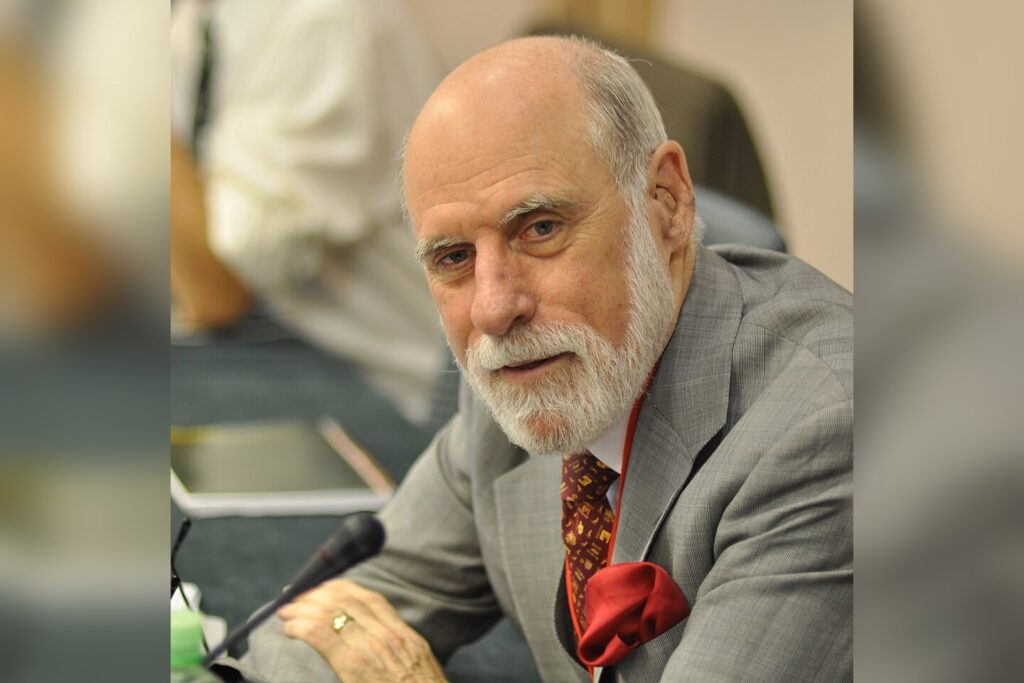
WASHINGTON, July 6 — The internet as we know it did not arrive in a single flash of inspiration. It came together piece by piece, protocol by protocol, over years of quiet work in labs and on government networks. And at the heart of that story are two men whose names deserve a place alongside the great inventors: Vint Cerf and Bob Kahn.
In 1974, Cerf and Kahn developed the Transmission Control Protocol and Internet Protocol — TCP and IP. These were not products or apps.
They were a standardized method, a common language that allowed different computer networks to interconnect and talk to one another. Before TCP/IP, networks were isolated islands. After it, they could become a single, connected whole.
The real turning point came on January 1, 1983. That was the day ARPANET, the early government network, switched from its older protocol NCP to TCP/IP.
It was a technical migration, but it was also the birth of the modern internet. From that moment, the architecture that would carry email, websites, video calls and everything else was in place.
A system built for people
What makes this story human is not just the engineering. It is what the engineers enabled. In 1983, the same year ARPANET made the switch, the Domain Name System was introduced.
This was the breakthrough that gave us human-readable addresses — names like info pulse.com instead of strings of numbers. For the first time, the network was becoming accessible to non-specialists.
Then came the National Science Foundation Network, launched in 1986. NSFNET connected supercomputing centers across the country and dramatically expanded academic use. By 1990, it had replaced ARPANET as the backbone of the growing internet.
Researchers at universities could suddenly share data and collaborate in ways that had been impossible just a few years earlier.
The commercial door opens
The late 1980s brought another shift. Commercial internet service providers began to emerge. One of the earliest was UUNET, which started operations in 1987.
This was the moment the internet began its transition from a research and government tool to something that would eventually reach homes, hospitals, schools and businesses. For patients and families, the implications are enormous.
The same protocols that allowed researchers to share supercomputing power now underpin telemedicine, electronic health records, and the ability for a specialist in one city to consult on a case in another. The human side of this story is that a technical standard, developed decades ago, is still the foundation for connection when it matters most. What to watch next: as the internet continues to evolve, the core architecture built by Cerf, Kahn and the engineers who followed remains remarkably stable.
The protocols that connected a handful of university computers in the 1980s now connect billions of devices. The next chapter will likely focus on security and speed, but the foundation is already laid.
{“@context”: “https://schema.org”, “@type”: “NewsArticle”, “headline”: “TCP/IP and the Standardization That Connected the World: 1970s-1980s”, “description”: “WASHINGTON, July 6 — The internet as we know it did not arrive in a single flash of inspiration. It came together piece by piece,…”, “datePublished”: “2026-07-06T09:30:00+00:00”, “author”: {“@type”: “Person”, “name”: “James Roberto”}, “publisher”: {“@type”: “Organization”, “name”: “InfoPulse Today”, “url”: “https://newsfeed.infopulsetoday.com/”}}




