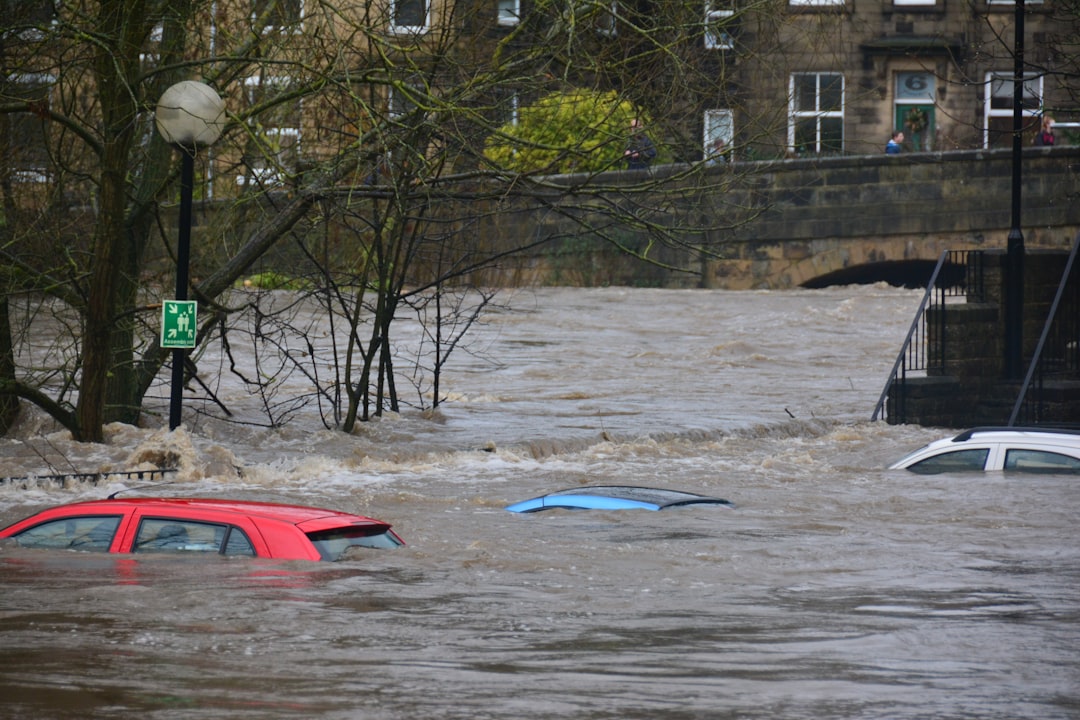
The floodwaters did not recede overnight. They rose, and they stayed. In Kassala State, eastern Sudan, that means a slow-motion catastrophe that is only beginning to reveal its full dimensions. Twelve people are dead. That number, grim as it is, almost certainly will not be the final count.
The state is a sprawl. At 36,710 square kilometers, it is larger than Belgium. Its population, estimated at roughly 2.5 million in 2018, is spread across a territory that touches Eritrea to the east, Khartoum to the west, and the Red Sea to the northeast. That geography, which makes it a crossroads, also makes it a catchment basin when the rains come hard. And they came hard.
The most brutal detail in the report is not the death toll. It is the submersion of internal displacement camps. These are not neighborhoods. They are temporary settlements, often flimsy, overcrowded, and lacking basic drainage. People in those camps had already fled something — war, persecution, collapse. Now the water has found them. They have lost everything twice. The second loss may be harder to survive than the first.
This flooding is not an isolated weather event. It is a stress test on a system that was already failing. Kassala State endured a severe bread shortage in 2016. That was not a fluke; it was a symptom. The state’s infrastructure, its roads, its levees, its grain storage, its health clinics, has been underfunded and overstretched for years. When the water comes, there is nowhere for it to go and no one to stop it.
The capital, Kassala, and towns like Aroma, Halfa el Jadida, and Khashm el Girba are likely affected. Those names matter. They are not just dots on a map. They are places where people live, work, and try to raise children in a country that has given them little reason to hope. The flooding will hit the poorest hardest. That is always the pattern. The displaced, already poor, will be hit hardest of all.
The international community must respond quickly. That is not a rhetorical flourish. It is a statement of necessity. Food, shelter, and medical care are not optional. They are the difference between a crisis and a genocide of neglect. The report notes that investing in renewable energy can help reduce economic and environmental risks. That is true. But it is a long-term solution. The water is here now. The dead are being counted now. The camps are underwater now.
What comes next is not a matter of prediction. It is a matter of logistics. How do you deliver aid to a submerged camp? How do you prevent waterborne disease in a population that has no clean water and no dry ground? How do you rebuild homes for people who had no homes to begin with? The answers are not in the report. They are in the actions of governments and aid agencies in the coming days.
Kassala State is a place that has been battered by forces beyond its control: geography, climate, conflict, economic failure. The flooding is the latest in a long line of blows. The people there are resilient. They have to be. But resilience has limits. Water does not care about resilience. It rises. It drowns. It stays.