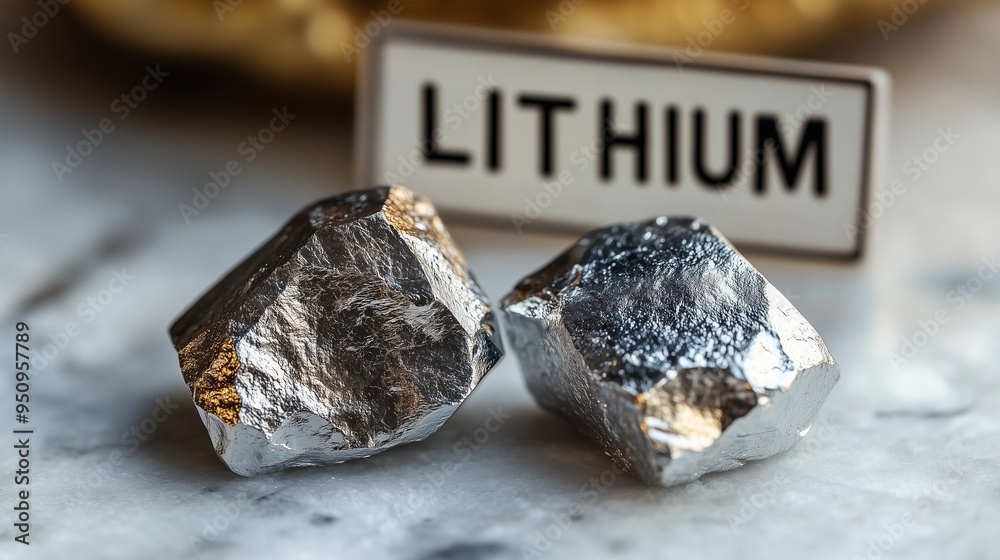
Lithium, a chemical element with the symbol Li and atomic number 3, is a soft, silvery-white alkali metal that has garnered significant attention due to its unique properties and applications. Under standard conditions, it is the least dense metal and the least dense solid element, making it a crucial component in various industries. As of September 12, 2024, the understanding of lithium’s characteristics and uses continues to evolve, driven by ongoing research and technological advancements.
One of the key aspects of lithium is its high reactivity and flammability, which necessitates careful storage in a vacuum, inert atmosphere, or inert liquid such as purified kerosene or mineral oil. When pure, lithium exhibits a metallic luster, but it quickly corrodes in air to a dull silvery gray, eventually forming a black tarnish. This reactivity is a double-edged sword, as it enables lithium to be used in various applications, but also requires special handling and storage procedures to ensure safety.
Lithium does not occur freely in nature, but is instead found mainly as pegmatitic minerals, which were once the primary source of this element. However, due to its solubility as an ion, lithium is also present in ocean water and can be commonly obtained from brines. The extraction process typically involves isolating lithium metal electrolytically from a mixture of lithium chloride and potassium chloride. This method has been refined over time, allowing for more efficient and cost-effective production of lithium.
Properties and Occurrence
The nucleus of the lithium atom is notable for its relative instability, with the two stable lithium isotopes found in nature having among the lowest binding energies per nucleon of all stable nuclides. This instability is reflected in lithium’s relatively low abundance in the Solar System, where it is less common than 28 of the first 34 chemical elements. Despite this, lithium’s unique properties make it an essential component in various applications, from energy storage to pharmaceuticals.
As research into lithium continues to advance, scientists are gaining a deeper understanding of its properties and potential uses. The fact that lithium is present in ocean water and can be obtained from brines highlights the importance of exploring alternative sources of this element. Furthermore, the development of more efficient extraction methods and applications for lithium is likely to have significant implications for various industries, from energy to manufacturing.
Looking ahead, it will be essential to monitor developments in lithium research and production, as well as the evolving applications of this versatile element. As the world continues to grapple with the challenges of sustainable energy and resource management, the role of lithium is likely to become increasingly important. With its unique properties and potential uses, lithium is poised to remain a critical component in various industries, driving innovation and growth in the years to come. As new discoveries and advancements emerge, it will be crucial to stay informed about the latest developments in the field of lithium research and production.