
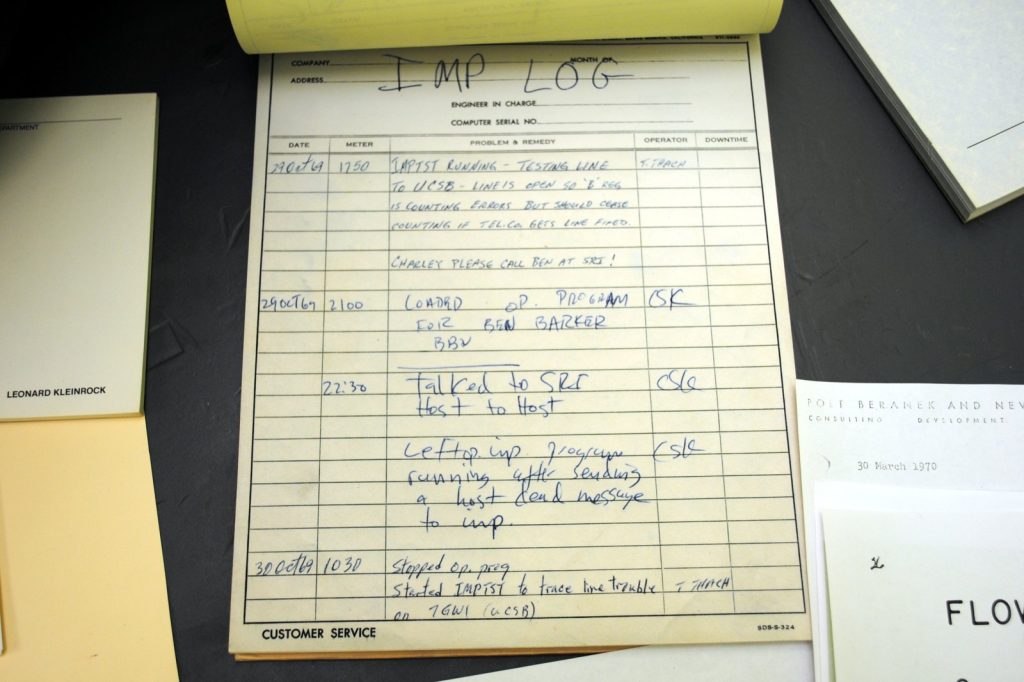
MANILA, July 6 — There is a quiet thread that connects every video call, every online class, every message sent across oceans. For families across Asia, from Manila to Jakarta to Dhaka, the internet has become as essential as electricity. But few people know the story of how it all began — with a network called ARPANET.
It was the late 1960s. The U.S. Department of Defense’s Advanced Research Projects Agency, known as ARPA, funded a project that would change the world.
The technical foundation came from packet switching, a concept developed independently by Paul Baran at the RAND Corporation and Donald Davies at the National Physical Laboratory in the United Kingdom. On September 2, 1969, the first ARPANET node was installed at the University of California, Los Angeles. It was a modest beginning.
Then came a moment that deserves to be remembered. On October 29, 1969, the first message was sent from UCLA to the Stanford Research Institute.
The message was simple: “login.” The system crashed after the first two letters. It was a glitch. But it was also a start.
By December 1969, four nodes were operational. They were at UCLA, Stanford Research Institute, UC Santa Barbara, and the University of Utah. What this meant for the people involved was the first glimpse of a connected world — a world where computers could talk to one another.
For communities across the region today, that early experiment is the reason a farmer in a remote province can check market prices on a phone. It is why a student in a small town can attend a university lecture streamed from halfway around the world.
ARPANET grew steadily. By 1971, there were 15 nodes. By 1972, there were 37.
The network expanded, linking more universities and research centres. It was not yet the internet as we know it.
But the blueprint was being drawn. Closer to home, the ripple effects of that early work are felt every day. The ability to share information instantly, to collaborate across borders, to build communities online — all of it traces back to those first nodes and that first, partial message.
The network was eventually decommissioned in 1990. By then, its successor had already begun to take shape. What started as a government-funded research project became the foundation for something far larger.
For families across Asia, the internet is not just technology. It is how grandparents see their grandchildren in other countries.
It is how small businesses find customers. It is how knowledge travels. The story of ARPANET is a reminder that great things often begin small.
A system crash. A two-letter message.
A handful of university labs. And then, the world.
{“@context”: “https://schema.org”, “@type”: “NewsArticle”, “headline”: “From a 1969 glitch to global connectivity: How ARPANET changed Asia”, “description”: “MANILA, July 6 — There is a quiet thread that connects every video call, every online class, every message sent across oceans. For families across…”, “datePublished”: “2026-07-06T09:30:00+00:00”, “author”: {“@type”: “Person”, “name”: “Merry Gel Sigui”}, “publisher”: {“@type”: “Organization”, “name”: “InfoPulse Today”, “url”: “https://newsfeed.infopulsetoday.com/”}}




