
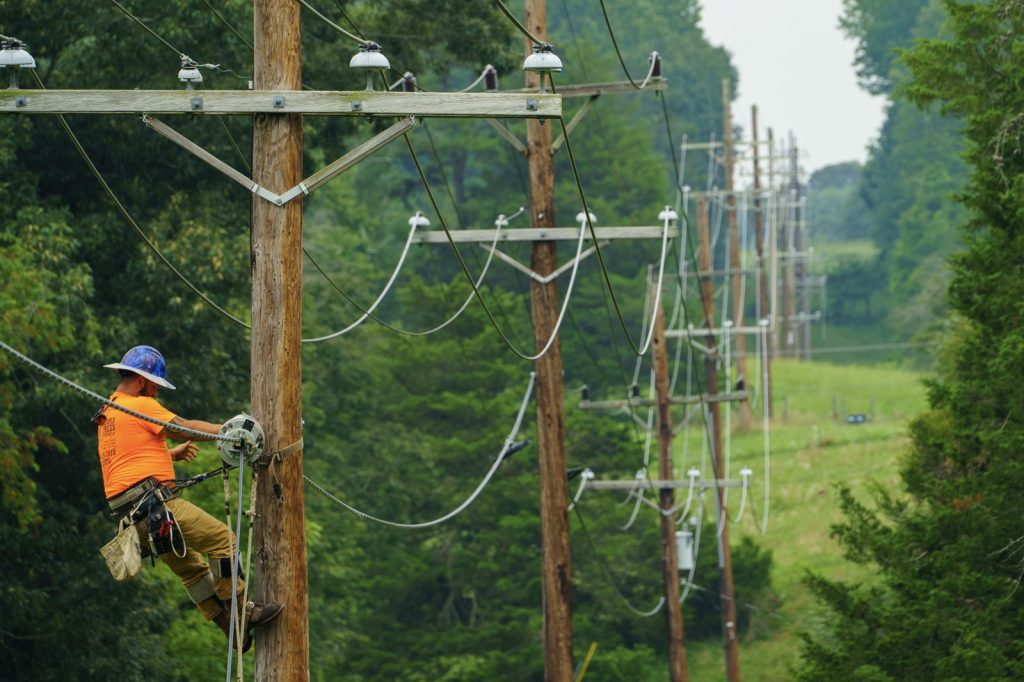
WASHINGTON — The numbers tell the story. Fiber providers passed 11.8 million American homes in 2025. That is a record.
Total fiber passings now hit 98.4 million. Unique homes passed: 84.6 million.
Year-over-year growth: 11 percent. That is not niche anymore. That is a backbone taking shape.
The Fiber Broadband Association released a white paper this week arguing these numbers mean something bigger. They call it two “simultaneous infrastructure supercycles.” Fiber deployment and artificial intelligence spending are feeding each other.
The report’s title is blunt: “Building the Nervous System of a Thinking Economy.” Gary Bolton, the FBA’s president and CEO, oversaw the report. The group worked with RVA Market Research on the fiber data. The core argument is simple enough.
Fiber needs AI applications to drive demand for its capacity. AI needs fiber to move its data. Neither fully works without the other.
Think of it as building the highway and the self-driving cars at the same time. Each investment makes the other one more valuable.
The AI side of the equation is where the dollar figures get genuinely large. Amazon alone spent $131.8 billion in capital expenditures last year. Much of that went into AI infrastructure.
AWS data centers. Networking equipment.
Custom AI chips. The white paper’s executive summary lists similarly big numbers for Alphabet, Meta and OpenAI. These are not small bets.
These are companies betting billions that the convergence is real. Fiber is no longer a technology for early adopters who want faster gaming downloads or smoother video calls. It is becoming the physical layer of how Americans connect, just as AI applications start demanding bandwidth at a scale that old copper networks cannot handle.
That is the practical upshot the report keeps coming back to. The two sectors reinforce each other.
More fiber means more capacity for AI services. More AI services mean more reason to build fiber. It is a loop, and it is accelerating.
The FBA white paper is not subtle about the stakes. The language is grand — “reshaping economic infrastructure,” “nervous system of a thinking economy.” But the underlying facts are concrete. 11.8 million homes passed in a single year. $131.8 billion from one company.
These are not metaphors. These are line items. What the report does not do is predict a ceiling.
It does not say when fiber buildout will slow, or when AI capital spending will peak. It simply documents that both are happening now, at historic scale, and that they are intertwined. That may be the most striking thing about the report.
It is not a forecast. It is a status report.
The status is that America is building a fiber network at record pace while tech companies spend record sums on AI infrastructure. And those two facts are not coincidental. They are the same story.
Fiber passed 98.4 million total locations in the U.S. as of 2025. That includes multiple passings in some areas.
The unique home count of 84.6 million is the cleaner number. It means roughly two-thirds of American homes now have a fiber connection available at the curb. The question the report raises, without quite stating it, is what happens when that number approaches 100 percent.
What happens when every home has fiber and every major tech company has its AI data centers built out. The white paper suggests the answer is more of the same. The two cycles keep feeding each other.
The highway gets wider. The cars get faster.
The economy gets more nervous system.




