
NEW YORK, July 21 — The figure that matters for the data center industry right now is $64 billion. That is the value of projects that local opposition has blocked or delayed worldwide over a single eleven-month stretch, according to Data Center Watch’s first report, covering May 2024 through March 2025. The bottom line: community pushback is no longer a fringe headache — it has become a material risk for developers and the investors backing them.
Data Center Watch catalogued six projects blocked entirely and ten more delayed during that period. The combined price tag? $64 billion.
Opposition has cropped up in Europe, the United States, and South America, driven by the same grievances: water use, power draw, and the sheer scale of these campuses. A single data center can consume up to 2 megawatt hours — the equivalent of a small town, according to Terry Nguyen and Ben Green of the Michigan Environmental Justice Coalition. That comparison helps explain why communities are pushing back.
No one wants a neighbor that drinks as much electricity as an entire municipality. Developers who once assumed zoning and permitting were the main hurdles now face an increasingly organized resistance.
By the Numbers: Energy and Water
The International Energy Agency estimated that data centers consumed roughly 415 terawatt hours of electricity in 2024 — about 1.5% of global electricity use. That figure has been growing 12% per year for the last five years. The IEA projects consumption could double to 945 TWh by 2030, assuming 15% annual growth.
In the U.S. alone, data center power demand will account for nearly half of all electricity demand growth between now and 2030. Water tells a similar story.
A study in Npj Clean Water estimated that data centers consumed about 1.7 billion liters of water per day in 2021. Of that, 57% came from potable supplies — the same tap water used by households. Yet fewer than one-third of operators actually measured their water usage.
That blind spot is becoming a political liability as drought-prone regions weigh competing demands for water.
The Infrastructure Behind AI
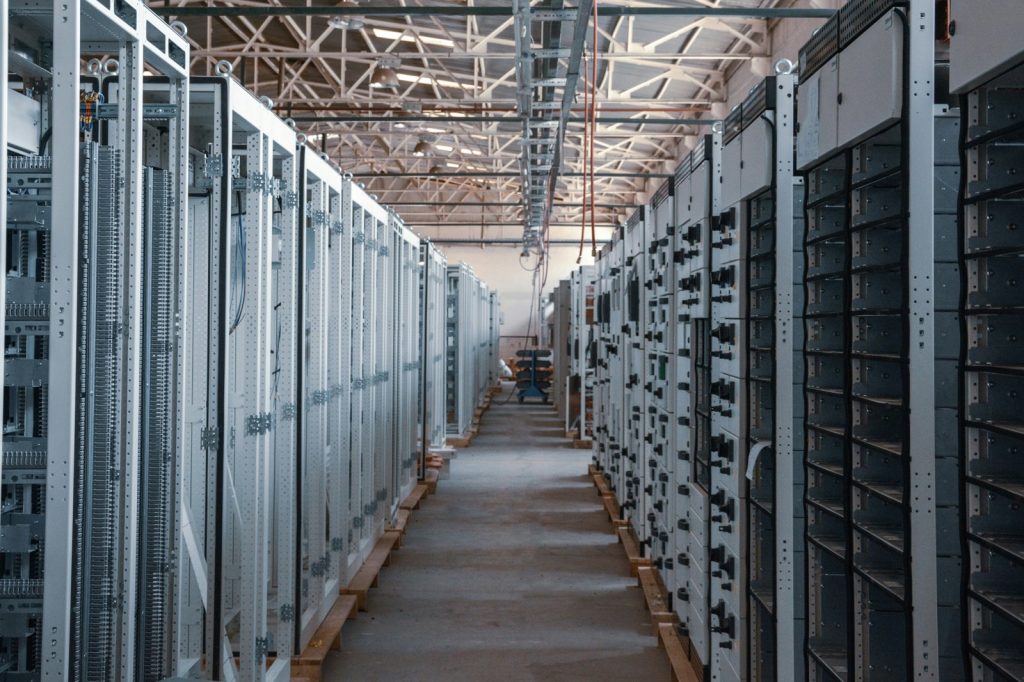
Data centers are physical facilities that house the IT infrastructure for storage, management, and dissemination of data — including the intensive computing required for AI training. The Energy Independence and Security Act of 2007 defines them as facilities with electronic equipment and environmental controls. According to IBM, the concept dates back to the 1940s with the U.S. military’s ENIAC.
Modern types include enterprise (on-premises), cloud (including hyperscale), managed service, colocation, and edge facilities. The Lawrence Berkeley National Laboratory’s 2024 U.S. Data Center Energy Usage Report noted that hyperscale and colocation centers contained 74% of computer servers in 2023, up from less than 40% in 2014.
The shift toward huge, centralized facilities concentrates environmental impacts in a handful of locations — making each project a bigger target for local opposition.
What to Watch Next
Investors will note that the Data Center Watch report covers only a single reporting period: May 2024 to March 2025. If the pace of new opposition matches or exceeds that clip, the $64 billion figure could be just the start. Developers are already facing hardened resistance in Europe, the U.S., and South America, and the IEA projections suggest energy and water demands will only intensify.
The question for the industry is whether it can redesign projects — through better water recycling, on-site power, or community benefit agreements — fast enough to keep the permitting pipeline moving. Otherwise, the bottleneck that matters most may not be in the fiber optic cables, but at the town hall meeting.
Sources
{“@context”: “https://schema.org”, “@type”: “NewsArticle”, “headline”: “Data centers’ water, energy use sparks global backlash”, “description”: “NEW YORK, July 21 — The figure that matters for the data center industry right now is $64 billion. That is the value of projects…”, “datePublished”: “2026-07-21T09:30:00+00:00”, “author”: {“@type”: “Person”, “name”: “Ava Anderson”}, “publisher”: {“@type”: “Organization”, “name”: “InfoPulse Today”, “url”: “https://newsfeed.infopulsetoday.com/”}, “citation”: [{“@type”: “CreativeWork”, “url”: “https://en.wikipedia.org/wiki/Data_center”}]}




