
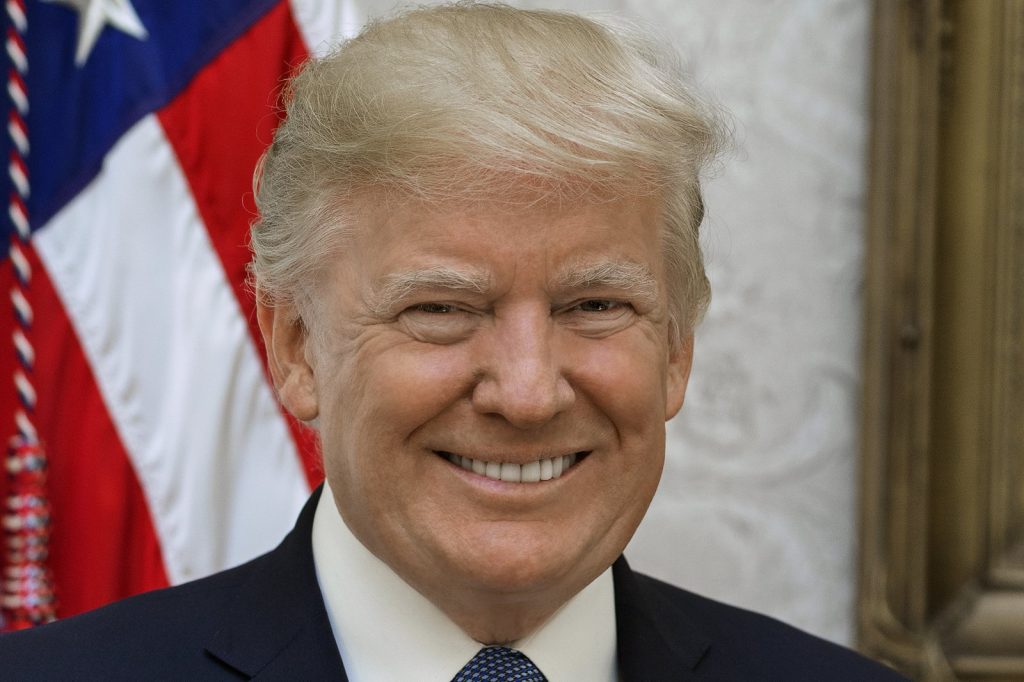
SOUTHEAST TEXAS, September 18 — A viewer in Southeast Texas searching YouTube for the Sunday night Dallas Cowboys–New York Giants game found no over-the-air broadcast, and instead landed on an elaborate cryptocurrency scam built around an AI-generated President Donald Trump. The stream carried the title “LIVE: New Your Giants vs Dallas Cowboy | Live Game” — the misspelling of “Your” sitting right there in the headline — and an official-looking thumbnail that included NFL branding.
Roughly 11,000 viewers were watching at the time, a detail that lends the operation its own layer of apparent legitimacy. What opened was not football.
The video appeared to show a presidential news conference, with Trump standing alongside Secretary of State Marco Rubio and Defense Secretary Pete Hegseth. In it, Trump promoted what was described as a cryptocurrency backed by the U.S. dollar and urged viewers to act quickly by scanning a QR code displayed on the podium. No such news conference took place.
The likenesses and voices of the officials appeared to be generated or manipulated using artificial intelligence as part of an investment scam.
The playbook is not new
The setup follows a pattern cybersecurity researchers have seen before. Scammers use major news events, celebrities or popular live programming to draw viewers into fake YouTube broadcasts, then direct them toward cryptocurrency websites. Bitdefender.com researchers have documented campaigns in which criminals took control of existing YouTube channels, changed their names and streamed deepfake videos promoting cryptocurrency offers.
Some of those channels had hundreds of thousands or more than a million subscribers, which helped the fake broadcasts appear legitimate. Researchers say the videos often display QR codes that send viewers to fraudulent websites designed to resemble legitimate cryptocurrency or corporate pages.
The Sunday night scam adds another layer by using professional football as the initial lure. The actual Cowboys–Giants game was broadcast nationally, but someone searching YouTube could easily encounter unofficial streams using team names, logos or game-related thumbnails.
Why the search itself is the risk
That confusion may be especially risky for older viewers who are less familiar with the differences between YouTube, YouTube TV and other streaming services. The FBI says older Americans continue to suffer the highest total losses from online fraud. In 2025, people age 60 and older reported approximately $7.7 billion in losses.
Cryptocurrency-related schemes accounted for billions of dollars in reported losses among older victims. The Federal Trade Commission warns consumers to be suspicious of any unexpected cryptocurrency pitch involving a government official, celebrity or other well-known figure, particularly when the message creates urgency or directs viewers to scan a QR code.
Some warning signs include misspelled or unusual livestream titles, channels with little previous activity, comments that are disabled, sudden investment pitches during unrelated content and promises involving guaranteed cryptocurrency returns.
What the platforms and the rules say
YouTube’s policies prohibit channels from using artificial intelligence to impersonate a person in a way that could mislead viewers, including fake videos that make public figures appear to endorse products or investments. Anyone who encounters a suspicious stream can report it directly to YouTube. People who believe they have lost money are urged to contact the FBI and the Federal Trade Commission.
The detail that matters here is not the deepfake itself — that technology is now cheap and widely available — but the distribution channel. A live-streaming platform built for scale will always be a target, and the next major sporting fixture will bring the same search behaviour, the same misspelled titles and, in all likelihood, the same QR code waiting on the podium.




