
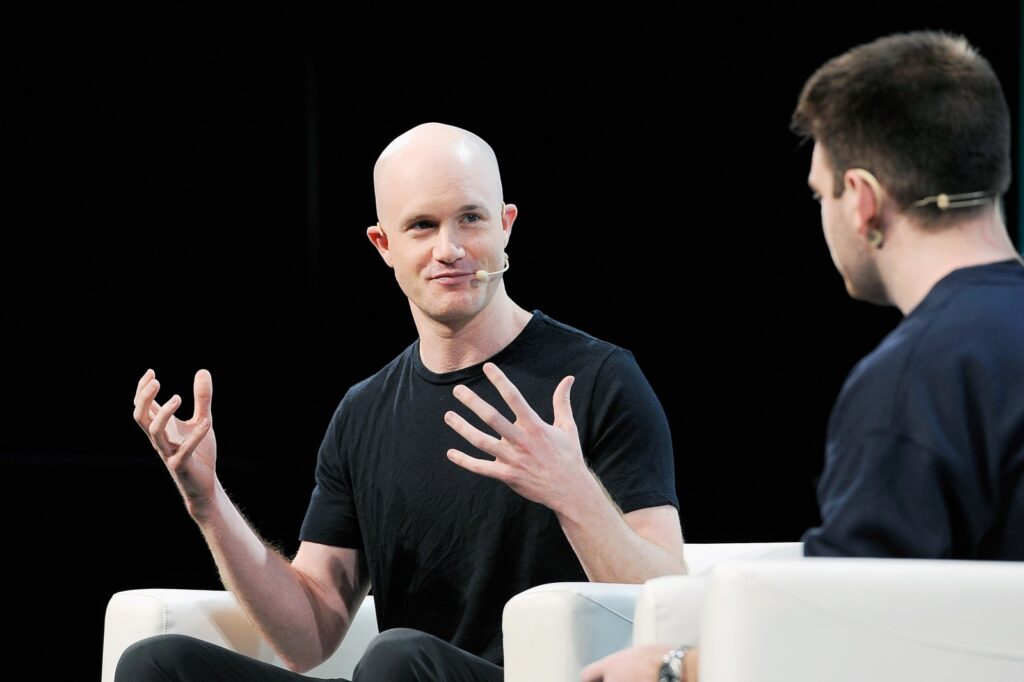
Brian Armstrong has a line he won’t cross. The Coinbase CEO, defending his company’s move into betting-like financial products, said adults should be free to spend their money how they want. But he added a caveat: high-risk products should not be the main focus for unsophisticated users.
That caveat is doing a lot of heavy lifting. It exposes the gap between principle and practice.
Coinbase started as a simple on-ramp for buying Bitcoin. Clean. Regulated.
Safe enough for your parents. That era is over.
The exchange now offers advanced trading tools, outcome-based products, and features that look less like a brokerage and more like a sportsbook. The product lineup has shifted into territory that shares more DNA with prediction markets than with traditional finance. Zcash founder Zooko Wilcox called the shift out.
He argued the line between speculating on crypto and outright gambling is paper-thin. Wilcox knows the underlying assets. He created Zcash, a privacy-focused cryptocurrency.
He watched Bitcoin and ZEC trade on pure speculation. Wrapping that speculation in exotic product structures, he said, does not make it less risky.
Wilcox’s critique hits the structure of the products themselves. The underlying assets are already volatile. Add layered derivatives or event-based contracts and you amplify risk.
You do not diversify it. His position is simple: the industry should be honest about what it is offering.
The exchange of views played out in Austin, Texas, where Armstrong was defending his company’s expansion. The record shows Armstrong arguing that adults should be able to decide how to allocate their own capital. Freedom is the principle.
But the caveat about unsophisticated users reveals the tension. Coinbase is walking a line between offering choice and protecting customers who may not fully understand the risks. That tension is not new.
It is baked into the business model. Crypto exchanges make money on volume.
Volume comes from activity. Speculative products generate more activity than buy-and-hold. The incentives push toward complexity.
The safeguards are reactive. Coinbase did not immediately respond to questions about how it defines an unsophisticated user or what measures it takes to keep high-risk products out of their hands.
The company has not disclosed whether it plans to limit access to its new betting-style features based on user experience or net worth. The debate matters because the products are not theoretical. They are live.
Users can trade them now. The question is not whether adults should be free to gamble their own money. It is whether a platform that started as a simple exchange should become a casino by degrees, without a clear line drawn anywhere.
Armstrong’s defense rests on personal freedom. Wilcox’s critique rests on the structure of the products themselves.
Both are right. That is the problem.




