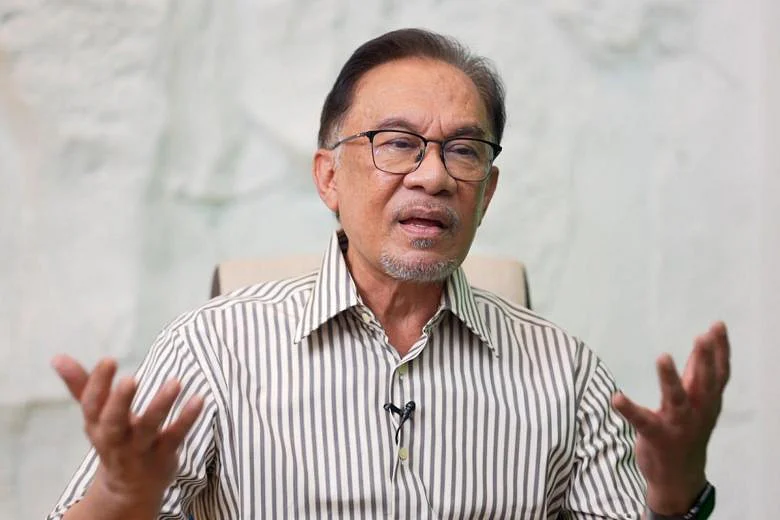
For millions of Malaysian public employees, the new year may bring a measure of financial relief. The first order of business for the 15th Malaysian Parliament, which convenes on December 19, is the approval of emoluments for civil personnel. Prime Minister Datuk Seri Anwar Ibrahim, who took the oath of office as the country’s tenth prime minister at Istana Negara from Yang di-Pertuan Agong Al-Sultan Abdullah Ri’ayatuddin Al-Mustafa Billah Shah, made the announcement during his first press conference. “Of course, in order to relieve the stress on our public employees. We must first clear the emoluments (for civil personnel) on December 19,” he stated. The move is designed to ensure that those who keep the nation’s services running are paid without delay.
A Revised Budget on the Horizon
Beyond the immediate payroll concerns, the session will set the stage for a revised national budget. The original Budget 2023, presented on October 7 by then-Finance Minister Tengku Datuk Seri Zafrul Abdul Aziz, carried a RM372.3 billion allocation. Parliament was dissolved on October 10 to make way for the 15th General Election (GE15), leaving the budget in limbo. Now, under Prime Minister Anwar Ibrahim’s administration, a new or revised budget is expected to be tabled within about a month. “Give us about another month, and we’ll table a new or revised budget,” Anwar said.
The 2023 mini budget’s main objective is to address urgent problems brought on by the rising cost of living and inflation rate. Tengku Zafrul noted that even if the full Budget 2023 is not passed, Parliament can still approve a portion of it under Article 102(a) of the Federal Constitution. This provision allows the administration to summon a Parliamentary meeting before December 31, 2022, to adopt a portion of the budget that has already been presented. “Operations will be in effect in January and February. If there is no partial permission, the upkeep of public services, welfare aid, and subsidy distribution still need to be put into action by the government. As a result, the Federal Constitution gives the government the ability to acquire approval,” he explained.
Balancing Priorities with Limited Time
Professor Yeah Kim Leng, an economics professor at Sunway University, offered insight into the fiscal challenge ahead. He stated that the new administration is expected to revise the Budget for 2023 and the midterm review of the 12th Malaysia Plan while accommodating or balancing those put forth earlier. “It is not advisable to start from scratch,” he said, “given the tight time frame to adopt the budget by the end of the year or at the latest early next year.” The administration does, however, have time to create a fresh budget and present it, Tengku Zafrul noted, pointing to a similar scenario that occurred in 1999. “This year, the same thing might occur,” he added.
As the December 19 session approaches, the focus remains on ensuring that public employees are paid and that essential services—from welfare aid to subsidy distribution—continue without interruption. The coming weeks will reveal how the new government balances the need for swift action with the long-term planning required to address the cost-of-living pressures facing Malaysian households.