Repurposing Waste Heat from Bitcoin Mining for Residential Infrastructure
Bitcoin miners are increasingly looking toward residential and recreational settings to manage the significant thermal output generated by their operations. By integrating mining hardware into household water heaters and space heating systems, engineers are attempting to turn an energy-intensive process into a functional utility for the home.
The core of this transition lies in the physics of the bitcoin protocol. Mining, or the process of proof-of-work, requires computers to solve complex cryptographic tasks to verify transactions and create new blocks on the blockchain. This process consumes substantial amounts of electricity. However, because conventional resistance heating elements and mining chips both convert nearly all of their consumed electricity into heat, the byproduct of this digital labor is thermal energy that can be captured for domestic use.
Heatbit, a Delaware-based company founded around 2020 by Alex Busarov, has moved to commercialize this concept. After introducing space heaters and air purifiers that mine bitcoin, the company recently announced the Bitwater. This device is a replacement heating element designed to fit into the electric water tanks already present in many homes. According to Heatbit, the device is compatible with most 30- to 80-gallon electric tank water heaters in the United States and Canada, including models from manufacturers such as A. O. Smith, Rheem, Bradford White, Whirlpool, and GE.
The Bitwater device operates by using bitcoin-mining chips to generate heat while simultaneously mining cryptocurrency. Users can monitor water temperature, hashrate, and earnings through a companion app, with bitcoin revenue directed to a user-controlled address. The company has set a price of $899 for the first production run, with shipments expected in the first quarter of 2027.
The Economic Reality of Residential Mining
While the conversion of electricity to heat is efficient, the financial viability of residential mining remains a subject of debate. The bottom line for consumers depends on a complex set of variables, including the initial cost of the hardware, household hot-water demand, electricity tariffs, and the volatility of bitcoin-mining conditions. While Heatbit claims that water heating costs remain consistent when swapping a conventional element for a Bitwater unit, the upfront investment is significantly higher than that of standard equipment.
The figure that matters to prospective buyers is the total cost of ownership. Reviews of previous Heatbit products, such as the Maxi Pro space heater, have pointed to the high initial purchase price as a potential barrier to actual savings. For instance, Wired reporter Matthew Korfhage noted that the upfront cost of the Maxi Pro, which was at least $1,500 at the time of his review, was approximately $1,350 more than conventional space heaters. Investors will note that even a standard replacement water-heater element typically costs much less than the $899 entry price for the Bitwater system.
Heatbit has stated that it tested the Bitwater during winter seasons in New York and Florida households, though the company did not provide detailed results from these trials. Because the economics of mining in homes are sensitive to uptime and local electricity rates, the potential for a return on investment varies significantly by location and usage patterns.
Regulatory Challenges and Utility Strains
The integration of mining hardware into residential and commercial infrastructure is occurring against a backdrop of increasing state oversight. In 2024, Arkansas passed Act 174 to create a formal permitting scheme for electricity-consuming digital asset mining operations. State officials have argued that such regulations are necessary to protect local utilities from the strain caused by large-scale mining facilities, which function essentially as high-density data centers.
The legislation became the subject of a legal dispute when the Arkansas Cryptomining Association sued the state. The association challenged a section of the act that prohibits certain foreign parties from owning an interest in mining operations, specifically targeting citizens and businesses from countries subject to federal arms export restrictions, such as China, Iran, North Korea, and Venezuela. The association argued that the state was overstepping its authority by setting foreign policy and discriminating against investors based on national origin.
A lower court blocked the entire act in 2025, finding that the ownership restrictions were likely preempted by federal law. However, the scope of that injunction has faced scrutiny at the appellate level. During a hearing before the Eighth Circuit in October 2026, U.S. Circuit Judge James Loken criticized the lower court’s decision as way overbroad. Loken described the blanket injunction as an affront on the separation of powers, noting that the act also addresses regulations, noise limits, and utility protections that are distinct from the foreign ownership debate.
The state of Arkansas maintains that its interest in regulating property ownership and ensuring the stability of local utilities falls within its traditional police powers. As the legal battle continues, the case highlights the tension between the rapid expansion of decentralized infrastructure and the desire of state governments to manage the load on their electrical grids.
Future of Decentralized Residential Infrastructure
The repurposing of mining heat represents a shift toward more integrated, decentralized energy use. By turning utility closets into nodes on a peer-to-peer network, companies like Heatbit are attempting to normalize the presence of mining hardware in the domestic environment. This approach relies on the bitcoin protocol’s fundamental structure, which allows for a distributed network of volunteers to maintain the blockchain without central oversight.
Engineering challenges remain, particularly regarding noise management and thermal regulation in residential settings. While the conversion of electricity into heat is a straightforward physical process, the long-term reliability of mining chips in a water-heating environment compared to traditional heating elements is a factor that users must consider. Furthermore, the decentralized nature of the network means that mining performance is subject to the consensus of the entire network and the difficulty of the proof-of-work tasks.
As the technology matures, the success of these hybrid units will likely depend on whether they can provide a clear economic advantage over existing home appliances. For now, the integration of mining into residential water heaters serves as an experiment in how digital asset infrastructure might eventually overlap with the basic utilities of modern life. Whether this model achieves widespread adoption will depend on the balance between the cost of the hardware, the efficiency of the heat generation, and the ongoing regulatory environment surrounding digital asset operations.
Sources
- Bitcoin protocol
- Arkansas defends restrictions on foreign-owned crypto mining
- Heatbit Says Your Water Heater Should Be Mining Bitcoin, and Now It Can
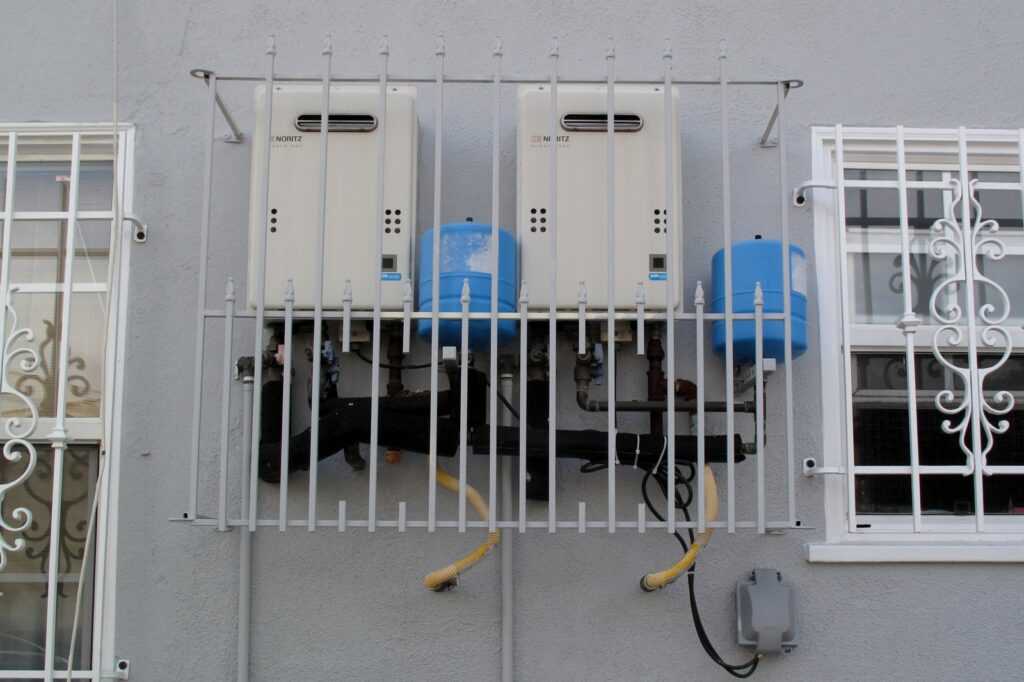
Photo: Downtowngal (CC BY-SA 4.0)