
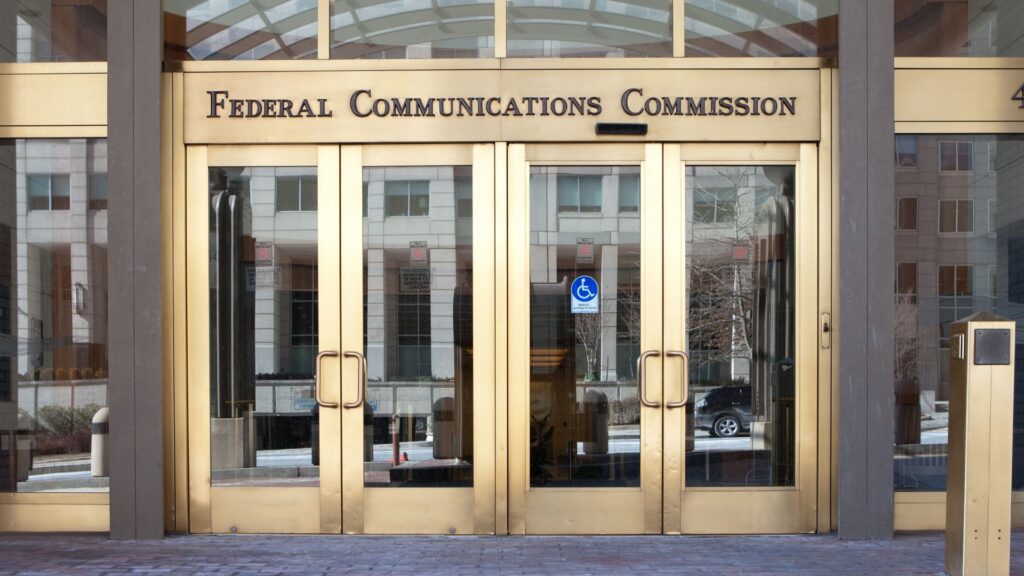
The question consuming the Federal Communications Commission is not whether satellites need environmental oversight, but which ones should be spared from it. For more than a year, the agency has deliberated a proposal to exempt a specific class of spacecraft — those engineered to incinerate entirely during reentry, known in regulatory language as fully demisable satellites — from review under the National Environmental Policy Act. As of early 2025, no final rule has been issued, leaving industry operators, environmental advocates, and investors in a holding pattern.
At the center of this unresolved regulatory question stands Chairwoman Jessica Rosenworcel, who has led the commission since her Senate confirmation in 2021 and served as a commissioner since 2012.
Balancing Innovation and Environmental Stewardship
The proposal itself is straightforward: operators who design satellites to burn up completely upon reentry would no longer need to undergo NEPA review before receiving licensing approval from the FCC. For companies building large constellations, this exemption could meaningfully accelerate deployment timelines.
The rapid growth of satellite constellations, particularly SpaceX’s Starlink system, has turned what might otherwise be a niche administrative question into a high-dollar regulatory calculation. An exemption would streamline approvals for any operator willing to meet the full demisability standard, effectively rewarding design choices that reduce orbital debris risk. Rosenworcel has publicly stressed the need to balance technological advancement with environmental responsibility, framing the decision as a careful line the commission must walk.
The stakes extend beyond the FCC’s docket. Satellite operators are monitoring the outcome to gauge how quickly they can expand their networks.
Environmental groups are watching just as closely for signs of weakened ecological guardrails. The commission’s final order, whenever it arrives, will signal the agency’s posture toward the new space economy. A full exemption would represent a green light for constellation operators seeking faster approvals.
A narrower rule, or no exemption at all, would keep the existing review process intact. In either scenario, the decision lands on Rosenworcel’s desk.
The Commission’s Structure and Regulatory Mandate
The FCC’s role in weighing such a question is rooted in its founding statute. Congress created the commission through the Communications Act of 1934, replacing the Federal Radio Commission and absorbing wire communication oversight from the Interstate Commerce Commission. As an independent agency of the federal government, the FCC holds jurisdiction across the fifty states, the District of Columbia, and U.S. territories. Its regulatory portfolio spans radio, television, wire communications, internet, Wi-Fi, satellite, and cable services.
The agency’s mission, established in the 1934 act and later amended by the Telecommunications Act of 1996, is to make rapid, efficient, nationwide wire and radio services available to all people at reasonable charges without discrimination. Unlike many federal bodies, the FCC is funded entirely through regulatory fees rather than appropriations.
Five commissioners direct the agency, appointed by the president and confirmed by the Senate for staggered five-year terms. Structural safeguards prevent any single party from holding more than three seats, and no commissioner may have a financial interest in any business the FCC regulates. The president designates one commissioner to serve as chairman.
Commissioners may continue serving after their terms expire until replacements are appointed, but not beyond the next session of Congress. This framework matters now because the same agency responsible for closing the digital divide and expanding broadband access — priorities Rosenworcel has pursued alongside the satellite question — is the one shaping the regulatory environment for space-based networks.
The commission’s choices affect how quickly these networks can grow and under what environmental rules, with consequences for both industry competition and ecological oversight. Rosenworcel brings to the role a law degree from New York University School of Law and experience as senior counsel to the Senate Commerce Committee. Her broader agenda includes expanding broadband access to underserved communities, work that continues alongside the pending satellite exemption.
But for the space sector, the unresolved NEPA decision remains the headline number worth watching. The commission’s eventual ruling will define not just the pace of constellation expansion, but the regulatory framework that governs America’s commercial space future.




