
TEHRAN, July 10 — The history of money, stretching back roughly 5,000 years, offers a lens through which to understand the current upheaval in global finance. From cattle and cowrie shells to metal coins and paper currency, each era has reflected the political and economic structures of its time. Today, officials and analysts say, the world stands at another inflection point, as digital currencies—both private and state-backed—reshape how value is stored and exchanged.
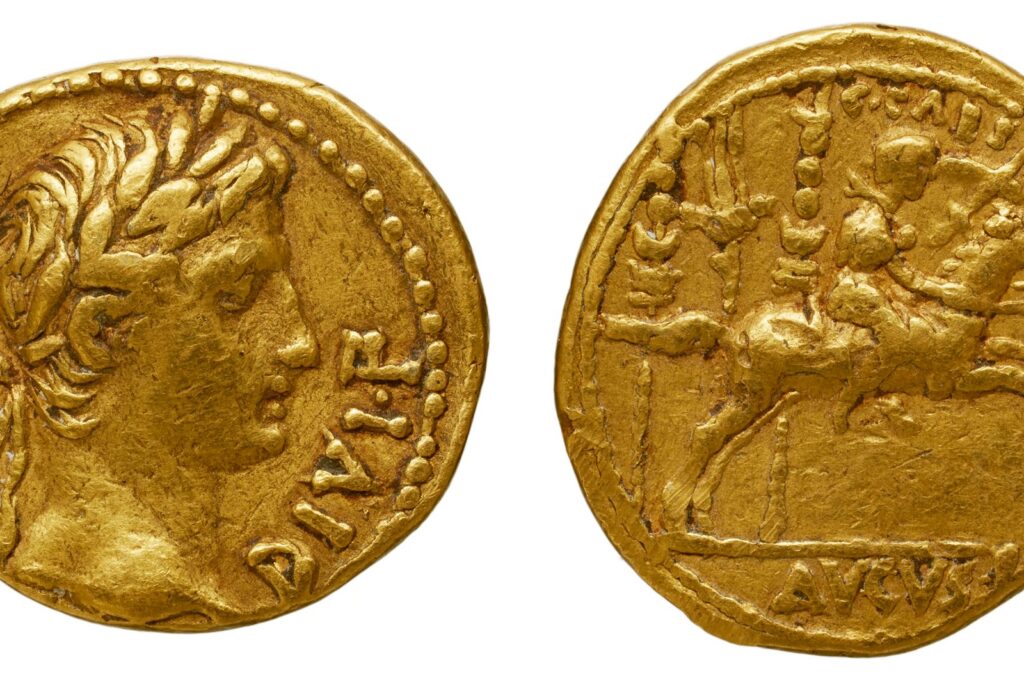
The first known coins were minted in Lydia, in modern-day Turkey, around 600 BCE, made of electrum, a gold-silver alloy. That innovation simplified trade and enabled states to assert control over their economies.
Paper money followed much later, originating in China during the Tang Dynasty, which ruled from 618 to 907 CE, and becoming widespread under the Song Dynasty, from 960 to 1279 CE. These were not merely technical advances; they were instruments of state power and commercial expansion. The gold standard, which linked a currency’s value to a fixed weight of gold, was adopted by the United Kingdom in 1821.
The United States followed with the Gold Standard Act of 1900. That system provided stability but also rigidity, tying governments’ hands during economic crises.
The Bretton Woods system, established in 1944, attempted to combine stability with flexibility by pegging major currencies to the U.S. dollar, which was itself convertible to gold at $35 per ounce. That arrangement held for nearly three decades. President Richard Nixon ended dollar-to-gold convertibility in 1971, according to historical accounts, ushering in the era of fiat money—currency that holds value by government decree rather than by backing in a physical commodity.
That shift gave central banks greater freedom to manage monetary policy, but also removed the anchor that had constrained inflation and fiscal expansion for generations. Today, digital currencies are pushing the boundaries further. Bitcoin, the first decentralized cryptocurrency, was launched in 2009 by an individual or group using the pseudonym Satoshi Nakamoto.
It operates without a central authority, relying on blockchain technology to verify transactions. While Bitcoin and other private cryptocurrencies have attracted both fervent advocates and skeptical regulators, the more consequential development, according to state and international reports, may be the rise of central bank digital currencies, or CBDCs.
As of 2025, over 130 countries, representing 98% of global GDP, were exploring CBDCs, according to the Atlantic Council. That figure indicates a near-consensus among major economies that the future of money will involve state-issued digital currencies. The People’s Bank of China launched its digital yuan, known as the e-CNY, as a pilot program in 2020.
By 2024, transactions using the digital yuan had exceeded $1 trillion, according to reports. That scale has no parallel among other CBDC projects.
The European Central Bank is developing a digital euro, with a potential launch date of 2028, according to officials. The project has moved through research and design phases, with policymakers citing the need to preserve the euro’s role in retail payments amid the rise of private digital alternatives. The U.S. Federal Reserve, meanwhile, has been researching a digital dollar but has not committed to issuing one.
That hesitation reflects ongoing debates over privacy, financial stability, and the proper role of the central bank in direct retail payments. The account indicates that the future of money is likely to involve a hybrid system, combining private cryptocurrencies, stablecoins—digital assets pegged to stable reserves—and government-backed digital currencies. Each form has distinct implications.
Private cryptocurrencies offer pseudonymity and resistance to censorship, but also volatility and potential for illicit use. Stablecoins aim to combine the efficiency of digital assets with the stability of traditional currencies, but their reserves require oversight.
Government-backed digital currencies could enhance financial inclusion and monetary policy transmission, but raise questions about surveillance and the erosion of cash anonymity. For the Middle East and regions with large unbanked populations, these developments carry particular weight. Central banks in several countries are studying CBDCs as tools to expand access to financial services without relying on costly physical banking infrastructure.
Yet the same technology that could bring millions into the formal economy could also enable unprecedented state monitoring of transactions. What to watch next: The timeline for the digital euro and any shift in U.S. policy under the current administration.
The Federal Reserve’s research continues, but without a formal commitment, the dollar’s dominance in digital payments remains an open question. Meanwhile, China’s e-CNY, already operational on a massive scale, offers a real-world test of how a major economy manages a fully digital currency. The next few years, officials say, will determine whether the hybrid model takes hold—or whether one form of digital money comes to dominate the others.




