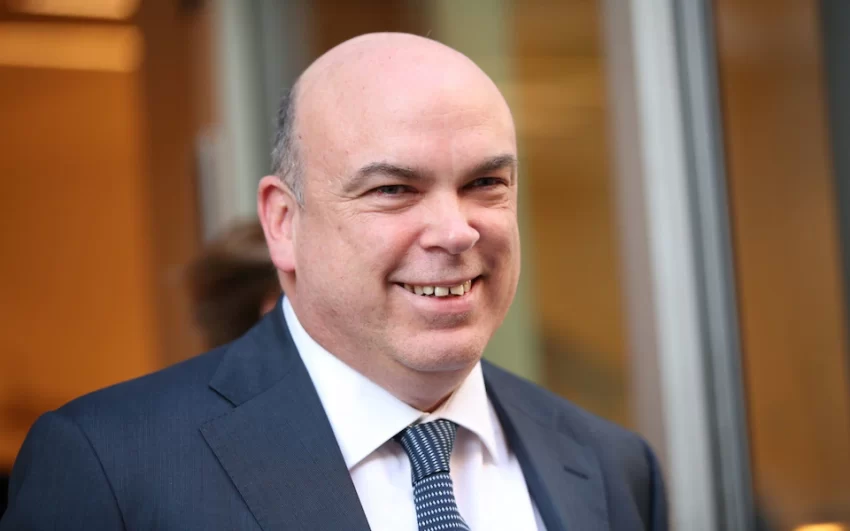
Mike Lynch, the British entrepreneur who built Autonomy into one of the UK’s flagship software groups, was arrested in London on 5 February 2020 after the United States requested his extradition to face 14 counts of conspiracy and wire fraud. Westminster Magistrates’ Court released him on £10 million bail the same day while he fights both the extradition request and a parallel £3.8 billion civil claim brought in the High Court by Hewlett-Packard. The US Department of Justice unsealed the indictment on 29 November 2019 and formally submitted the extradition papers on 1 December, arguing that Lynch masterminded a scheme to inflate Autonomy’s books between 2009 and 2011, causing HP to overpay by roughly £5 billion when it bought the company for £8.4 billion in October 2011.
The HP write-down that started everything
HP announced the Autonomy takeover in August 2011, touting it as the biggest software deal in European history. Barely a year later, on 20 November 2012, the Silicon Valley giant told investors it was writing off £6.7 billion of the purchase price and accused “serious accounting improprieties” at the British firm. The shock reversal wiped out most of HP’s market value in a single day and triggered a boardroom purge that cost chief executive Léo Apotheker his job. Court filings released in London show HP’s lawyers claim Autonomy executives used a string of “back-to-back” resellers, round-trip deals and hardware swaps to fabricate revenue growth of 20 per cent a year when the true figure was closer to 2 per cent. HP’s general counsel John Schultz told reporters the fraud “was not a mistake; it was a deliberate, multiyear scheme designed to deceive public shareholders and private acquirers alike”.
US indictment paints Lynch as ringleader
The 14-count indictment filed in the Northern District of California names Lynch and Autonomy’s former vice-president of finance, Stephen Chamberlain, as co-conspirators. Prosecutors say the pair pressured subordinates to record sales of software licences months before contracts were signed, hid loss-making hardware sales inside “pure software” line items and parked tens of millions of pounds of unwanted stock with friendly resellers who were secretly promised they would never have to pay. If convicted on all counts Lynch faces a maximum sentence of 25 years in federal prison. US Attorney David Anderson said at a press briefing that “the department will not hesitate to pursue executives who cook the books, no matter where they sit geographically”. Lynch’s legal team replied that the indictment “ignores the fundamental principle that British companies are governed by British law and should be tried in British courts”.
Civil trial already under way in London
While the extradition fight looms, Justice Robert Hildyard is hearing HP’s civil claim in the Rolls Building without a jury. The trial, which began on 9 March 2019, is expected to run until late 2020 and has already produced 1.3 million documents. HP’s barrister Laurence Rabinowitz QC told the court that Lynch and Autonomy’s former chief financial officer, Sushovan Hussain, “created a culture of fear in which finance staff were ordered to hit impossible quarterly numbers or resign”. Hussain was separately convicted in San Francisco in April 2019 and sentenced to five years in prison; he is appealing. Lynch has taken the witness box for nine days of gruelling cross-examination, insisting that HP “destroyed Autonomy through incompetence” and that any accounting differences were “judgment calls” approved by auditors Deloitte. He denies every allegation.
Westminster court grants record bail
When Lynch surrendered to police on the US warrant he was wearing an electronic tag within hours. Chief Magistrate Emma Arbuthnot set bail at £10 million secured against two London properties and imposed a 10 pm-to-6 am curfew. The sum is believed to be the largest ever granted in a UK extradition case. Clifford Chance partner Reid Weingarten, leading Lynch’s defence, said outside court: “Dr Lynch is a British citizen who ran a British company listed on the London Stock Exchange under UK accounting rules. He has cooperated with every investigation and will contest these charges vigorously.” The Serious Fraud Office opened its own probe in 2013 but closed it without charges, citing “insufficient evidence”, a decision now being reviewed after pressure from MPs on the Treasury Select Committee.
What happens next
The extradition hearing is listed for 24-25 June 2020. Under the UK-US treaty the court must decide whether the “dual criminality” test is met and whether Lynch’s human rights would be breached by American prison conditions. Even if the court blocks extradition, Home Secretary Priti Patel can overrule the decision. Meanwhile the civil trial judgment is expected early in 2021; HP is seeking damages of up to US $5 billion plus interest. Analysts say a victory for HP could embolden other buyers burned by tech deals gone sour, while a Lynch win would cast serious doubt on HP’s due-diligence standards. Whatever the outcome, the saga has already shredded reputations on both sides of the Atlantic and left Autonomy’s once-vaunted code buried inside a company that no longer wants it.
The arrest marks the sharpest escalation yet in a legal war that has dragged on for eight years. Lynch, once hailed as Britain’s answer to Bill Gates, now risks spending the rest of his life in a US penitentiary while HP shareholders continue to count the cost of a deal that vaporised billions.