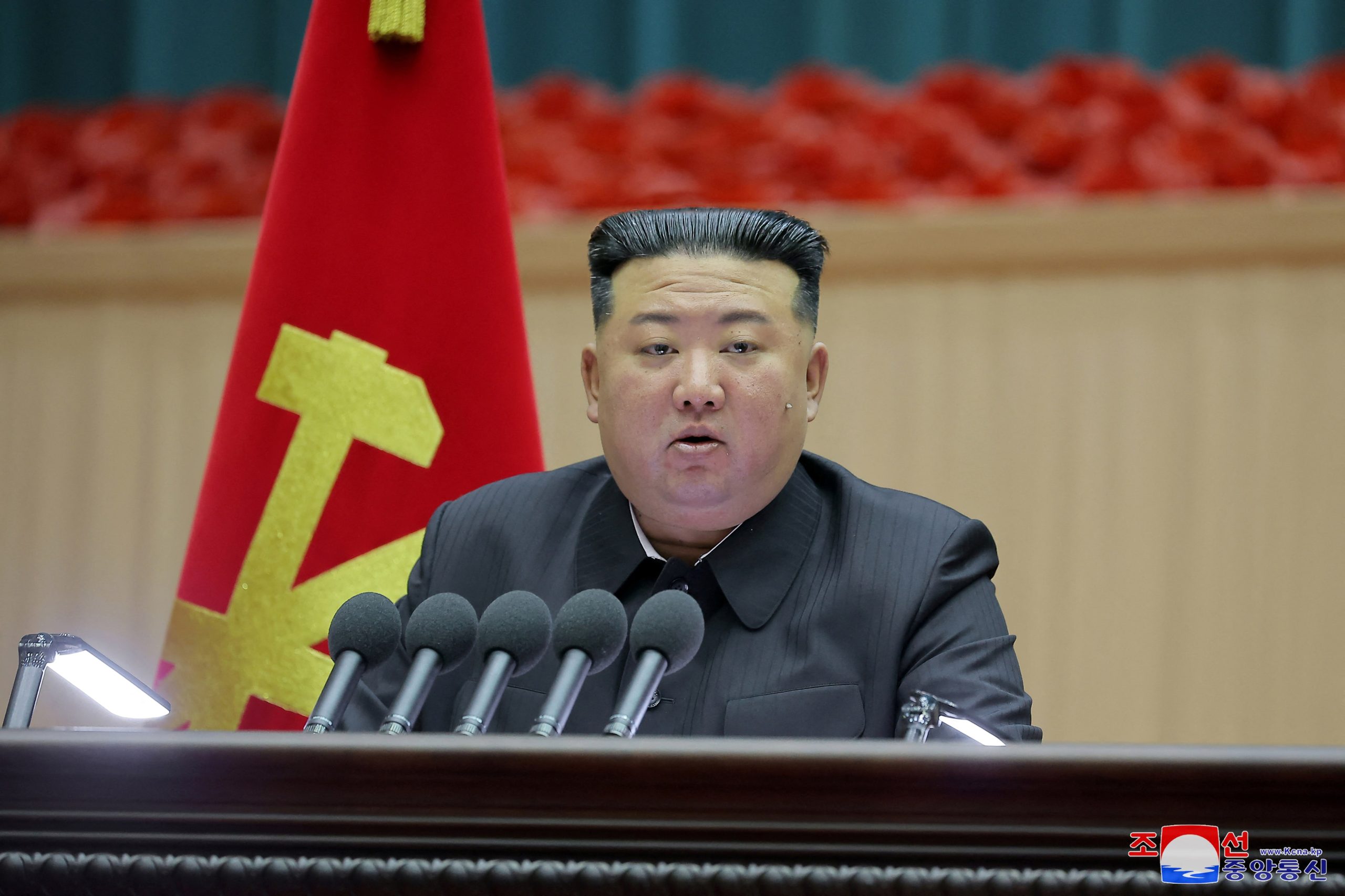
On March 27, 2022, the United States called for tougher UN sanctions after North Korea test-fired its biggest intercontinental ballistic missile to date, with Kim Jong Un vowing to expand his country’s nuclear war deterrent and prepare for a long-standing confrontation with the United States, in Seoul, South Korea, because the launch extended a barrage of weapons demonstrations this year aimed at forcing the United States to accept the idea of North Korea as a nuclear power and remove crippling sanctions against its broken economy.
background on the launch
The launch on Thursday was North Korea’s 12th round of launches this year and the most provocative since President Joe Biden took office. According to the North’s official Korean Central News Agency, the Hwasong-17 was fired at a high angle to avoid the territorial waters of neighbors, reached a maximum altitude of 6,248 kilometers and traveled 1,090 kilometers during a 67-minute flight before landing in waters between North Korea and Japan. The South Korean and Japanese militaries had announced similar flight details, which analysts say suggested that the missile could reach targets 15,000 kilometers away when fired on a normal trajectory with a warhead weighing less than a ton, placing the entire US mainland within striking distance. Believed to be about 25 meters long, the Hwasong-17 is the North’s longest-range weapon and by some estimates, the world’s biggest road-mobile ballistic missile system.
us response to the launch
At a UN Security Council meeting, US Ambassador Linda Thomas-Greenfield said the US would propose a resolution to update and strengthen Security Council sanctions. She declined to specify what those new measures might be. “It is clear that remaining silent, in the hope that the DPRK would similarly show restraint, is a failed strategy,” she said. The council originally imposed sanctions after the North’s first nuclear test explosion in 2006 and tightened them over the years. But last fall, veto-wielding China and Russia called for lifting various sanctions against their neighbor. The US also imposed new sanctions of its own against five entities and individuals in Russia and North Korea over transferring sensitive items to the North’s missile program, State Department spokesperson Ned Price said.
international reaction to the launch
Russian Deputy Ambassador Anna Evstigneeva said that further sanctions would only harm North Korea’s people. While Chinese Ambassador Zhang Jun urged the council to consider how to accommodate the DPRK’s justified security concerns. He suggested that the US didn’t do enough to respond to the North’s 2018 self-imposed pause on long-range missiles and nuclear tests, and needed to show its goodwill, work harder to stabilize the situation, and resume dialogue. North Korea didn’t speak at the council meeting. A message seeking comment was sent to its UN mission. Seoul’s Unification Ministry, which handles inter-Korean affairs, criticized the North for breaking its self-imposed moratorium on ICBM tests.
questions about the launch
Some experts questioned whether the North was hiding key details about the launch. Colin Zwirko, a senior analyst at the North Korea-focused website NK Pro, said commercial satellite images indicate that North Korean state TV footage of the launch was likely shot on a different date. He said this raises the possibility that North Korea botched a Hwasong-17 test on March 16, when South Korea’s military said it detected a missile exploding shortly after liftoff at the airport, and was trying to pass off footage from that failure with whatever missile it launched on Thursday. South Korea’s Yonhap news agency quoted unnamed military officials who wondered whether North Korea actually launched the smaller Hwasong-15 with certain modifications to increase its range. KCNA claimed the launch met its technical objectives and proved the ICBM could be operated quickly during wartime conditions. Kim Jong Un was paraphrased by KCNA as saying that the new weapon would make the whole world clearly aware of the North’s bolstered nuclear forces, and he vowed for his military to acquire formidable military and technical capabilities, unperturbed by any military threat and blackmail, and keep themselves fully ready for a long-standing confrontation with the US imperialists.
The situation on the Korean peninsula remains tense, with South Korea’s military responding to the launch with live-fire drills of its own missiles launched from land, a fighter jet, and a ship, show a revival of tensions as diplomacy remains frozen. The US and its allies will likely continue to pressure North Korea to abandon its nuclear program, while North Korea will likely continue to push for recognition as a nuclear power and an end to crippling sanctions. As the situation continues to unfold, it remains to be seen what the future holds for the region, but one thing is certain, the US will continue to play a important role in shaping the outcome. President Joe Biden has made it clear that the US will not tolerate North Korea’s aggressive behavior and will work with its allies to ensure the region remains stable and secure. The US has also made it clear that it is committed to defending its allies, including South Korea and Japan, and will take all necessary measures to protect them from any potential threats. The international community will be watching the situation closely, and it is likely that the UN will continue to play a important role in trying to find a peaceful resolution to the crisis.