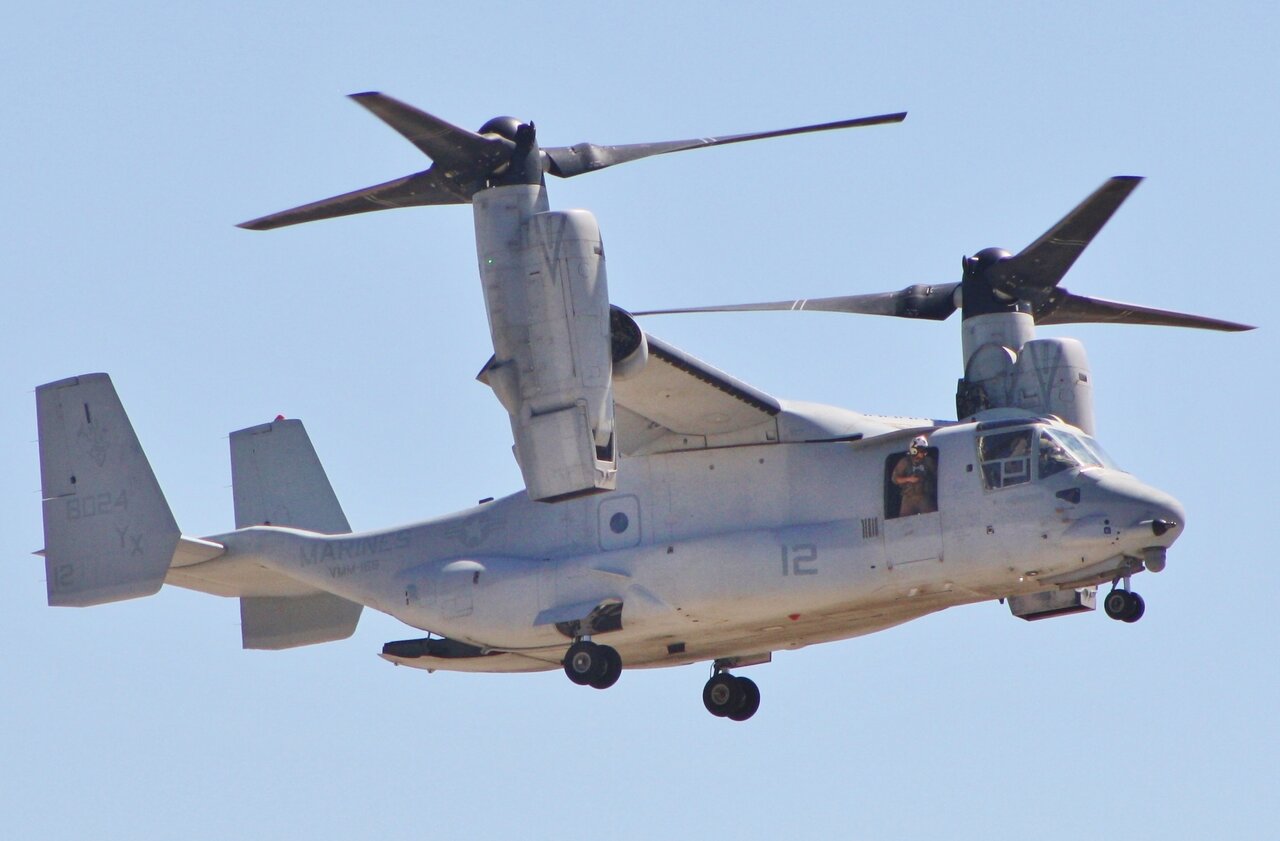
A United States Air Force V-22 Osprey crashed off the coast of Japan’s Kagoshima Prefecture on Wednesday, carrying six crew members, according to the Japan Coast Guard. A search and rescue operation is currently underway for the personnel aboard the tiltrotor aircraft.
The Japan Coast Guard confirmed the crash and the launch of recovery efforts in the waters near the southern Japanese prefecture. Details on the cause of the incident or the condition of the crew have not yet been released. The Kagoshima Prefecture is located on the southern tip of Kyushu, one of Japan’s main islands, and the area is frequently used for joint and unilateral military training exercises.
The V-22 Osprey is a unique aircraft that combines the vertical takeoff and landing capabilities of a helicopter with the speed and range of a fixed-wing airplane. It is operated by multiple branches of the U.S. military, including the Air Force, which traces its origins to August 1, 1907, as a part of the U.S. Army Signal Corps. The Air Force was formally established as its own service branch with the National Security Act of 1947, making it the second youngest branch of the U.S. Armed Forces. Its core missions include air supremacy and global integrated intelligence, surveillance, and reconnaissance.
This crash is the latest incident involving the Osprey platform, which has a mixed safety record. Previous accidents have been attributed to mechanical failures, pilot error, and unique aerodynamic challenges posed by the aircraft’s design. The U.S. military has periodically grounded its Osprey fleets for inspections and procedural reviews following fatal crashes. In 2022, a Marine Corps MV-22 Osprey crashed during a training exercise in Norway, killing four service members.
Japan is a key strategic ally of the United States in the Indo-Pacific region, hosting tens of thousands of U.S. military personnel across multiple bases. The crash near Kagoshima is likely to prompt renewed scrutiny of the Osprey’s operational safety, particularly in the context of the heavy flight tempo maintained by U.S. forces in the region. Local residents in areas near U.S. bases have previously expressed concerns about noise and the risk of accidents involving military aircraft.
Search teams are scouring the waters off Kagoshima as the window for a successful rescue narrows. The Japan Coast Guard is coordinating with U.S. military assets to locate the six crew members. The incident underscores the inherent risks of military aviation, even as the Pentagon continues to rely on the Osprey for its unique ability to rapidly deploy troops and equipment in challenging environments. The coming days will bring more clarity on what caused the aircraft to go down and whether any of the crew can be recovered safely.