
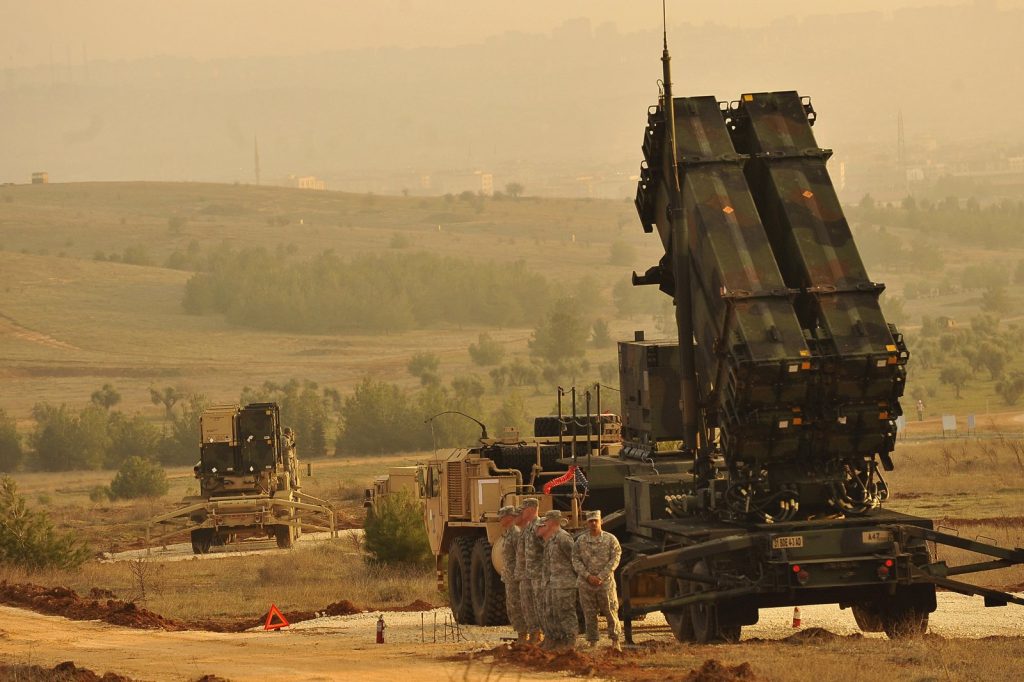
KYIV, July 8 — The Ukrainian military has been operating the MIM-104 Patriot air-defense system, with the system’s combat record now including the first-ever interception of a hypersonic weapon in real-world conditions. According to the sequence of events confirmed by official announcements, Ukraine first requested the Patriot systems in late 2022, after Russia began deploying Iranian-made Shahed drones and Kh-55 cruise missiles against Ukrainian infrastructure. The United States announced the transfer of one Patriot battery on December 21, 2022, as part of a $1.85 billion security assistance package.
Ukrainian crews completed training at Fort Sill, Oklahoma, in March 2023, and the battery arrived in Ukraine in April of that year. Germany and the Netherlands each contributed additional Patriot batteries during 2023, expanding Ukraine’s coverage.
Combat Debut Against Hypersonic Threat
In May 2023, a Patriot battery was used to intercept a Russian Kinzhal missile over Kyiv. Officials confirmed this marked the first time the system had been used against a hypersonic weapon in combat anywhere in the world. By early 2024, Ukraine had at least three Patriot batteries operational.
The systems have been used to defend major cities and critical infrastructure from Russian missile and drone attacks, though the specific number of intercepts has not been disclosed by Ukrainian or Western officials.
Supply Constraints and Licensing
The license approval on June 7, 2024, represents a significant step toward ensuring long-term supply of Patriot interceptors for Ukraine. Current stockpiles in Western nations are limited. The record shows the United States has approximately 1,500 PAC-3 interceptors in its inventory, and production capacity is around 500 per year.
The German and Dutch contributions have helped maintain a multi-layered air-defense network, but the overall number of available batteries remains modest relative to the size of Ukraine’s territory and the intensity of Russian aerial attacks. The Patriot system’s performance in Ukraine has reshaped the debate about hypersonic weapons.
Russian officials had repeatedly claimed that the Kinzhal missile could defeat any existing air-defense system. The May 2023 interception over Kyiv disproved that assertion. For Ukraine, the continued supply of Patriot systems and interceptors is tied to broader Western political decisions about the level of military support.
The June 2024 license approval addresses one bottleneck, but production lead times mean that interceptors ordered today would not reach Ukraine for many months. The United States has approximately 1,500 interceptors in its inventory, a figure that must cover both domestic requirements and commitments to allied nations.
Ukraine’s allies continue to explore options for additional Patriot batteries from other nations’ inventories, though the system’s complexity and the training required for crews limit how quickly new units can be deployed.




