
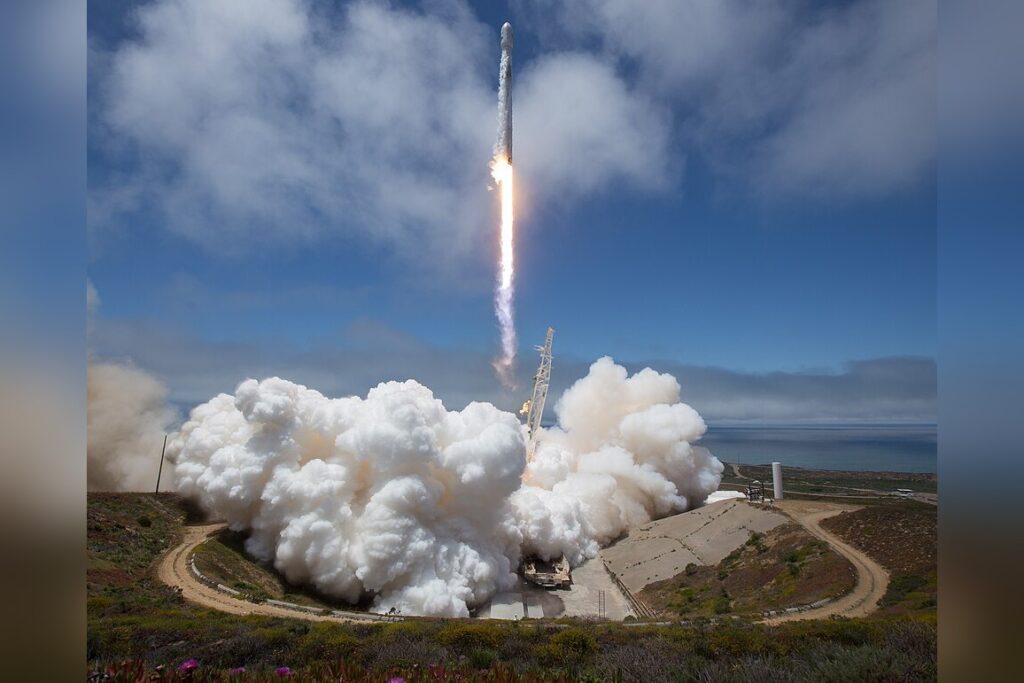
WASHINGTON, July 16 — The quiet but fierce battle for control of the skies above us is intensifying, with tech giants SpaceX and Amazon locked in a multi-year regulatory tug-of-war at the Federal Communications Commission. At stake is nothing less than the future of global internet access, a prize that could connect millions of families across Asia and the world who still lack reliable online service. Since 2019, both companies have filed multiple complaints with the FCC over spectrum allocation and orbital slot assignments.
These are not minor squabbles. They are fundamental disputes over who gets to park their satellites in the most valuable real estate in low Earth orbit, and who gets to use the radio frequencies that make satellite internet work.
SpaceX, which operates the Starlink constellation, and Amazon, developing its Project Kuiper system, have each been granted licenses by the FCC. SpaceX received its license in 2018, while Amazon secured its own in 2020. Yet the regulatory peace has been anything but settled.
In 2021, SpaceX formally asked the FCC to reject Amazon’s proposed modifications to its Kuiper constellation. The company argued that the changes would cause harmful interference with Starlink satellites.
Amazon fired back, countering that SpaceX’s own plans violated FCC rules on orbital debris — a growing concern as thousands of new satellites are launched each year. The International Telecommunication Union, a United Nations agency, also plays a coordinating role in this crowded arena. Both companies have filed for priority rights with the ITU, seeking to secure their place in the spectrum order before the other.
What this means for communities in the Asia-Pacific region is significant. Satellite internet promises to bridge the digital divide in remote islands, mountainous regions, and rural areas where fiber optic cables are too expensive or impractical to lay. For families in the Philippines, Indonesia, or Bangladesh, the outcome of these FCC battles could determine whether they get fast, affordable internet — or whether they are left waiting longer.
The stakes are rising because low Earth orbit is becoming increasingly crowded. Industry projections indicate that by 2030, more than 8,000 satellites could be orbiting the planet, many of them providing broadband services.
That is a dramatic increase from the few hundred active satellites that circled the Earth just a decade ago. Both companies continue to lobby the FCC for favorable rules, each seeking an edge in what is becoming a winner-takes-most market. The regulatory decisions made in Washington will shape the competitive landscape for years to come, affecting not just corporate profits but the daily lives of people who depend on connectivity for education, healthcare, and economic opportunity.
Closer to home, the Philippines has long struggled with internet speeds and access that lag behind many of its neighbors. Satellite broadband offers a potential shortcut to better connectivity, bypassing the need for expensive terrestrial infrastructure.
But that promise depends on who ultimately wins the regulatory game in the United States and at the ITU. The FCC has not signaled any immediate plans to revisit its earlier decisions, but the complaints from both companies remain active. The agency’s next moves will be watched closely by telecommunications analysts, investors, and governments across the Asia-Pacific region.
For now, the regulatory battle continues, with no clear end in sight. What is certain is that as more satellites fill the sky, the competition for orbital slots and radio frequencies will only grow more intense. The decisions made in the coming months will determine not just which company leads the market, but which communities around the world get connected first.
Sources
{“@context”: “https://schema.org”, “@type”: “NewsArticle”, “headline”: “SpaceX, Amazon Clash with FCC Over Spectrum and Orbital Slots”, “description”: “WASHINGTON, July 16 — The quiet but fierce battle for control of the skies above us is intensifying, with tech giants SpaceX and Amazon locked…”, “datePublished”: “2026-07-16T09:30:00+00:00”, “author”: {“@type”: “Person”, “name”: “Merry Gel Sigui”}, “publisher”: {“@type”: “Organization”, “name”: “InfoPulse Today”, “url”: “https://newsfeed.2bme.xyz/”}, “citation”: [{“@type”: “CreativeWork”, “url”: “https://en.wikipedia.org/wiki/Federal_Communications_Commission”}]}




