
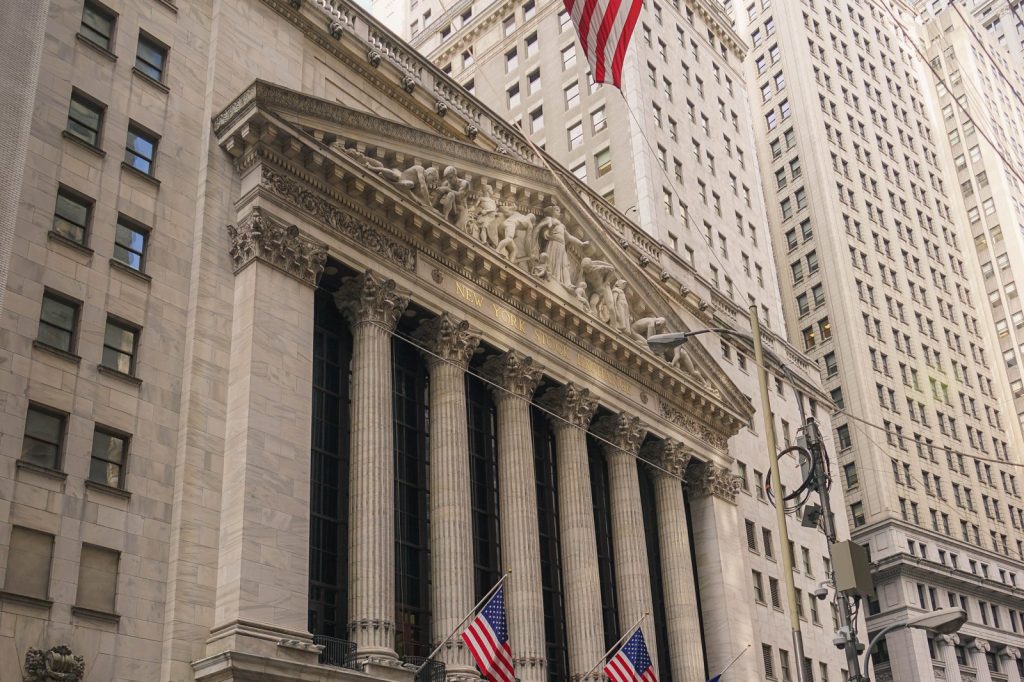
NEW YORK, July 7 — Carlos Domingo is not a name most people know. But the company he runs just pulled off something Wall Street has been talking about for years: taking a piece of itself, breaking it into digital tokens, and putting those tokens on public blockchains for anyone to trade. Domingo is the chief executive of Securitize, the firm that went public on the New York Stock Exchange on July 2 under the ticker symbol SECZ.
That listing alone was a milestone. But the move that has the fintech world paying attention came alongside it: Securitize tokenized $295 million of its own stock on the Solana and Avalanche networks.
The company did not just talk about the promise of blockchain-based securities. It made itself the test case. For Domingo, this is the culmination of a strategy he has been building for years.
Under his leadership, Securitize raised approximately $400 million through a merger with a special purpose acquisition company, or SPAC, and hit a valuation of $1.25 billion. The company now oversees tokenized assets under management totaling $3.4 billion, spread across nearly 650 funds.
Those are the numbers that tell the institutional story. The human story, for Domingo, is about access. He has spent much of his career thinking about how technology can reshape finance — first as an executive at Telefónica, then as a founder of several tech startups, and now as a recognized voice in the blockchain space.
His core argument, repeated in interviews and industry talks, is that tokenization can open up private markets to a wider range of investors. Real-world assets — shares in a company, stakes in a fund, pieces of real estate — can be turned into digital tokens that trade more freely, more cheaply, and more transparently than traditional securities. Securitize’s own quarterly numbers offer a glimpse of the momentum.
In the first quarter of 2026, the company reported revenue of $19.5 million, a 39 percent increase over the same period a year earlier. That kind of growth, in a sector still finding its footing, has made Domingo a figure to watch.
His approach is careful. Domingo has been a vocal advocate for regulatory-compliant tokenization, arguing that the future of decentralized finance, or DeFi, depends on building bridges to the existing financial system rather than trying to replace it overnight. Securitize operates under U.S. securities laws, and its tokenized stock is structured to meet those requirements.
For Domingo, compliance is not a constraint. It is the foundation.
The company’s decision to tokenize its own stock on Solana and Avalanche — two blockchains known for speed and relatively low transaction costs — was a deliberate signal. It says to the market: we believe in this technology enough to put our own shares on it. And it gives the company a direct stake in proving that the model works.
What this means for the broader industry is still unfolding. Tokenization of real-world assets has been called the next big thing in crypto for years, but adoption has been uneven. Securitize’s move, combined with its public listing, gives the concept a blue-chip credibility it has often lacked.
Other companies, particularly in the private-fund space, are watching closely. Domingo’s background gives him a perspective that blends the old and the new.
At Telefónica, he worked inside one of the world’s largest telecommunications companies. As a startup founder, he learned the rhythms of building from scratch. That mix — institutional experience and entrepreneurial instinct — has shaped how he runs Securitize.
He is not a maximalist. He does not argue that blockchain will replace every financial intermediary.
Instead, he talks about efficiency, about reducing friction, about making markets work better for the people who use them. For the investors in Securitize’s funds — the nearly 650 funds the company now services — the promise is straightforward: faster settlement, lower costs, and the ability to trade assets that were once locked up for months or years. For Domingo, that is the point.
The technology is the means. The outcome is a financial system that works for more people. The road ahead is not without challenges.
Regulatory uncertainty remains a factor, even with a compliance-first approach. The broader crypto market is volatile.
And tokenization, for all its promise, still has to prove itself at scale. But Securitize’s first-quarter revenue growth, its public listing, and its willingness to tokenize its own stock all suggest that Domingo’s bet is gaining traction. As of this week, the ticker SECZ trades on the New York Stock Exchange.
And somewhere on the Solana and Avalanche blockchains, $295 million worth of Securitize shares circulate in digital form. That is the story Carlos Domingo has been building toward.
It is still early, but the foundation is laid.




