
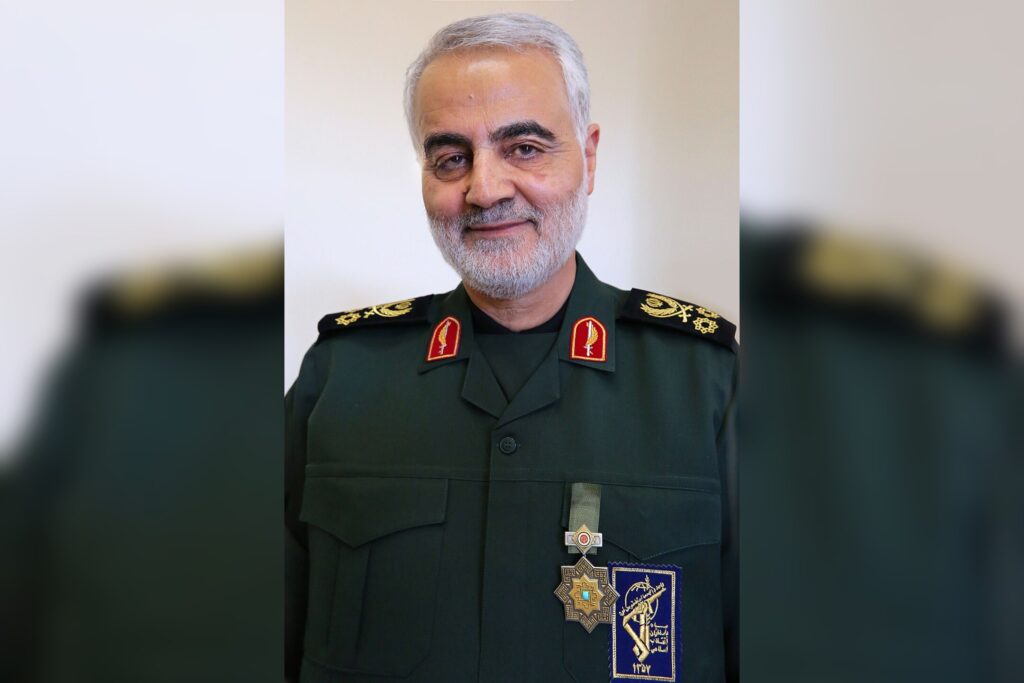
Nearly four and a half years after a U.S. drone strike killed Iranian Major General Qasem Soleimani, the consequences of that single act of targeted killing continue to reverberate. In July 2024, U.S. authorities announced they had disrupted an alleged Iranian plot to assassinate former President Donald Trump, the American leader who ordered the strike.
The plot, U.S. officials said, was in its early stages and was thwarted by intelligence and law enforcement. It represented the most direct retaliation yet for the January 3, 2020, strike near Baghdad International Airport, and it underscored a simple geopolitical reality: Soleimani’s death did not dismantle the network he spent more than two decades building. The man is gone, but the machinery he ran is still running.
The Rise of a Shadow Commander
Qasem Soleimani was born on March 11, 1957, in the Iranian city of Qom. He joined the Islamic Revolutionary Guard Corps in 1979, immediately after the Iranian Revolution, and rose through the ranks quickly despite having received minimal early military training. By 1998, Soleimani had taken command of the Quds Force, the IRGC’s extraterritorial arm responsible for clandestine operations beyond Iran’s borders.
He would lead that unit until his death, and under his direction it became the primary vehicle for Iranian influence across the Middle East. In his later years, Soleimani grew into a close advisor to Iran’s supreme leader, and some analysts regarded him as the second most powerful person in the country.
The United States designated him a terrorist in 2005, a label that reflected his direct role in attacks on American forces and his logistical support for militant groups. He was not a shadowy or anonymous figure; he was a known, named adversary. The United Nations and the European Union also sanctioned him for orchestrating attacks against foreign targets.
Soleimani used asymmetric warfare to expand Iranian influence. He oversaw the arming of Hezbollah in Lebanon, strengthening the militia that has long been a primary antagonist to Israel.
In Syria, he was critical to keeping the Assad government in power during that country’s brutal civil war. He also secured Russian intervention in the Syrian conflict, a move that reshaped the battlefield there. Former intelligence officials in Israel described his strategies as a direct threat to their security.
For Western powers, Soleimani was a primary adversary, and his activities drew international condemnation.
The Strike and the Cycle of Vengeance
The drone strike that killed Soleimani on January 3, 2020, was ordered by then-President Donald Trump. It was a dramatic escalation in the long-running shadow war between the United States and Iran. Tehran immediately condemned the action, and Iranian leaders vowed revenge. That promise was not empty.
By July 2024, the alleged plot to assassinate Trump emerged as a direct consequence of the Soleimani killing. U.S. authorities said the plot was in its early stages and had been disrupted, but it served as a reminder that the Soleimani killing had created a cycle of vengeance that has not cooled.
For investors tracking geopolitical risk, the implications are clear: Iran’s proxy network remains operational, and the risk of retaliatory attacks against American targets remains elevated.
Legacy of an Enduring Network
Soleimani’s death made him a martyr in the eyes of Iran’s leadership, and Iranian state media now portray him as a national hero. But the structure he built, the Quds Force, continues to operate under new commanders.
The figure that matters for regional stability is not his date of birth or his date of death, but the year 1998. That was when he took command and began a campaign that reshaped the Middle East. By the numbers, Soleimani’s career was a study in state-sponsored militancy: He armed Hezbollah, propped up the Syrian government, and built a network that outlived him.
The alleged assassination plot against Trump, reported in July 2024, was the most direct retaliation yet, but it is only the latest chapter in a story that began decades ago. The legacy of Soleimani’s leadership remains a source of instability, and the tension between Tehran and Washington shows no sign of abating.
For anyone tracking Middle East security, that is the number to watch.




