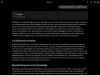
A newly declassified U.S. military report confirms a U.S. operator tracked a diamond-shaped object over the Mediterranean Sea in January 2024—moving at an estimated 499 miles per hour. The document, released May 8, 2026, under the Department of War’s PURSUE archive, is now forcing fresh scrutiny on how the Pentagon handles unidentified aerial sightings near allied territory.
The mission report, originally classified SECRET and shared only with the Five Eyes intelligence alliance, describes a two-minute event. The object was visible solely through a Short-Wave Infrared sensor. The operator noted a non-maneuvering probe at the bottom. The Department of War’s summary cautions that all descriptive language reflects the reporter’s subjective interpretation at the time. That caveat does little to quiet questions about what exactly transited Greek airspace in early 2024.
Greece sits at a strategic crossroads. The Mediterranean corridor sees constant NATO patrols, Russian naval movements, and migrant traffic. A UAP clocking 434 knots—well above typical commercial drone speeds—raises immediate operational concerns. Was it foreign reconnaissance? A sensor glitch? Something else entirely? The report does not say. The redactions are heavy.
The document’s path to public view is itself notable. Declassified on October 24, 2025, by Major General Richard A. Harrison, USCENTCOM Chief of Staff, it landed in the PURSUE archive—a repository the Department of War established to centralize UAP records. That archive is still new. Each release tests its credibility. Skeptics watch for pattern: vague descriptions, limited data, heavy redactions. This report fits that mold.
For the All-domain Anomaly Resolution Office, or AARO, the report is another data point. AARO was created to standardize UAP reporting across the military. But it relies on exactly these Mission Report forms—MISREPs—filed by individual operators. The quality of the input determines the quality of the output. A two-minute sensor-only sighting, with no corroborating radar or second observer, is thin gruel for analysts.
The speed estimate matters. Four hundred thirty-four knots is fast. It is not extraordinary for military aircraft, but it is well beyond hobbyist drones and most commercial traffic. If the object held that speed without conventional propulsion signatures—the report does not specify—it would challenge existing threat models. The Mediterranean is a crowded battlespace. A fast, silent, diamond-shaped object that only shows up on SWIR is a problem for air defense planners.
Allies will take note. Greece is a NATO member. If U.S. operators are tracking unexplained objects over allied waters, the alliance has a stake in the answer. The Five Eyes classification on the original document suggests intelligence partners were already read in. But public release changes the calculus. Citizens in allied nations will ask what their own militaries know. Governments will face pressure to disclose similar sightings.
The Department of War’s own summary undercuts certainty. It warns against interpreting the report as conclusive evidence of object features or performance. That is standard legalese. But it also invites a simple question: if the report is not evidence, why release it? The PURSUE archive exists to provide transparency. Yet each document comes with disclaimers that erode its evidentiary value. The tension is built in.
Watch for follow-on reports. The January 2024 sighting is one entry in a growing file. AARO is scheduled to deliver further updates to Congress. Lawmakers have pressed for more raw data, less summary. This MISREP gives them exactly that—a raw, redacted, subjective account. Whether it advances understanding or simply adds to the pile depends on what comes next. The Mediterranean is not a quiet place. Something was there in January 2024. No one has yet said what.