Behind the Sighting: What a 2023 Mission Report Reveals About Military UAP Protocols
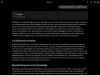
The document is dated March 31, 2023. The location is Iraqi airspace. The witness is a U.S. military operator flying an F-16CM. The objects were “several bright objects maneuvering quickly” from west to east northeast. The track lasted roughly 20 seconds on an onboard targeting pod. Then the objects dimmed and vanished from the sensor.
That is the raw data from a Mission Report, or MISREP, released by the Department of War on May 8, 2026, under the PURSUE archive. But the report itself tells a deeper story about how the U.S. military handles the unknown. It is not just a sighting. It is a procedural artifact.
The aircraft was part of a 2-ship formation from Prince Sultan Air Base. Their mission was Defensive Counter Air under Operation Inherent Resolve. The area of operation was labeled ESSA. The F-16CM carried an ALR-56M Radar Warning Receiver and an ALQ-184 Electronic Counter Measures system. These are standard tools for a combat patrol. They are not designed to hunt anomalies. Yet the operator still managed to lock onto the UAP with the targeting pod for those 20 seconds.
Twenty seconds is a long time in aerial combat. It is enough to get a solid track, enough to rule out a bird or a weather balloon. The objects were moving fast, changing direction. Then they went dark. That pattern — rapid maneuver followed by sensor loss — appears repeatedly in military UAP reports. This document adds another data point.
The release of this report under the PURSUE archive signals a shift. The Department of War is now systematically declassifying these encounters. Not all of them, not yet. But enough to build a pattern. The All-domain Anomaly Resolution Office, or AARO, is the body tasked with making sense of this data. Their job is to investigate these phenomena in air, sea, and space. This MISREP is exactly the kind of raw material AARO needs.
What the report does not say is almost as telling. There is no mention of a threat assessment. No indication that the objects were engaged or fired upon. The operator simply observed, tracked, and reported. That suggests a doctrine shift from the Cold War era, when unknown contacts were often treated as hostile by default. Now the standard procedure appears to be documentation first, escalation only if necessary.
The location matters too. Iraq, 2023. Active combat zone. Operation Inherent Resolve was ongoing. The airspace was contested. The F-16CMs were there to protect coalition forces from enemy aircraft and drones. Yet the operator took time to track a UAP. That requires discipline. It also requires trust that command will take the report seriously.
The PURSUE archive is the mechanism for that trust. By releasing these documents, the Department of War signals to operators that their reports will not disappear into a black hole. They will be archived, analyzed, and eventually made public. That encourages more reporting. More reporting means more data. More data means AARO can do its job.
Where this leads is predictable. As more MISREPs surface, the statistical weight of these encounters will grow. The military will refine its sensors and its reporting forms. The classification boundaries will shift. Eventually, the conversation moves from “did this happen?” to “what is it?” That is the trajectory this single report sets in motion.
The objects dimmed and disappeared from the targeting pod. But the document they left behind is permanent. That is the real story here. Not the lights in the sky. The paper trail on the ground.