
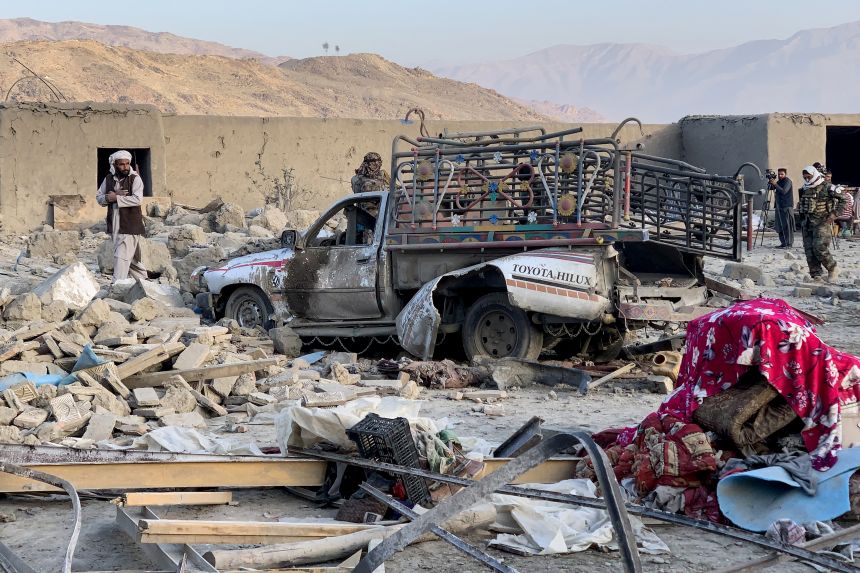
ISLAMABAD, September 24 — Pakistan carried out airstrikes inside Afghanistan after Islamabad accused the Taliban-led government in Kabul of allowing drone attacks to be launched from Afghan territory against Pakistani targets, officials said, marking a sharp escalation in long-running tensions between the two neighbors. The Afghan government condemned the strikes, saying they killed civilians. Pakistan’s Foreign Ministry said the operation targeted militants responsible for cross-border attacks.
No independent verification of casualty figures was immediately available.
A border drawn in 1893
The two countries share a 2,640-kilometer (about 1,640-mile) border — the Durand Line — that has been a source of friction since it was demarcated in 1893. The border runs through rugged terrain, making it difficult to monitor. Pakistan has completed fencing on most of the border, a move Afghanistan opposes.
The strikes are the latest in a series of cross-border incidents that have strained ties between the two countries, which share deep cultural, economic, and historical links. They also test Pakistan’s relationship with the Taliban, which it had hoped would help curb the TTP.
The TTP and the security breakdown
The Taliban returned to power in Afghanistan in August 2021. Since then Pakistan has repeatedly accused the Afghan Taliban of harboring the Pakistani Taliban (Tehrik-i-Taliban Pakistan, or TTP), which has waged a years-long insurgency against the Pakistani state. The TTP, founded in 2007, is a separate organization from the Afghan Taliban but shares ideological ties.
Pakistan has also accused the TTP of operating from sanctuaries in Afghanistan’s eastern provinces, a charge Kabul has denied. Cross-border violence has spiked since 2021, including a series of deadly attacks on Pakistani security forces.
In 2022, Pakistan conducted airstrikes in Afghanistan’s Khost and Kunar provinces, killing dozens, which drew sharp condemnation from Kabul. In 2023, Pakistan ordered the expulsion of undocumented Afghan refugees, affecting an estimated 1.7 million people, according to UN estimates. The TTP has been responsible for some of the deadliest attacks in Pakistan, including the 2014 Army Public School attack in Peshawar that killed more than 140 people, mostly children.
The group has also targeted Pakistani military and government installations. In 2022, the TTP ended a ceasefire with the Pakistani government that had been brokered by the Afghan Taliban.
Since then, attacks have increased.
Regional stakes and what comes next
Pakistan’s military has not publicly detailed the latest operation, and the Afghan government’s response has been limited to statements. The United States, which withdrew from Afghanistan in August 2021, has said it monitors the situation but has not commented directly on the strikes. The strikes come amid a broader regional context: Afghanistan’s humanitarian crisis, with about 23 million people in need of assistance, according to the United Nations, and the country’s isolation since the Taliban takeover.
The Taliban government has not been formally recognized by any country, though some have engaged with it. The incident raises questions about the stability of the region and the ability of the Taliban government to prevent militant groups from using Afghan soil.
The Afghan government’s ability to control its territory and prevent attacks on neighbors is a key test of its governance. Pakistan’s security concerns are long-standing, and its patience with the Taliban appears to be wearing thin. The two countries have no formal diplomatic relations at the ambassadorial level, but they maintain trade and people-to-people ties.
The border crossing at Torkham is a vital trade route. Any disruption could affect both economies.
Afghanistan relies heavily on Pakistan for trade and transit. Pakistan, in turn, seeks a stable Afghanistan to secure its western border. The international community, including the United States, China, and Russia, has interests in the region.
China has invested in Pakistan and has concerns about militancy. Russia has engaged with the Taliban. The United States has said it will continue to monitor terrorist threats from Afghanistan.
The strikes may complicate regional diplomacy and are likely to be discussed at the United Nations and other forums. The Taliban has said it will not allow Afghan soil to be used against other countries but has not moved against the TTP, which it considers a separate group.
The strikes may be an attempt by Pakistan to pressure the Taliban. The Taliban’s response will be closely watched. The risk of escalation is real.
Both sides have much to lose from a wider conflict. The coming days will be crucial in determining whether the strikes lead to a wider conflict or a renewed diplomatic effort.




