
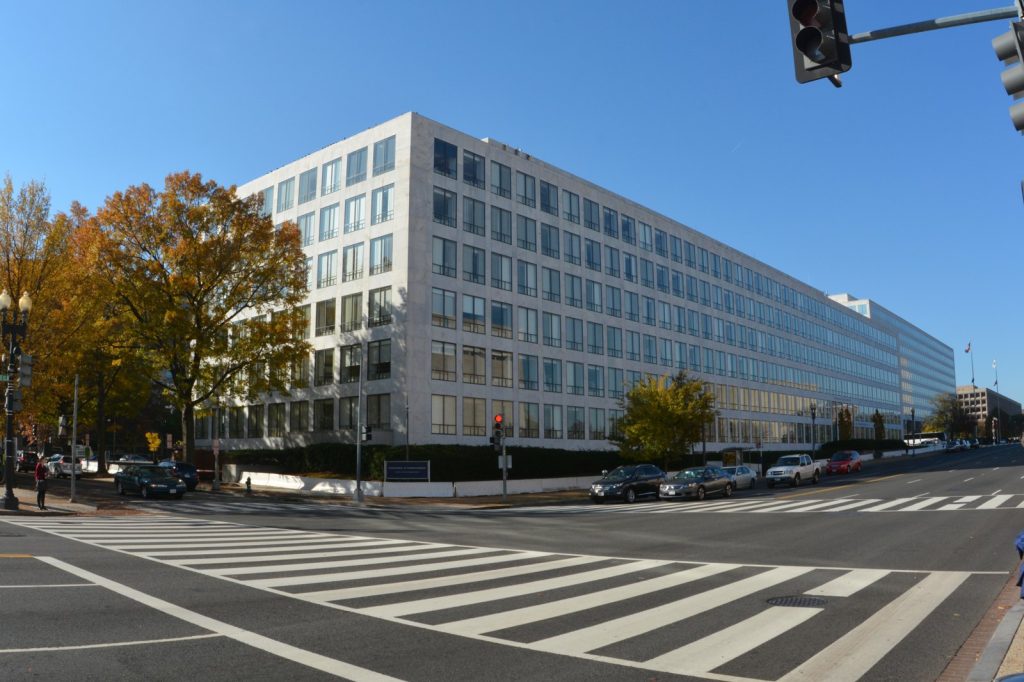
WASHINGTON, July 19 — The National Highway Traffic Safety Administration, the federal agency tasked with writing and enforcing automobile safety regulations, occupies a strategic but contested position on the U.S. transportation chessboard as traffic fatalities in the early 2020s have persistently exceeded 40,000 annually. Created by Congress in 1970 under the Highway Safety Act, NHTSA now finds itself at the center of a high-stakes regulatory and political battle involving vehicle technology, federal preemption, and state-level authority.
The agency’s roots trace back to the mid-1960s, when public pressure from Unsafe at Any Speed and a National Academy of Sciences report forced the creation of three predecessor bodies: the National Traffic Safety Agency, the National Highway Safety Agency, and the National Highway Safety Bureau. Those entities were established in 1966; NHTSA itself was formed four years later.
It sits within the Department of Transportation and holds primary responsibility for setting Federal Motor Vehicle Safety Standards. The first such standard, FMVSS 209, took effect on March 1, 1967. The agency administers the Vehicle Identification Number system, licenses vehicle manufacturers and importers, develops crash test dummies and testing protocols, and provides vehicle insurance cost information.
What this signals is a broad regulatory mandate that touches nearly every vehicle sold in the United States — from design and testing to labeling and crashworthiness.
Safety Standards and Investigative Legacy
NHTSA has conducted several high-profile investigations that shaped public perception and industry practice. Among them: the Audi 5000 affair, the Ford Explorer rollover controversy, and the Toyota sticky pedal problems. The agency also proposed mandating Electronic Stability Control by the 2012 model year — a technology highlighted by the 1997 Swedish moose test.
That mandate represented a strategic shift from recommending features to requiring them, reflecting an increasingly assertive enforcement posture. The agency’s investigative powers, however, are bounded.
While NHTSA sets vehicle safety standards, aspects of traffic safety such as road design, police enforcement, and crash investigation fall outside its jurisdiction. Strategically, the calculus of highway safety thus involves multiple federal, state, and local actors — a fragmented landscape that complicates any single-agency solution.
The Broader Geopolitical Chessboard: Greenhouse Gas Disputes
One of the most consequential ongoing battles involves NHTSA’s claim of preemptive regulatory authority over greenhouse gas emissions from motor vehicles. That assertion is contested by state bodies such as the California Air Resources Board, which has historically set its own emissions standards under a Clean Air Act waiver. The broader stakes: whether the federal government can block California and other states from imposing stricter fuel economy and emissions rules, a fight with direct implications for the auto industry’s product planning and investment decisions.
This dispute is not merely technical. It sits at the intersection of federalism, environmental policy, and automotive engineering — and the outcome will shape what vehicles Americans drive for decades.
Statistical Tools and Jurisdictional Limits
Through its National Center for Statistics and Analysis, NHTSA collects crash data via two primary systems: the Fatality Analysis Reporting System, which captures all fatal crashes, and the Crash Investigation Sampling System, which samples police crash reports. These tools provide the empirical foundation for regulatory action, but they also reveal the limits of the agency’s reach.
Despite improved vehicle design and public awareness campaigns, annual fatalities in the early 2020s remained above the 40,000 mark — a stubborn plateau that points to factors outside NHTSA’s direct control: driver behavior, road infrastructure, and enforcement. The agency’s statutory authority is clear on what it can mandate, but the broader reality of traffic safety involves many levers NHTSA does not hold.
That tension — between regulatory power and practical outcome — defines the agency’s strategic position going forward. Looking ahead, NHTSA will continue to face pressure on multiple fronts: maintaining safety improvements as vehicle technology evolves, navigating the federal-state emissions clash, and confronting the persistent human toll on U.S. roads. For an agency built on the legacy of Unsafe at Any Speed, the next chapter will be written as much in courtrooms and state capitals as in its own rulemaking dockets.




