KATHMANDU — Twenty bodies. Two days of rain. One geography that cannot be escaped.
Nepal’s mountains are its identity and its liability. Eight of the world’s ten highest peaks sit inside this landlocked nation, including Mount Everest. The same slopes that draw climbers and trekkers from across the globe also shed landslides when saturated. The same rivers that irrigate the fertile southern plains swell into brown, fast-moving killers.
After 48 hours of relentless rainfall, twenty people are dead. The government has not yet released a full breakdown of where each life was lost, but the pattern is familiar. In Nepal, heavy rain does not fall evenly. It collects in valleys, pounds hillsides stripped of trees, and turns narrow mountain roads into dead ends.
The country’s geography is a study in extremes. To the north, the high Himalaya. To the south, the flat Terai plains — part of the same Ganges basin that stretches into India. In between, a band of subalpine forested hills where most of the population lives. Every monsoon season, that middle band takes the worst of it. Roads wash out. Bridges collapse. Villages lose contact with the outside world for days or weeks.
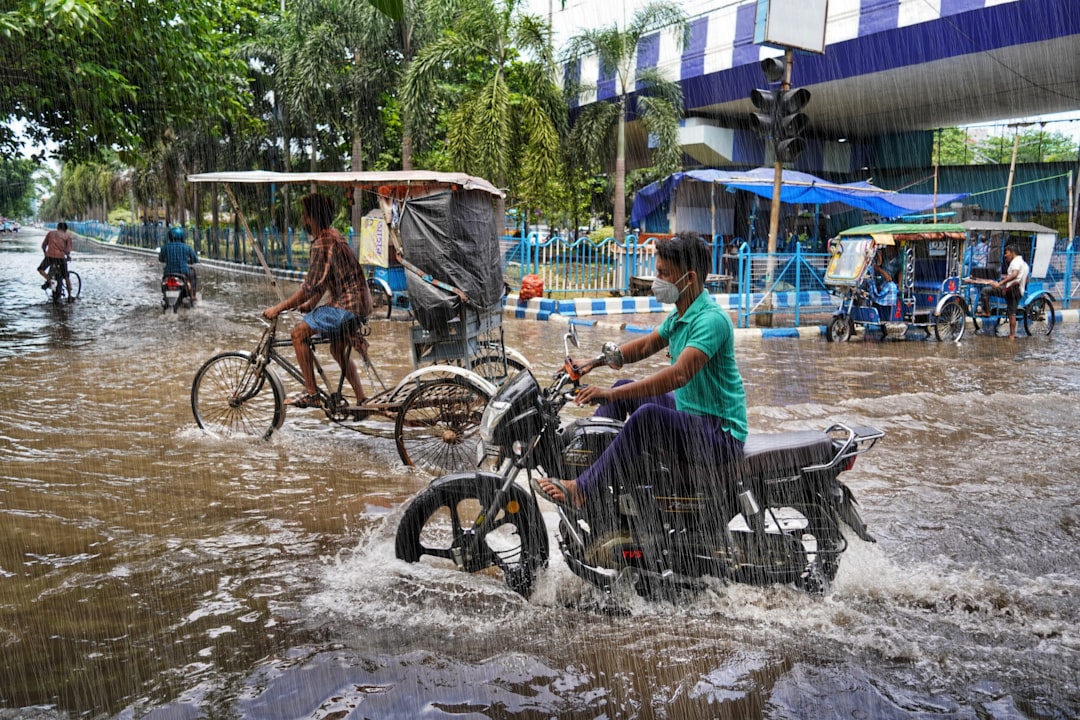
This time was no different. The rains came hard and did not let up. Water overwhelmed drainage systems in Kathmandu, a city of 1.5 million people crammed into a valley that was once a lakebed. The city floods easily. Its aging infrastructure was not built for the kind of rainfall that now arrives with regularity.
Nepal’s vulnerability is not new. The country ranks among the most disaster-prone in the world. Earthquakes, floods, landslides — the land itself seems to shift underfoot. In 2015, a 7.8-magnitude earthquake killed nearly 9,000 people. Every monsoon since has brought fresh flooding. The government has response plans on paper. In practice, reaching remote communities in the middle of a storm is nearly impossible.
The dead include men, women, and children. Their names have not been released. Emergency crews are working to clear roads and restore access to cut-off areas. The army has been deployed. Shelters are being set up. Food and clean water are being distributed where they can reach.
But the geography that makes Nepal beautiful also makes relief work slow. A washed-out bridge in the hills might take days to repair. A landslide that blocks a single-lane road in the mountains can strand entire villages. Helicopters can fly in supplies, but not in every kind of weather. The same rain that caused the disaster also prevents the response.
Nepal is bordered by China’s Tibet Autonomous Region to the north and India on the other three sides. It has no coastline. Everything — fuel, medicine, building materials — must come overland through mountain passes or across the southern border. When those routes are cut, the country feels its isolation.
The international community may be asked for help. In past disasters, Nepal has received aid from India, China, the United States, and various United Nations agencies. Financial support and technical expertise have arrived. But aid cannot rebuild every road or stabilize every hillside.
Twenty people are dead. The number will likely rise as rescue teams reach areas that have been silent since the rain began. Nepal will recover. It always does. But the same mountains will still be there when the next storm comes.