For the families living in the small communities of northern Norway, the roar of military aircraft and the sight of amphibious vehicles on the shore are more than just a drill. They are a daily reminder that the world has changed. Near the border with Russia, where the Arctic winds sweep across the snow-covered landscape, the lives of these residents are now directly tied to a conflict hundreds of miles away in Ukraine.
U.S. Marine General David Berger, speaking from the snow-covered Norwegian airbase of Bardufoss, acknowledged the new reality. “We have a clear understanding of what their capabilities are. And we’ve studied their doctrine for a long time,” he said. But the general warned that the old assumptions no longer hold. “Their decision-making on the part of the president, that’s another factor. Whether or not they would do something,” Berger said. “I think the lesson learned here is you can’t predict what a dictator might do.”
A Shift in Military Calculus
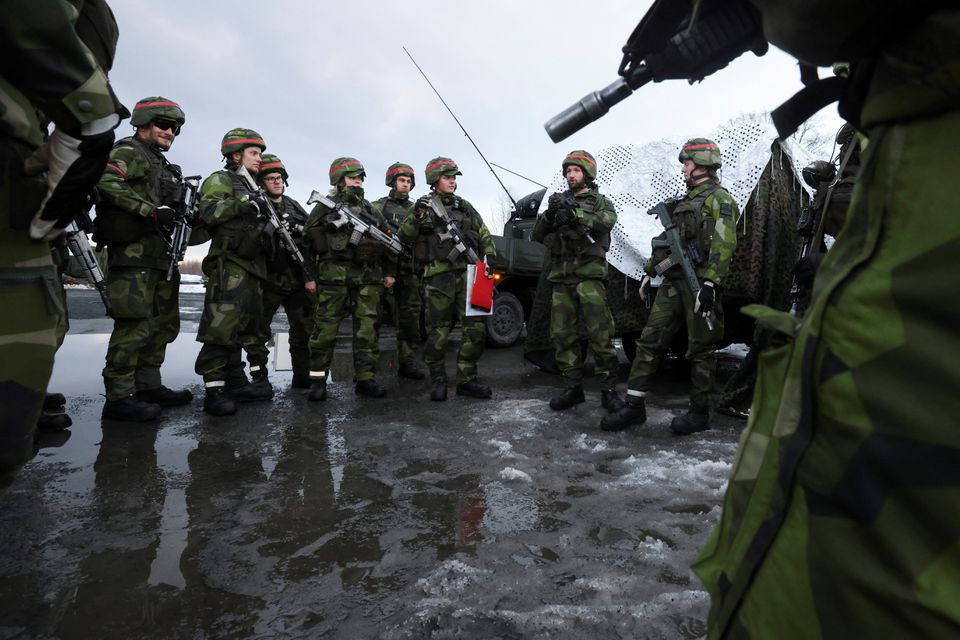
The comment came during NATO’s “Cold Response” exercises, which are currently underway in northern Norway. The drills have taken on a new urgency following Russia’s invasion of Ukraine, which Moscow launched on Feb. 24 and calls a “special military operation.” That event, the biggest military mobilization since World War Two, has jolted the assumptions of analysts who believed Russian President Vladimir Putin would always take calibrated risks, use limited ground forces, and find diplomatic exit strategies. The pattern of his 2014 annexation of Crimea and his 2015 intervention in Syria had suggested a cautious approach.
Instead, the full-scale invasion of Ukraine involves siege warfare and escalation tactics, such as putting nuclear forces on alert and exposing the Russian economy to massive Western sanctions to achieve military goals. For the people of northern Norway, this means NATO must now face a Russian adversary that is more unpredictable and ready to take greater risks to project power in Europe.
General Berger said that studying Russian capabilities and military doctrine is no longer enough. The alliance must be ready to respond at a moment’s notice. “You have to be ready to respond,” he said. The “Cold Response” exercises are designed to prepare allied forces on the land, sea, and in the air for exactly that scenario. The scenario for the exercise shows what a future conflict in the Arctic region could look like, fought near where the borders of Norway and Russia meet.
Life Under the Drills
In the exercise, U.S. Marines are making amphibious landings in Norway. The airspace over the country is contested. And the painstaking effort is taken to consider the logistics of bringing troops to the country and resupplying them. For local residents, this means disrupted routines, increased military traffic, and a heightened sense of vigilance. The snow-covered landscape, once a place of quiet winter life, is now a training ground for a potential Arctic conflict.
The drills are not just about readiness; they are about sending a message. NATO leaders meeting in Brussels on Wednesday are expected to agree to increase the frequency of such military drills as part of the alliance’s response to Russia’s invasion of Ukraine. For the communities of Bardufoss and beyond, the question is how long this new normal will last.
What to Watch Next
As the “Cold Response” exercises continue, the focus will remain on how NATO adapts to a more unpredictable Russia. The alliance is expected to finalize plans for more frequent drills, potentially extending them into other Arctic regions. For the families in northern Norway, the immediate future holds more noise, more activity, and more uncertainty. The world is watching to see if the lessons learned in the snow will translate into lasting security for the region.