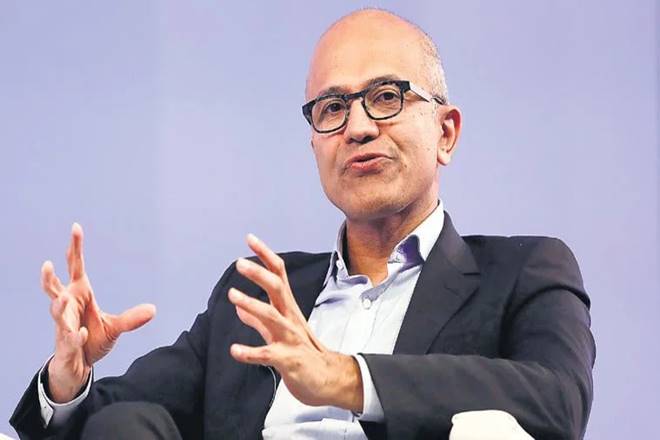
Microsoft chief executive Satya Nadella told a New York audience on 13 January 2020 that India’s new Citizenship Amendment Act is “sad and bad,” prompting a wave of criticism from supporters of Prime Minister Narendra Modi’s government who accused the India-born American of misreading the law.
Nadella’s remarks at Manhattan tech summit
Addressing editors at a Microsoft news gathering in Manhattan, Nadella said the situation in his birth country “makes me sad.” “I think what is happening is sad, primarily as someone who grew up there… I think it’s just bad,” he told BuzzFeed editor-in-chief Ben Smith, who moderated the session.
The 52-year-old Hyderabad native, now a U.S. citizen, added that he hoped a Bangladeshi immigrant could still “create the next unicorn in India or become the next CEO of Infosys,” remarks that were interpreted by many listeners as a swipe at the religion-based criteria embedded in the CAA.
What the citizenship act changes
Parliament approved the measure on 11 December 2019. It offers an accelerated path to Indian citizenship for Hindus, Sikhs, Buddhists, Jains, Parsis, and Christians who fled Afghanistan, Bangladesh, or Pakistan before 31 December 2014 and who entered India without valid papers.
Muslims are not included, a omission that opponents label unconstitutional. Modi’s Bharatiya Janata Party insists the law is a humanitarian gesture toward persecuted minorities in Muslim-majority neighbours and does not strip any existing Indian citizen of rights.
Since mid-December, street protests have flared from Delhi’s Jamia Millia Islamia campus to Kolkata’s Park Circus, with at least 25 deaths reported nationwide, according to state police statements compiled by the Times of India on 3 January.
Social media pushback
Within minutes of Nadella’s comments surfacing online, pro-government voices accused him of commenting without studying the statute.
Author Shefali Vaidya tweeted: “What ‘new citizenship act’, could you elaborate @satyanadella? And who has stopped Bangladeshis from applying for immigration through proper channels? #CAA is about making it easy for persecuted Indic minorities to get citizenship. A simple Google search could have told you that.”
The pushback dominated Indian Twitter trends for much of 14 January, with #SatyaNadella and #Infosys also appearing in the top-ten list compiled by the social platform.
Washington stays on sidelines
The Trump administration has not formally criticised the law. A State Department spokesperson, speaking on background 10 January, said the United States “respects India’s democratic right to legislative self-determination” while urging New Delhi to “abide by its constitutional guarantees, including religious freedom.”
President Trump, who last year shared the stage with Modi at Houston’s “Howdy Modi” rally, is scheduled to visit India next month. White House officials told reporters 12 January that trade and defence files, not domestic Indian statutes, will headline the talks.
Corporate India watches words
Nadella is the first global CEO of a major technology firm to wade publicly into the debate. Indian industry bodies, normally quick to defend government policy that courts foreign investment, stayed quiet on 14 January.
Confederation of Indian Industry director-general Chandrajit Banerjee declined to comment when reached by phone, while the Associated Chambers of Commerce did not return e-mails.
An executive at a Bengaluru outsourcing firm, who asked not to be named because he lacks media clearance, said multinational leaders “risk brand damage either way, stay silent and activists accuse you of complicity, speak up and Delhi sees you as meddling.”
Opposition welcomes support
India’s Congress party seized on Nadella’s statement. “Even respected global CEOs can smell the fear the CAA has generated,” spokesman Randeep Surjewala told the Hindu newspaper 14 January.
Delhi chief minister Arvind Kejriwal, whose Aam Aadmi Party faces BJP challengers in 8 February state elections, tweeted that “when minds shaped in India rise abroad, their conscience still speaks for pluralism.”
The BJP dismissed the endorsement. Party spokesperson Sambit Patra said on Times Now television 14 January that “foreign citizens are entitled to opinions, but India’s elected lawmakers, not corporate corner offices, will decide national policy.”
Outlook for Modi’s outreach
The episode lands at an awkward moment for the prime minister, who has spent the past week meeting European Union envoys to reassure investors that India remains open and tolerant.
With GDP growth sliding to a six-year low of 4.5 percent, Modi can ill-afford a widening perception that social unrest threatens stability. Yet retreating on the CAA could fracture the BJP’s core Hindu constituency ahead of crucial state polls in Bihar later this year.
For now, New Delhi appears ready to ride out the storm, betting that investor interest in India’s 1.3-billion-person market will outweigh reputational bumps delivered by a headline-grabbing CEO 8,000 miles away.