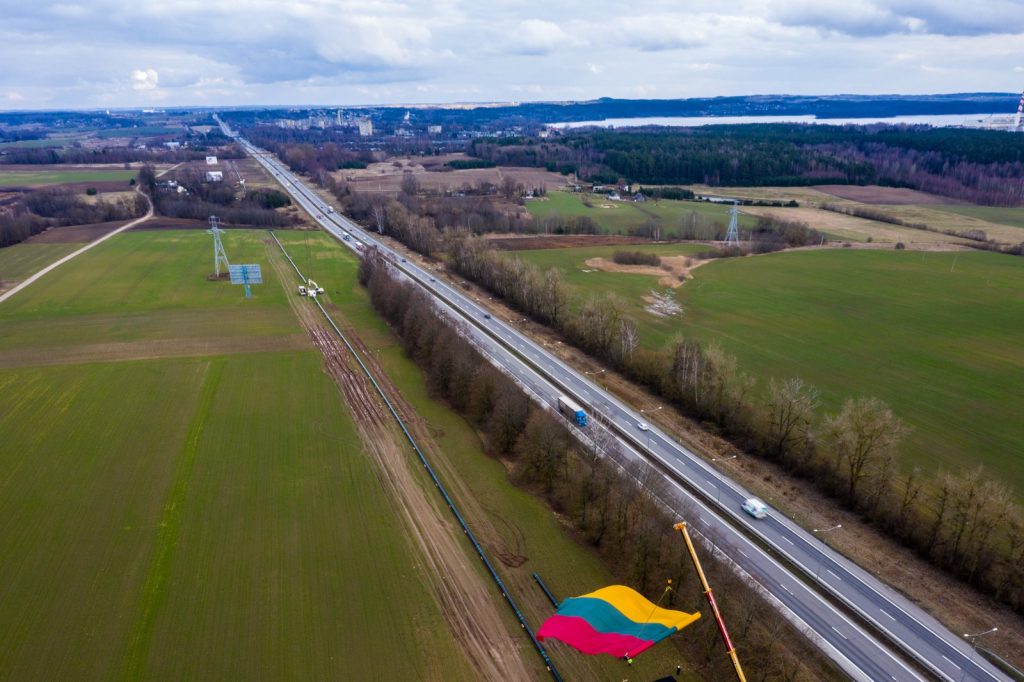
Lithuania, April 4, 2022 — cyberinktimes.com — For the nearly 2.8 million people living in Lithuania, a significant change has taken place in their daily lives. The country has cut itself off entirely from gas imports from Russia, a move that is seen as a major milestone in achieving energy independence. This change is not just about numbers and policies; it’s about the lives of individuals and communities who will be affected by this decision.
Families, businesses, and industries will all feel the impact of this shift, as the country moves away from reliance on Russian gas. The decision to stop importing Russian gas was made in response to Russia’s energy blackmail in Europe and the war in Ukraine.
According to Lithuania’s energy ministry, the measure took effect at the beginning of April, and the country has managed to reduce imports of Russian gas to zero. This is a significant achievement, considering that in 2015, nearly 100% of Lithuania’s gas supplies were derived from imports of Russian gas.
Path to Energy Independence
The journey to energy independence was not overnight. It was the result of a multi-year coherent energy policy and timely infrastructure decisions. Minister of Energy Dainius Kreivys said, “We are the first EU country among Gazprom’s supply countries to gain independence from Russian gas supplies.
And this is the result of a multi-year coherent energy policy and timely infrastructure decisions.” A key factor in this achievement was the construction of an off-shore LNG import terminal in the port city of Klaipeda, which was launched in 2014. From now on, all gas for Lithuania’s domestic consumption will be imported via Klaipeda’s LNG terminal.
Last year, the situation was different, with 26% of Lithuania’s gas supplies derived from deliveries from a Russian gas pipeline, 62% coming via Klaipeda’s LNG terminal, and the remaining 12% imported from gas storage in neighboring Latvia. The energy ministry’s statement highlighted the country’s determination to break its energy dependence on Moscow, and Lithuanian President Gitanas Nauseda urged other European nations to do the same. In a tweet, President Nauseda said, “From this month on, no more Russian gas in Lithuania.
Years ago, my country made decisions that today allow us with no pain to break energy ties with the aggressor. If we can do it, the rest of Europe can do it too!”
Regional Implications
The decision by Lithuania to stop importing Russian gas has implications for the region. Baltic neighbors Latvia and Estonia are also heavily dependent on Russian gas. However, Lithuania’s Prime Minister Ingrida Simonite said that Klaipeda’s LNG terminal wouldn’t have enough capacity to provide gas for all three Baltic countries.
As a solution, Estonia’s government has proposed building an LNG terminal jointly with Latvia and Nordic neighbor Finland in the Estonian port town of Paldiski, which is not far from the capital, Tallinn. This proposed project could have a significant impact on the region’s energy landscape and could potentially reduce reliance on Russian gas.
As the region moves forward, it will be important to watch how Lithuania’s decision to stop importing Russian gas affects the country and the region. Will other European nations follow Lithuania’s lead, and what will be the impact on the energy market? The proposed LNG terminal in Paldiski, Estonia, will also be an important development to watch, as it could potentially change the energy dynamics in the region.
As the situation continues to evolve, one thing is clear: the lives of individuals and communities in Lithuania and beyond will be impacted by the decisions made today.