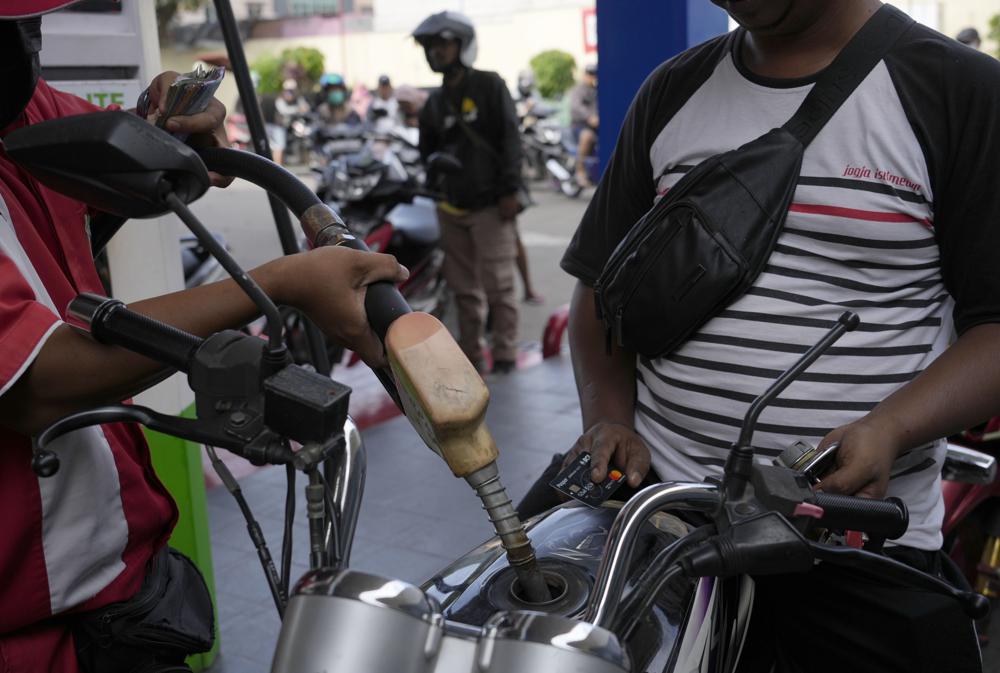
For millions of Indonesians, the daily commute just got a lot more expensive. As of Saturday, fuel prices have increased by about 30% across the country, affecting not just motorists but also communities that rely on fuel for their livelihoods. The hike, which raised the price of gasoline from about 51 cents to 67 cents per liter and diesel fuel from 35 cents to 46 cents, has been a long time coming, but its impact will be felt immediately. Long lines of motorbikes and cars snaked around gas stations as motorists waited for hours to fill up their tanks with cheaper gas before the increase took effect.
The decision to increase fuel prices was not taken lightly, according to President Joko Widodo, who said it was his last option. The country’s energy subsidy had tripled this year to 502 trillion rupiahs ($34 billion) from its original budget, triggered by rising global prices of oil and gas. Widodo told a televised address announcing the fuel hike that “the government has tried its best as I really want fuel prices to remain affordable,” but added that “the government has to make decisions in difficult situations.” He also noted that the flow of subsidies to the public was not well targeted, with about 70% of subsidies benefiting the middle and upper classes.
Impact on Inflation and Economic Growth
The Indonesian government is closely monitoring the impact of the fuel price increase on inflation and economic growth. Finance Minister Sri Mulyani Indrawati said that authorities are watching the situation closely, as inflation has been relatively modest, with the shock being mostly absorbed through a budget bolstered by energy subsidies. Inflation hit 4.6% in August, and the Bank Indonesia, the central bank, has said it would reassess the inflation outlook in response to the government’s fuel price policy. Indrawati also announced that the government would provide 150,000 rupiahs ($10) cash handouts to cushion the impact of the fuel price increase on 20.6 million people, in an effort to “reduce the pressure of rising prices and help reduce poverty.”
The government has subsidized fuel for decades in Indonesia, a vast archipelago nation of more than 270 million people. Fuel prices are a politically sensitive issue that could trigger other price hikes and risk student protests. In 1998, an increase in prices sparked riots that helped topple longtime dictator Suharto. The current government is aware of the potential risks and is taking steps to mitigate the impact of the fuel price increase on the most vulnerable members of society.
Looking Ahead
As the Indonesian government navigates the complex issue of fuel subsidies and price increases, it will be important to watch how the situation unfolds in the coming weeks and months. The government’s decision to increase social assistance and provide cash handouts to those affected by the fuel price increase is a step in the right direction, but it remains to be seen whether these measures will be enough to cushion the impact of the hike. The potential for protests and unrest is still present, and the government will need to be careful in its handling of the situation to avoid escalating tensions. As the country moves forward, it will be important to prioritize clean air, clean water, and conservation, and to explore ways to reduce the country’s reliance on fossil fuels and promote sustainable energy sources.
As Indonesia continues to grapple with the challenges posed by the fuel price increase, the international community will be watching with interest. The country’s ability to balance its economic and social priorities will be crucial in determining the success of its efforts to reduce poverty and promote sustainable development. In the coming weeks and months, it will be important to watch for updates on the government’s progress in implementing its social assistance programs and promoting sustainable energy sources. The situation in Indonesia serves as a reminder of the complex challenges faced by countries around the world as they seek to balance their economic, social, and environmental priorities, and the need for careful planning and decision-making to ensure a sustainable future for all.