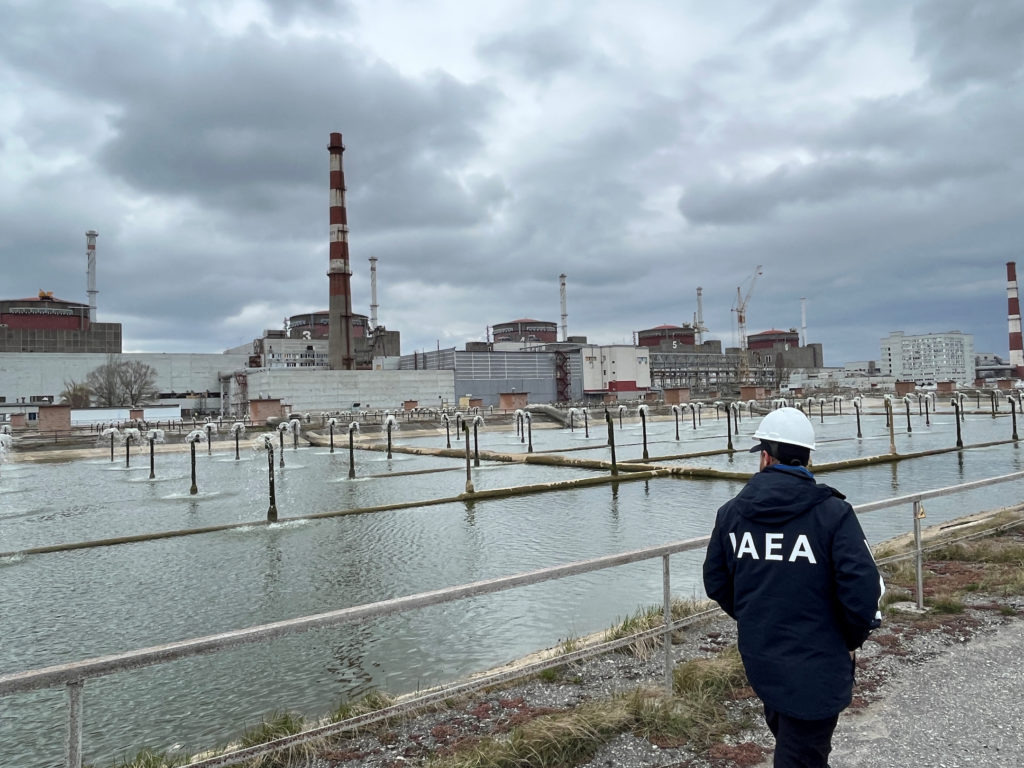
The International Atomic Energy Agency has deployed expert teams to all four of Ukraine’s nuclear power plants to reduce the risk of catastrophic accidents during Russia’s ongoing war. IAEA Director General Rafael Grossi announced the expansion on January 27, 2023, during a visit to Kyiv. The agency now maintains a permanent presence at the Russian-occupied Zaporizhzhia plant and has stationed staff at the Rivne, Khmelnytskyi, and South Ukraine facilities, as well as the decommissioned Chernobyl site. The mission aims to provide technical guidance and monitor safety systems as fighting continues near nuclear infrastructure.
A permanent footprint at every plant
The IAEA’s presence in Ukraine has grown to a level never seen before. At least 11 agency employees are now stationed across the country’s nuclear facilities. The Zaporizhzhia plant, Europe’s largest, already hosted IAEA staff. The new deployments cover the remaining sites.
Ukrainian Prime Minister Denys Shmyhal announced the expansion at a joint press conference with Grossi. “Starting the following day, there will be two flags at all of the nuclear facilities in Ukraine; one of Ukraine and the second of the international nuclear agency,” Shmyhal said.
Grossi traveled to Chernobyl on January 25 and to Rivne on January 24 as part of the installation and flag-raising mission. He said personnel will remain at each site “as long as they are requested” by the Ukrainian government.
Flags mean more than symbolism
Grossi emphasized that the IAEA flags flying at Ukrainian nuclear plants carry real weight. “They represent and they will signify the presence of some of the most well-known professionals in safety and security who will offer guidance and technical help to each site,” he said. “Confronting specific challenges and issues as needed during this extremely trying period.”
The experts will monitor nuclear safety and security systems. They will also help prevent accidents at plants that have faced shelling and power disruptions since Russia’s invasion began in February 2022. The Ukrainian government requested the missions, according to Grossi.
Shmyhal explained why. “Very simply there are attacks on the facilities,” he said. “We turned to the IAEA for security and protection because we want to prevent any nuclear accidents.”
Zaporizhzhia remains the highest risk
The Zaporizhzhia nuclear power station sits on the front lines of active combat. Russian forces seized the plant in March 2022. It has come under fire multiple times since then. All six reactors are currently shut down, but the facility remains connected to the power grid for safety reasons.
Grossi has pushed for months to establish a nuclear safety and security protection zone around Zaporizhzhia. The IAEA has had staff at the plant for more than four months. “I’m still committed to bringing about the much-needed protection zone as soon as I can,” Grossi said on January 24. “Although not as quickly as they should be. My negotiations with Russia and Ukraine are progressing.”
At the January 27 press conference, he added that discussions with the Ukrainian government over the zone’s creation were ongoing. “We are getting closer to a positive result,” he said.
Broader context of war and tragedy
The IAEA’s expanded mission comes as Ukraine reels from two recent disasters. A Russian missile strike on an apartment building in the southeastern city of Dnipro killed 45 civilians over the weekend. A helicopter crash on January 25 at a kindergarten in the Kyiv region killed the country’s interior minister and about a dozen other people.
Shmyhal also used the press conference to call for penalties against Moscow’s atomic agency. He asked the IAEA to deny Russia membership benefits and stop all nuclear cooperation with the nation. Grossi said the member states would discuss that decision.
The war is now in its eleventh month. The IAEA experts will increase technical know-how at each plant to prevent nuclear accidents and keep an eye on safety systems. The Ukrainian government requested the installation of the missions.
The IAEA’s presence at all of Ukraine’s nuclear plants marks a significant step in international efforts to prevent a radiological disaster. The agency’s staff now operate in a war zone, working alongside Ukrainian personnel at facilities that have become targets. The protection zone around Zaporizhzhia remains elusive, but Grossi’s negotiations continue. For now, the flags fly. The experts are on the ground. The risk has not gone away, but the monitoring has intensified.