
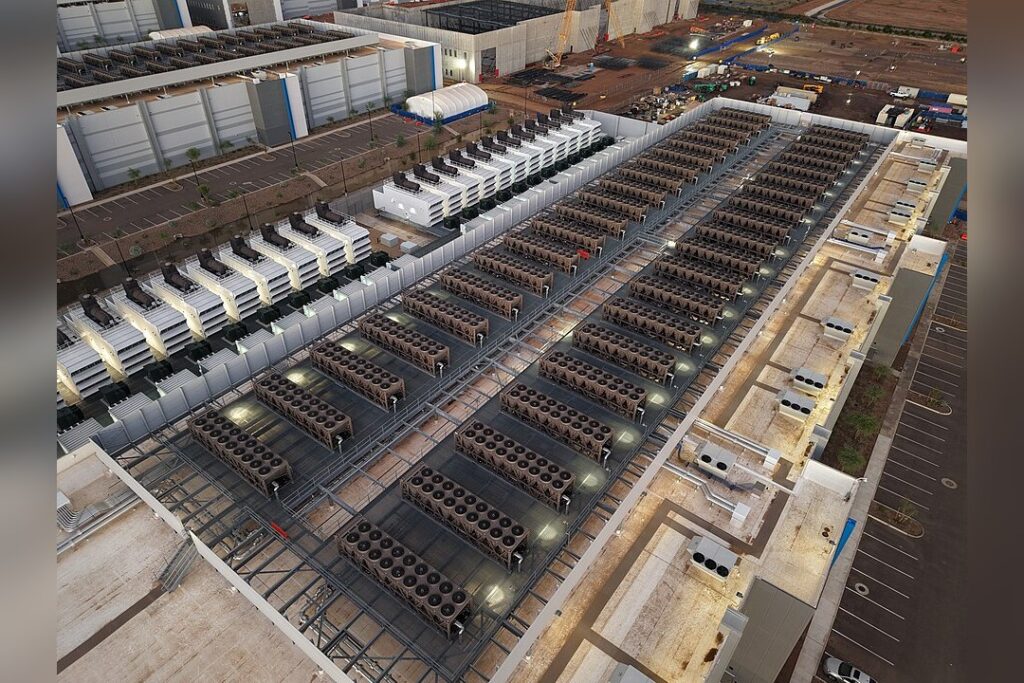
MANILA, July 20 — Behind every video call you make, every photo you upload, every online order that zips across the region, there is a vast, humming infrastructure that most of us never see. It is called hyperscale computing — and for communities across Asia, it is quietly reshaping what is possible. At its simplest, hyperscale computing is the ability of an architecture to scale up seamlessly as demand surges.
You add more computing, memory, networking, and storage resources to nodes — or to groups of nodes — without breaking the system. It is the backbone of modern cloud computing, big data, distributed storage, and the platforms billions of people depend on.
The companies that operate at this scale — the hyperscalers — include Google, Facebook (now Meta), Amazon, Microsoft, IBM Cloud, Oracle Cloud, Twitter (now X), and Cloudflare. Also on that list are Alibaba and SAP. These are the firms recognised for their massive data centres and enormous capacity for processing and storing information.
Closer to home, this matters because when an app works smoothly even during a surge — say, a flash sale on Shopee or Lazada, or a major live stream — hyperscale infrastructure is likely the reason. It is built to handle spikes without crashing.
Who Builds the Backbone
Building a hyperscale data centre is not something just any company can do. The infrastructure providers that specialise in constructing and operating these giant facilities include Scaleway, Switch, Alibaba, IBM, QTS, Neysa, Digital Realty Trust, Equinix, Oracle, Meta, Amazon Web Services, Microsoft, Google, and Cloudflare. Then there are the suppliers of the hardware kits that make it all possible.
Ericsson, AMD, and Intel provide hyperscale infrastructure kits designed for IT service providers.
More Than Just Big Servers
Hyperscale is not just about vast racks of servers. It is also intimately linked to two other concepts: software-defined networking and software-defined storage. These technologies allow administrators to manage network and storage resources through software rather than fiddling with physical cables and drives.
That flexibility is what enables the seamless provisioning — adding capacity on the fly as demand shifts. For families across Asia, this may sound like technical jargon, but it translates directly into the reliability of the services they use every day.
When a student in Manila joins an online class hosted in a Singapore data centre, when a farmer in Vietnam checks market prices on a mobile app, or when an overseas worker in Dubai sends money home through a digital wallet — hyperscale computing is what keeps those connections stable and fast.
Why Size Matters for the Region
Hyperscale computing is necessary for building robust cloud, big data, map reduce, and distributed storage systems — all of which are fundamental to the digital economy that is growing across Southeast Asia and beyond. Alibaba, a hyperscaler, operates data centres not only in mainland China but across the region, serving businesses from logistics to fintech. Equinix and Digital Realty Trust, both named in the source, are two of the world’s largest data-centre real estate investment trusts — they own and lease space to hyperscalers and other tenants.
Their presence in cities like Singapore, Tokyo, and Jakarta means that the physical infrastructure for hyperscale computing is being planted right in our neighbourhood.
What to Watch Next
As more Asian companies move their operations to the cloud — and as governments push for digital transformation — the demand for hyperscale capacity will only increase. The source mentions that hyperscale is “necessary” for robust and scalable systems. That suggests that the race among hyperscalers to build bigger, more efficient data centres is far from over.
For communities across the region, the quiet whir of a hyperscale data centre might not be something we hear, but its impact is something we all feel. Whether it is a video call that doesn’t freeze or an e-commerce platform that doesn’t crash at checkout, hyperscale computing is the unseen force making it work.




