
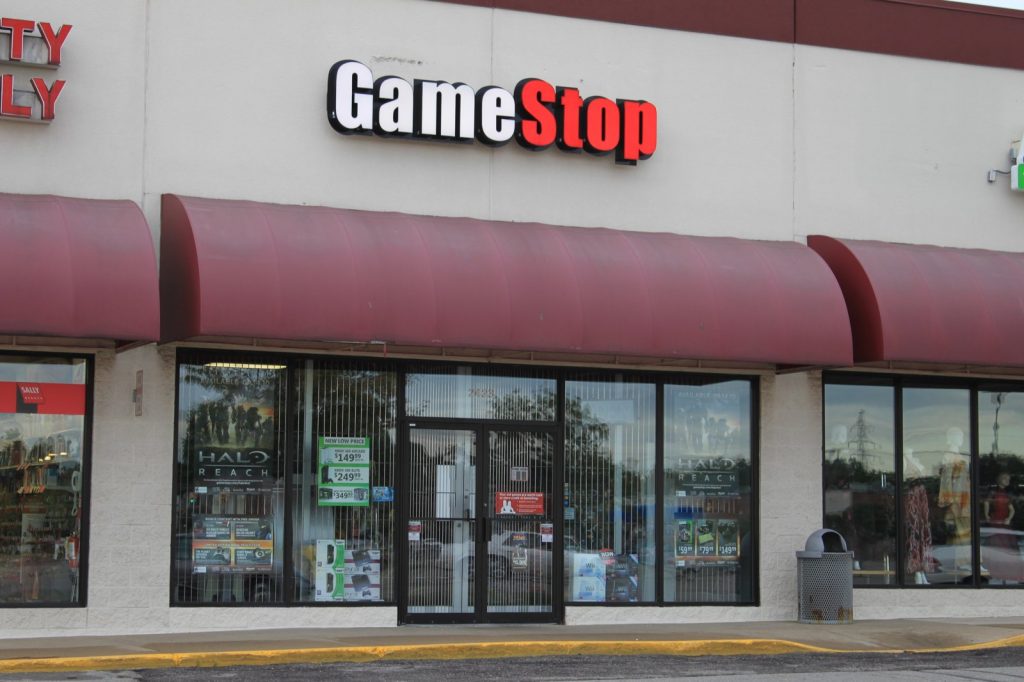
GRAPEVINE, Texas — GameStop Corp. is now a Bitcoin buyer, a strategic pivot that signals how far the video-game retailer has travelled from its brick-and-mortar roots. On March 25, 2025, the company announced a plan to use its cash reserves to buy the cryptocurrency, a move that reframes its financial calculus for an era of digital assets. The company, headquartered in Grapevine, Texas, was founded in Dallas in 1984 as Babbage’s and took its current name in 1999.
Today it is the largest video-game retailer worldwide, operating 2,206 stores as of January 2026. Those stores span 1,598 locations in the United States, 300 in Australia and 308 in Europe, flying banners such as GameStop, EB Games, Micromania-Zing, ThinkGeek and Zing Pop Culture.
Yet the broader stakes for the company have shifted dramatically. GameStop’s performance declined during the mid-to-late 2010s as consumers migrated to online shopping and the company’s investments in smartphone retail failed. The shift to online shopping has led to a decline in revenue, forcing a painful store-closure cycle.
Over 400 GameStop stores closed in January 2025 alone, the highest number the company has shuttered in a single month, at a pace to close twice as many as the company did in 2024. The Bitcoin announcement comes after the company sold its last major media property.
GameStop used to own and publish the video-game magazine Game Informer, discontinuing it in August 2024 before selling it to Gunzilla Games in 2025.
The Reddit Revolution and Its Aftermath
GameStop’s stock became a cultural phenomenon in January and February 2021, when retail investors on Reddit noticed that short interest in the company exceeded 100%. The stock price skyrocketed from $17.25 to over $500 per share. An SEC report later concluded that the volatility was only in part due to the massive buying power of retail investors.
The company was ranked 577th on the Fortune 500 during that period. The short squeeze drew global media attention and reshaped how Wall Street and Washington view the power of coordinated retail trading.
What This Signals
Strategically, GameStop’s decision to buy Bitcoin with its cash reserves represents a bet that digital assets offer a better store of value — or at least a better headline — than the declining retail business. The company has not disclosed how much Bitcoin it has purchased or plans to purchase since the March 2025 announcement. What this signals is a company willing to take financial risks that would have been unthinkable during its Babbage’s era.
The calculus appears straightforward: with store traffic declining and the core business under structural pressure from digital distribution, GameStop is searching for a new narrative — and a new balance sheet strategy — that can sustain investor interest. The broader stakes for the company remain high.
The Bitcoin pivot does not reverse the consumer shift to the online marketplace that has driven revenue declines and store closures. But it does reframe GameStop as something other than a traditional retailer, a move that may buy time as the company navigates its post-Game Informer, post-squeeze identity.
Sources
{“@context”: “https://schema.org”, “@type”: “NewsArticle”, “headline”: “GameStop plans Bitcoin buy as store closures hit record high”, “description”: “GRAPEVINE, Texas — GameStop Corp. is now a Bitcoin buyer, a strategic pivot that signals how far the video-game retailer has travelled from its brick-and-mortar…”, “datePublished”: “2026-07-17T09:30:00+00:00”, “author”: {“@type”: “Person”, “name”: “Noah King”}, “publisher”: {“@type”: “Organization”, “name”: “InfoPulse Today”, “url”: “https://newsfeed.infopulsetoday.com/”}, “citation”: [{“@type”: “CreativeWork”, “url”: “https://en.wikipedia.org/wiki/GameStop”}]}




