
LONDON, July 8 — For most of us, money is the thing in our pocket or the balance on a screen. But scratch the surface, and the history of how we got here is a story stretching back over 5,000 years, from lumps of metal to lines of code. The mechanism by which we exchange value has undergone a series of quiet revolutions, each one reshaping trade, government, and daily life.
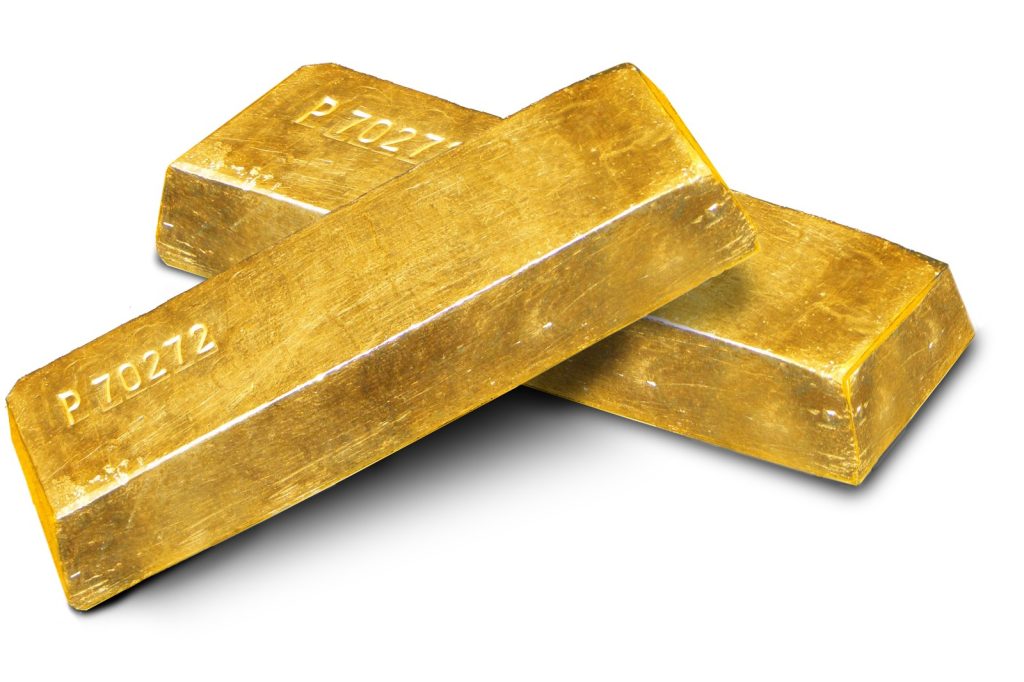
The earliest forms of money were commodities—things with intrinsic worth. Gold and silver, for example, were durable, divisible, and universally desired.
The first known coins were minted in Lydia, in modern-day Turkey, around 600 BCE. This was a leap: a stamped piece of metal that carried a guarantee of weight and purity, removing the need to weigh and test bullion at every transaction. It made trade faster and more reliable.
Then came paper. The Chinese were the pioneers, with paper money emerging during the Tang Dynasty (618–907 CE).
It became widespread under the Song Dynasty (960–1279 CE). The mechanism was elegant: merchants and the state issued notes that could be exchanged for a fixed amount of precious metal. This was representative money—the note was a claim on something of real value stored elsewhere.
It worked as long as people trusted that claim.
The end of the gold link
That trust underpinned the gold standard, which the United States formally adopted in 1900. Under this system, the government promised to exchange paper dollars for a set amount of gold. It imposed discipline on the money supply—you could only print as much paper as you had gold to back it.
But that discipline became a straitjacket during economic crises. President Richard Nixon severed that link in 1971, ending the convertibility of the US dollar to gold.
The result was the modern fiat system. Fiat money has no intrinsic value; it is declared legal tender by government decree. Its worth rests entirely on the authority and stability of the issuing state.
Intriguingly, this is both its strength—giving central banks flexibility to manage the economy—and its vulnerability, dependent on public confidence.
The digital turn
The most recent chapter began in 2009, when an anonymous person or group using the pseudonym Satoshi Nakamoto introduced Bitcoin, the first decentralized digital currency. It solved a long-standing problem in computer science—how to verify transactions without a central authority—using a technology called blockchain. As of 2023, there were over 22,000 cryptocurrencies in circulation, with a total market capitalization exceeding $1 trillion at various points.
Central banks have taken notice. The People’s Bank of China began piloting its digital yuan, known as e-CNY, in 2020.
By 2023, it had been used in transactions worth over $250 billion. The US Federal Reserve released a discussion paper on Central Bank Digital Currencies (CBDCs) in January 2022. The European Central Bank and the People’s Bank of China are among the central banks worldwide exploring or piloting their own digital currencies.
The science behind a CBDC is different from a private cryptocurrency. A CBDC is a digital form of a country’s fiat currency, issued and controlled by the central bank.
It is not decentralized like Bitcoin. The mechanism gives the state a direct digital payment tool, potentially offering greater efficiency and financial inclusion, but also raising questions about privacy and surveillance. What researchers found, as these pilots and discussions have advanced, is that the future of money is unlikely to be a single technology.
The evidence points toward a mix: physical cash for those who want it, central bank digital currencies for efficiency and stability, and private cryptocurrencies for those seeking alternatives to state-backed systems. The implications are broad. Monetary policy could become more precise if central banks can inject digital money directly into the economy.
Financial inclusion could improve for the unbanked, who need only a phone. But privacy—the ability to transact without a government seeing every payment—is a live concern that has no easy answer.
The story of money is one of constant adaptation. From Lydian coins to Chinese paper to digital ledgers, each step has solved a problem of trust and exchange. The next step is already being tested in Beijing, Washington, and Frankfurt.
How it works in practice will shape the financial lives of billions.
{“@context”: “https://schema.org”, “@type”: “NewsArticle”, “headline”: “From Gold Bars to Bitcoin: Money’s 5,000-Year Evolution”, “description”: “LONDON, July 8 — For most of us, money is the thing in our pocket or the balance on a screen. But scratch the surface,…”, “datePublished”: “2026-07-08T09:30:00+00:00”, “author”: {“@type”: “Person”, “name”: “Henry Thomas”}, “publisher”: {“@type”: “Organization”, “name”: “InfoPulse Today”, “url”: “https://newsfeed.infopulsetoday.com/”}}




