
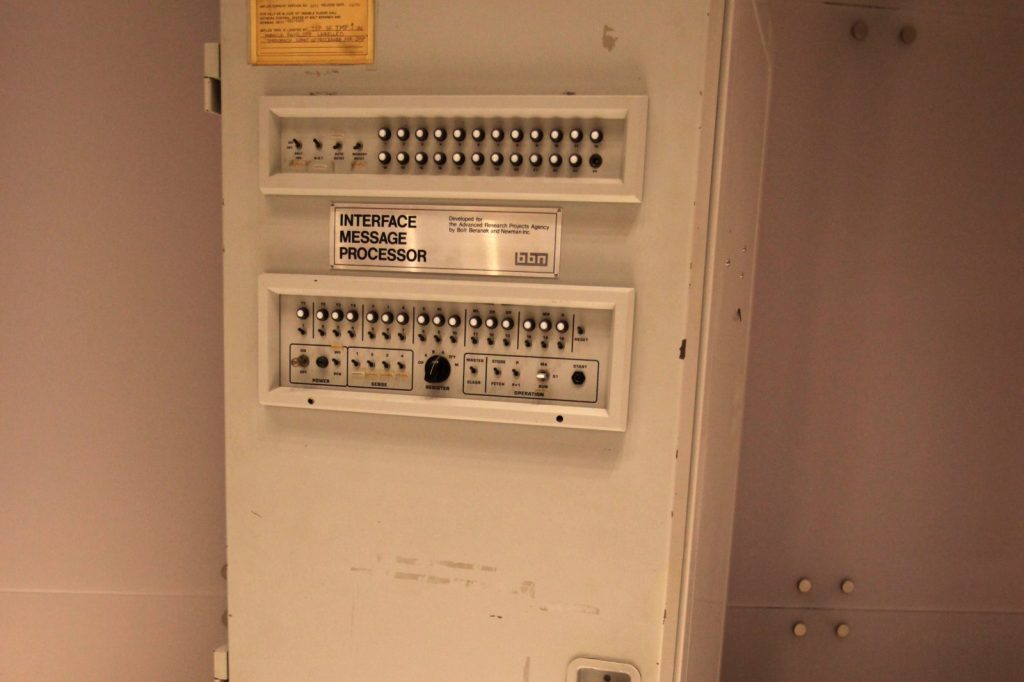
ISLAMABAD, July 14 — For those of us who rely on a stable internet connection for daily work, health research, and family communication, it is easy to forget that the entire system began with a single, failed word. Early findings from the history of digital communications show that the network’s first message, sent in 1969, was meant to be “LOGIN.” The system crashed after transmitting just two letters: “LO.” That moment, however, marked the beginning of something far larger than anyone could have predicted.
The U.S. Department of Defense funded the project, which started with just four nodes that year: UCLA, Stanford Research Institute, UC Santa Barbara, and the University of Utah.
A network takes shape
By 1971, the network had grown to 15 nodes. The encouraging part for researchers at the time was that the system was proving it could connect distant computers reliably enough to share data. A crucial breakthrough came in 1971, when Ray Tomlinson invented email.
He introduced the @ symbol to separate the user’s name from the computer’s name. Patients and doctors today who communicate through email can trace that simple, elegant convention back to this early work.
The Network Control Protocol, or NCP, was the original standard that allowed these early computers to talk to one another. But the system needed to evolve. On January 1, 1983, NCP was replaced by TCP/IP.
Many historians mark this date as the official birth of the internet as we know it. Also in 1983, Paul Mockapetris introduced the Domain Name System, or DNS.
This innovation allowed users to type familiar names instead of numerical addresses, making the network far more accessible to non-specialists.
Transition and legacy
By 1990, ARPANET was decommissioned. Its successor was the National Science Foundation’s NSFNET, which operated from 1985 to 1995. This network connected supercomputing centers across the United States, and by 1988, it had expanded to use T1 lines capable of transmitting data at 1.5 megabits per second.
For patients and families researching treatment options or consulting specialists remotely, these technical milestones are not just historical footnotes. They represent the infrastructure that makes telemedicine, online medical journals, and patient support forums possible.
The encouraging part is that the principles behind ARPANET — redundancy, reliability, and open communication — continue to guide how we share health information today. Early findings from any new technology always come with limitations, but the foundation laid by these engineers remains sound. As with any significant change in how we access information, patients should talk to their doctor about the most reliable sources for their specific health needs.
The network that began with a crash has given us a remarkable tool, but it works best when paired with professional medical guidance.




