On 16 March 2020, Philippine President Rodrigo Duterte placed the entire island of Luzon, home to 60 million people, under “enhanced community quarantine” after COVID-19 cases jumped from 64 to 142 in four days. All domestic flights, ferries, buses, jeepneys and tricycles stopped at midnight. Schools and non-essential businesses closed. Only workers in food, health, banks and business-process outsourcing were told to keep reporting. The sudden lockdown, announced eight hours before it took effect, left commuters stranded, shelves emptied and millions wondering how to earn the next meal.
Commuters marooned as transport halts
Mary Grace Rabulan, 29, a back-office clerk for an insurance firm in Tarlac, woke at 4 a.m. to reach her office before the ban. “No public bus, no jeepneys, not even a tricycle,” she told InfoPulseToday by phone. She begged an uncle to drive her 25 km so she could collect her desktop computer. “When I arrived, 95 percent of the staff were already packing up to work from home. I stayed because our team handles death claims, people still die even in a pandemic.”
Andrew Muhfield, a call-centre agent in Clark Freeport, was less fortunate. Living in Angeles City, 20 km away, he usually rides two jeepneys each way. “On Monday morning the roads were empty except for army trucks. One motorcycle driver offered me a ride for 500 pesos, ten times the usual fare. That’s half a day’s pay.” Muhfield asked his employer for temporary shelter; 200 employees are now sleeping on rubber mats in training rooms.
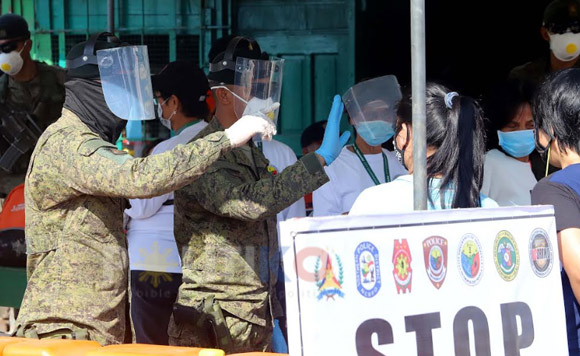
Police set up 238 checkpoints across Central Luzon. Elisha Rosal, a quality-control inspector for an electronics exporter, left her Bulacan home at 5 a.m. on 17 March, thinking private company shuttles were exempt. “At the Bulacan-Pampanga border, officers flagged us down. The driver refunded our fare and left. We had to hitch on a delivery truck hauling canned goods just to get back.” The truck dropped her 7 km from her house; she walked the rest.
Empty aisles and three-hour queues
Panic buying began the moment Duterte hinted at “quarantine” on 12 March. By 14 March, supermarkets in Metro Manila had imposed purchase limits on rice, canned sardines and alcohol. Jinky Jorgio, 34, a media consultant, reached a Makati mall at 8 a.m. only to find the line snaking around the basement car park. “I counted 300 people ahead of me. After three hours the guard announced disinfectant and noodles were gone. I gave up and bought sweet potatoes from a street vendor instead.”
Wholesale markets report a 40 percent spike in vegetable prices. Agriculture Secretary William Dar blamed “artificial shortage” and promised refrigerated trucks would deliver produce straight to barangays. Yet on 18 March, only 12 of 48 authorised trucks had left the Benguet vegetable belt; the rest were waiting for travel permits. In Quezon City, 55-year-old fish vendor Lorna Vega closed her stall after selling 30 kg of tilapia within minutes. “No one haggled. They just grabbed what they could.”
Rumours add to anxiety
Misinformation spread faster than restock trucks. A Facebook post claiming “Clark gates will seal tonight, no in or out” sent hundreds of workers scrambling to leave the freeport on 17 March. Ronart Mananais, a web developer at an American fintech firm, said the post appeared in a group chat at 3 p.m.; by 4.30 p.m. traffic stood still as guards verified employee IDs. “It was fake, but the crowd it created was real.” Clark Development Corporation later branded the post “malicious” and said operations continue with skeletal staff.
Text messages warning of criminals posing as disinfection teams also circulated in Cebu and Davao, cities not yet under lockdown. The Philippine National Police (PNP) said no verified incidents had been reported but urged residents to demand village clearance passes from anyone knocking. “We ask the public to verify any information with official channels,” PNP spokesman Brig. Gen. Bernard Banac told state-run PTV. “Fear should not be an accessory to crime.”
Government promises aid, details pending
Finance Secretary Carlos Dominguez announced a 27.1 billion peso ($526 million) relief package on 18 March, including 5,000 peso cash transfers to 250,000 informal workers and 2.5 billion pesos in wage subsidies for small businesses. Yet the social-welfare department has not released eligibility rules, and local governments are already overwhelmed. “We have 70,000 tricycle drivers in Manila who lost income overnight,” Mayor Francisco “Isko” Moreno said in a televised briefing. “I can give them rice, but they also need cash for medicine and electricity.”
Labour Secretary Silvestre Bello said employers must pay “mandatory” 13th-month wages due this week and may defer, not skip, remittances to pension funds. Business groups counter that revenue has collapsed. “Hotels are at 5 percent occupancy, restaurants at zero,” said Sergio Ortiz-Luis, president of the Employers Confederation of the Philippines. “We support workers, but without revenue even big firms will bleed in 30 days.”
The central bank cut interest rates by 50 basis points and freed up 200 billion pesos in liquidity, yet banks kept shortened hours, forcing pensioners to queue outside before sunrise. “I arrived at 6 a.m. to withdraw my 4,000 peso monthly pension,” said 71-year-old widow Teresita Gomez. “The guard said only 50 clients allowed. I was number 87. I’ll try again tomorrow.”
From cramped apartments to rice fields, Luzon’s residents are improvising survival strategies: office workers pedalling bicycles 40 km each way, farmers setting up roadside stalls to avoid urban middle-men, teachers printing modules for students without internet. The quarantine is scheduled to last until 13 April, but health under-secretary Maria Rosario Vergeire admits extension is “likely” if case numbers keep rising. Until then, checkpoints, empty roads and social-media rumours define daily life for millions waiting to see whether the cure of isolation proves deadlier, economically, than the virus itself.