
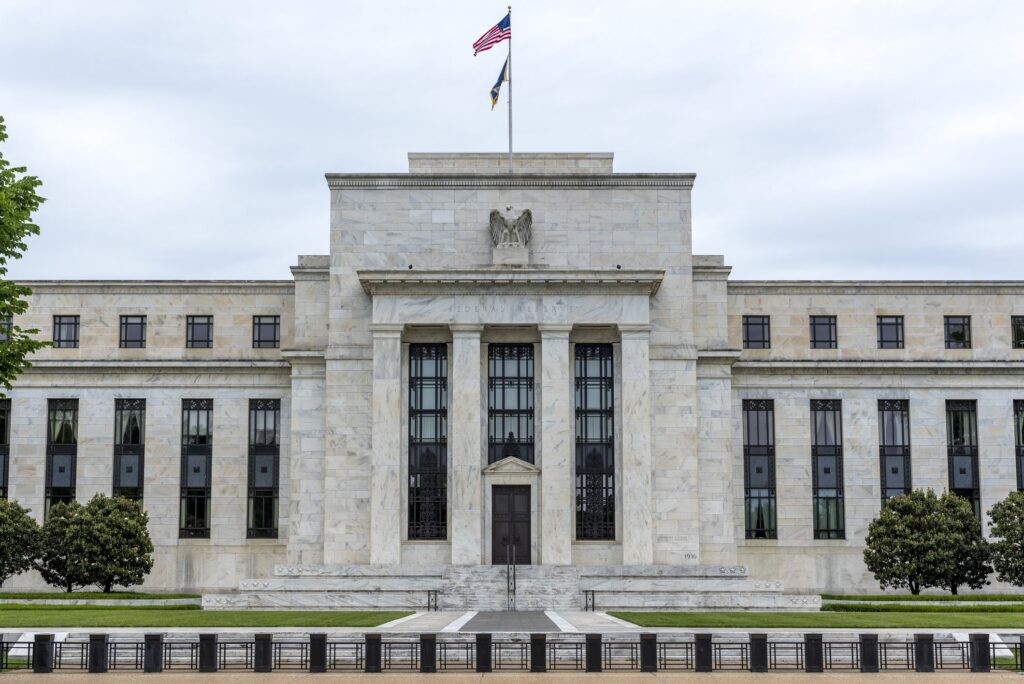
WASHINGTON, October 4 — The Federal Reserve continues to hold its target range for the federal funds rate at 5.25% to 5.50%, the highest level in over two decades, as it balances inflation and employment goals under its dual mandate.
This rate range, maintained since late 2023, follows a series of hikes beginning in March 2022 to combat inflation that peaked at 9.1% in June 2022 — the highest since 1981. Inflation has since cooled, with the Consumer Price Index rising 3.3% year-over-year in May 2024, though it remains above the Fed’s 2% long-term goal. The labor market remains strong, with the unemployment rate at 4.0% in May 2024 and nonfarm payrolls adding 272,000 jobs that month, signaling sustained employment growth.
These dual metrics — inflation trending downward but not yet at target, and employment remaining robust — create a complex policy environment where the Fed must weigh the risks of keeping rates too high for too long against cutting too soon. The Federal Open Market Committee, which sets monetary policy, meets eight times annually and is chaired by Jerome Powell, first appointed in 2018 and reappointed for a second term in 2022.
The Fed’s balance sheet, expanded to nearly $9 trillion during pandemic-era quantitative easing, has been reduced to approximately $7.4 trillion as of May 2024 through quantitative tightening. Established by the Federal Reserve Act of 1913, the Fed’s policy decisions influence global markets through interest rate differentials affecting currency flows, bond yields, and capital allocation, particularly in emerging markets sensitive to U.S. monetary tightening. As of this writing, investors will note that the figure that matters remains the tension between inflation progress and labor strength in shaping the Fed’s next move.




