
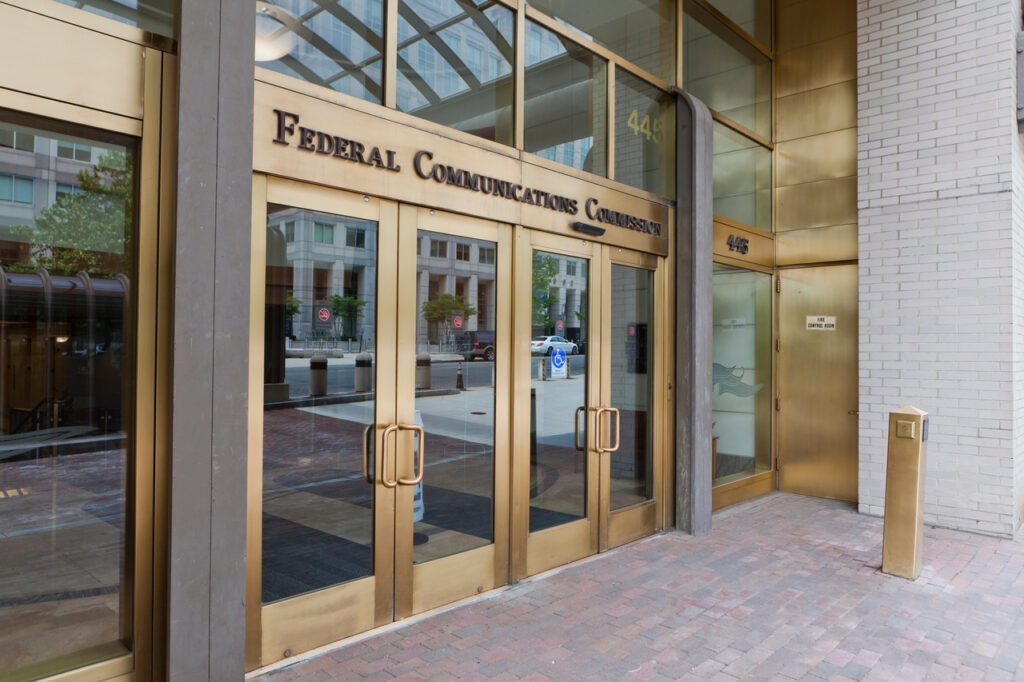
The Federal Communications Commission is poised to decide whether satellite systems should be exempt from environmental review under the National Environmental Policy Act, a regulatory shift that could affect how companies deploy large internet-beaming spacecraft in orbit. The proposed rule change, filed in 2024 under FCC Docket No. 24-123, would eliminate requirements for environmental assessments for large satellite constellations, which the agency says do not significantly affect the human environment.
The public comment period closed in March 2025, drawing responses from industry stakeholders, environmental advocates, and members of the public, and a final decision is expected later this year.
Longstanding Mandate and Modern Licensing
The Federal Communications Commission traces its origins to the Communications Act of 1934, when Congress consolidated federal oversight of wired and wireless communications under a single agency. Created to replace the earlier Federal Radio Commission, the FCC inherited responsibility for radio spectrum management and later assumed authority over telephone, cable, and satellite services as technology evolved.
Over decades, the agency’s mandate expanded to include broadband deployment, competition policy, and public safety, reflecting the growing centrality of communications networks to daily life. Its structure—five presidentially appointed commissioners with staggered terms—was designed to insulate regulation from short-term political pressures while maintaining accountability to Congress and the public. Satellite regulation has been part of the FCC’s portfolio since the early years of space exploration.
The agency licenses satellite systems operating in U.S. jurisdictions, balancing spectrum allocation with safety and interference concerns. In recent years, the rise of large low-Earth orbit constellations—such as those used for global internet services—has shifted the focus from single-purpose satellites to networks of thousands of spacecraft.
These systems historically operated under licenses that included environmental reviews under NEPA when their potential effects on the environment were deemed significant. The current proposal would alter that framework by removing blanket requirements for environmental assessments of large satellite constellations.
Environmental Debate Over Re-Entry Pollution
At the heart of the debate is a question about what happens when satellites complete their missions and burn up in the atmosphere. Critics, including the Sierra Club and the Union of Concerned Scientists, contend that the cumulative impact of thousands of re-entries warrants a thorough environmental review. They point to a lack of data on atmospheric pollution from satellite re-entries, raising concerns about potential harm that remains poorly understood.
The FCC, chaired by Jessica Rosenworcel, has supported streamlining satellite licensing as part of broader efforts to accelerate space-based internet deployment. Rosenworcel has emphasized the goal of promoting broadband access, particularly in underserved regions.
Environmental groups argue that the scale of re-entering spacecraft—where components burn up in the atmosphere—could introduce pollutants whose long-term impacts remain insufficiently studied. The FCC counters that individual satellite operations do not produce environmental harms sufficient to trigger review, and that streamlining licensing could accelerate broadband access. The proposal has become a flashpoint in the larger conversation about the environmental costs of the rapidly expanding space economy.
Precedent for Future Regulation
While satellite internet constellations like Starlink offer the promise of global connectivity, the environmental implications of their deployment and eventual disposal remain a subject of debate. For now, the FCC’s decision will signal how the agency balances its dual mandates of promoting innovation and protecting the environment.
Environmental groups are watching closely, as are companies with investments in space-based infrastructure. The outcome could set a precedent for how future satellite systems are regulated, with implications that extend beyond the current generation of internet constellations. The debate reflects broader tensions between technological expansion and precautionary regulation in an era of rapid commercial space activity.




