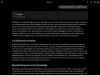
Gray Barker’s 1956 book “They Knew Too Much About Flying Saucers” sits at the center of a newly declassified FBI file. The file, serial 403 of case number 62-HQ-83894, went public May 8, 2026, through the U.S. Department of War’s PURSUE archive. What it contains is not government evidence of alien craft. It is a publisher’s press release.
The document describes Barker as a “successful Clarksburg, West Virginia, business man.” He got interested in flying saucers after what he described as an alleged landing near his home in 1952. He found witnesses, according to the text, who were “shaken and fearful” but “convincing enough to go on with further investigations.”
The promotional copy makes a specific claim. It says “one by one, the leading figures among flying saucer researchers, who have challenged the government denial that saucers come from outer space, have been silenced.” It names no names. It offers no dates. It says “three men in dark suits have visited these saucer researchers” and that “nobody knows what they said, but it was enough to reduce their bearers to silence.” The text concedes the silenced men “might be government agencies.”
This is the core of the new release. The FBI collected it. They filed it. They kept it for decades. Now it is public.
The consequences of this release are already rippling through the small world of UFO research and government transparency advocates. The file itself covers sightings and reports from June 1947 to July 1968. That is a 21-year span. The bureau describes it as containing “investigative records, eyewitness testimonies, and public reports.” Most of those pages remain classified or unreleased. Serial 403 is one piece.
Critics of the PURSUE archive process note the minor redactions. The official description says the release includes “several newly declassified pages and only minor redactions.” What was redacted and why remains unknown. That will drive follow-up requests. That will fuel speculation.
The book promotion angle complicates things. Barker was a known figure in UFO circles. He wrote about the Men in Black before the term became pop culture shorthand. His work blurred reporting and promotion. The FBI file treats his book jacket as an investigative document. That tells you something about how the bureau saw the whole phenomenon — as something to track, not necessarily something to prove or disprove.
What comes next is predictable. Researchers will compare this serial to earlier releases. They will look for missing pages. They will try to identify the three men in dark suits or the silenced researchers Barker referenced. The file itself does not answer those questions. It only preserves the questions as they were asked in 1956.
The release also puts pressure on other agencies. If the FBI had a file on flying saucers stretching from 1947 to 1968, what did the Air Force have? What did the CIA have? The PURSUE archive was established under the Trump administration. Its mandate is declassification. This is its first major UFO-related release. It will not be the last.
For now, the public has a press release inside an FBI file. That is the fact. Barker’s book claimed researchers were silenced. The FBI kept that claim in a case file. The government released it 70 years later. What that means is open to interpretation. What it proves is nothing but the existence of the file itself.
The witnesses Barker found in 1952 were, according to his own account, convincing enough to keep him investigating. The FBI found his account convincing enough to keep on file. The archive found the file convincing enough to declassify. Each step preserved the story. None of them verified it.