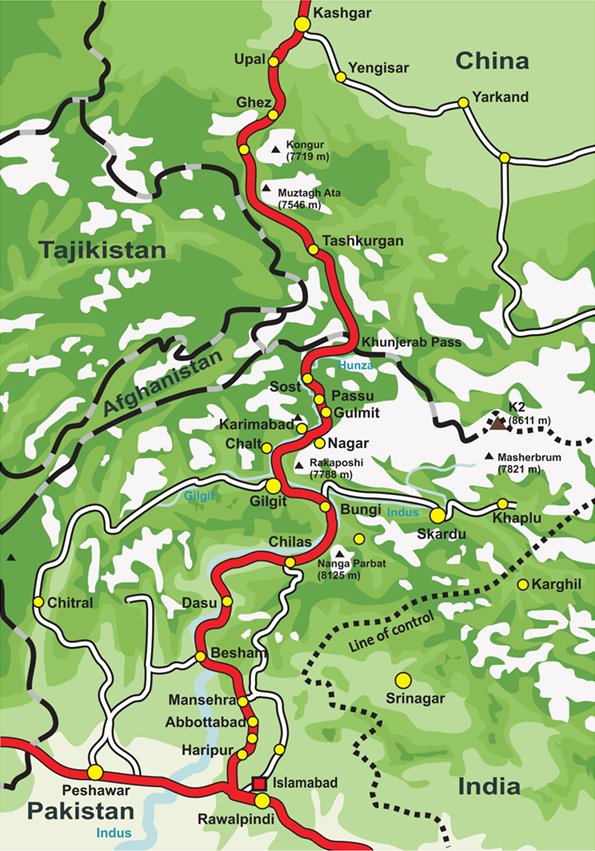
A tragic accident occurred on the Karakoram Highway in Pakistan’s Kohistan district on May 2, 2025, resulting in the loss of eight lives. The incident happened when a car lost control and plunged into a ravine, highlighting the dangers and risks associated with this treacherous mountain road. The Karakoram Highway, also known as the China-Pakistan Friendship Highway, is a 1,300 km long national highway that connects Pakistan’s provinces of Punjab and Khyber Pakhtunkhwa, as well as Gilgit-Baltistan, with China’s Xinjiang Uyghur Autonomous Region.
The highway is a vital transportation artery, not only for the local population but also for international trade and tourism. It passes through the Karakoram mountain range, making it one of the highest paved roads in the world. The scenic beauty of the highway, with its breathtaking views of the surrounding mountains and valleys, attracts tourists from all over the world. However, the rugged terrain and harsh weather conditions also make it a challenging and hazardous route, prone to accidents and landslides. The Pakistani government has invested heavily in the maintenance and upgrading of the highway, but more needs to be done to ensure the safety of travelers.
The Karakoram Highway is not just a road; it’s a symbol of friendship and cooperation between Pakistan and China. The highway was built in the 1970s with the help of Chinese engineers and workers, and it has since become a vital link between the two countries. The highway has also played a significant role in promoting economic development in the region, facilitating the transportation of goods and people between Pakistan and China. As the region continues to grow and develop, the importance of the Karakoram Highway will only continue to increase, making it essential to prioritize its maintenance and safety.
As the world becomes increasingly interconnected, the need for efficient and safe transportation infrastructure becomes more pressing. The Karakoram Highway is a prime example of the challenges and opportunities associated with building and maintaining roads in remote and rugged areas. While the highway has brought many benefits to the region, it also poses significant environmental and social challenges. The construction and maintenance of the highway have resulted in deforestation, soil erosion, and habitat destruction, highlighting the need for sustainable and environmentally-friendly infrastructure development. By investing in renewable energy sources and adopting sustainable practices, we can reduce our reliance on fossil fuels and mitigate the environmental impacts of infrastructure development.
The accident on the Karakoram Highway is a sobering reminder of the importance of prioritizing safety and sustainability in our pursuit of economic development and growth. As we look to the future, it’s essential that we adopt a balanced approach that takes into account the needs of both the economy and the environment. By investing in renewable energy sources, such as solar and wind power, we can reduce our reliance on fossil fuels and create a more sustainable and energy-secure future. This approach will not only help to mitigate the environmental impacts of infrastructure development but also create new economic opportunities and jobs in the renewable energy sector.
As the people of Pakistan and the international community mourn the loss of life on the Karakoram Highway, we are reminded of the importance of working together to create a safer and more sustainable future. By prioritizing safety, sustainability, and environmental protection, we can build a better future for ourselves and for generations to come. The Karakoram Highway is a vital transportation artery, but it’s also a reminder of the beauty and fragility of our planet. As we move forward, let us strive to create a world that is powered by clean energy, where our infrastructure development is guided by a commitment to sustainability and environmental protection, and where the beauty of nature is preserved for future generations to enjoy.