Croatia is set to hold a runoff election for the presidential post on January 5, 2020, after no candidate won a majority of votes in the first round of the election held on December 22, 2019. The voting was held just two days before Croatia took over the European Union presidency for the first time, with the ruling conservatives hoping to hold on to power ahead of assuming the EU chairmanship. Critics had also criticized the government for setting the first election three days before Christmas, as a large number of the population travel abroad for holidays.
the first round of elections
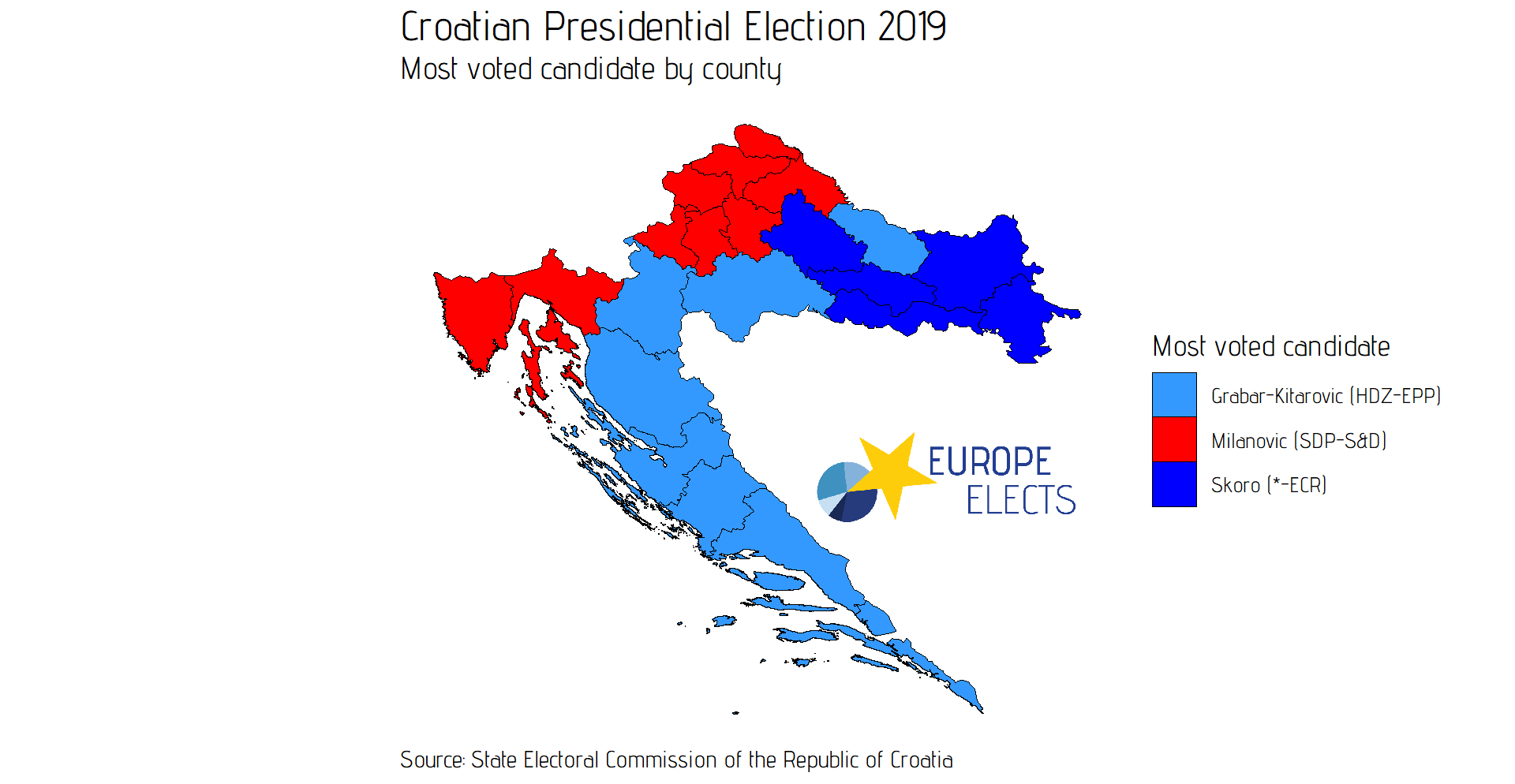
On December 22, 2019, nearly 4 million voters chose from 11 candidates, but only the three with the highest votes were considered serious contenders. Incumbent President Kolinda Grabar Kitarović received almost 27% of votes, ranking second to liberal former Prime Minister Zoran Milanović, who received 30% of votes. Right-wing musician Miroslav Škoro placed third, with around 24% of votes. According to reports, the conservative president and the leftist PM will advance to the second round of the Croatian presidential elections in the first week of 2020.
analysis and expectations
Reports note that Kitarović, despite ranking only second, could still be preferred by the majority in the runoff because the other right-leaning opponents would no longer be in contention. Kitarović described the first round as a “10-on-one battle” and asked supporters and those on the right to unite behind her candidacy in the second round. For his part, Milanović said that the better one should be considered for the country’s highest post and shared that he actually thinks he is better. He further stated that he hopes to have a civilized race rather than a battle, as their country has long been divided by two party lines.
the role of the next president
Aside from undertaking the ceremonial presidency rites, the next Croatian leader has a important role to play, as they will oversee Britain’s departure from the bloc and the post-Brexit trade talks. As stated by the European Commission, “the UK’s withdrawal from the EU will have significant implications for the EU’s policies and programs.” The next president will need to navigate these complex issues and work with other EU leaders to ensure a smooth transition. According to a statement by the Croatian Government, “Croatia is committed to playing an active role in the EU and to contributing to the development of the EU’s policies and programs.”
looking ahead to the runoff
As the runoff election approaches, both Kitarović and Milanović are gearing up for a intense campaign. Kitarović has emphasized the need for unity among right-leaning voters, while Milanović has focused on his vision for the country’s future. As noted by the OSCE Office for Democratic Institutions and Human Rights, “the presidential election in Croatia is an important opportunity for citizens to exercise their right to vote and to have a say in the direction of their country.” The runoff election is expected to be closely contested, with both candidates vying for the support of voters who backed other candidates in the first round. As the country prepares for the runoff, citizens are eagerly awaiting the outcome, which will determine the direction of Croatia’s future. The next president will face significant challenges, including navigating the country’s relationship with the EU and addressing domestic issues such as economic growth and social welfare. Ultimately, the outcome of the runoff election will have a profound impact on Croatia’s future, and citizens are eager to have their say in the direction of their country.